Capture of Fort Donelson: February 16, 1862
1862 · Fort Donelson, United States
American Civil War: General Ulysses S. Grant captures Fort Donelson, Tennessee.
July 13, 1863
The New York City draft riots began, lasting several days, as a response to the Union draft during the American Civil War.
New York City, United States | Union Army
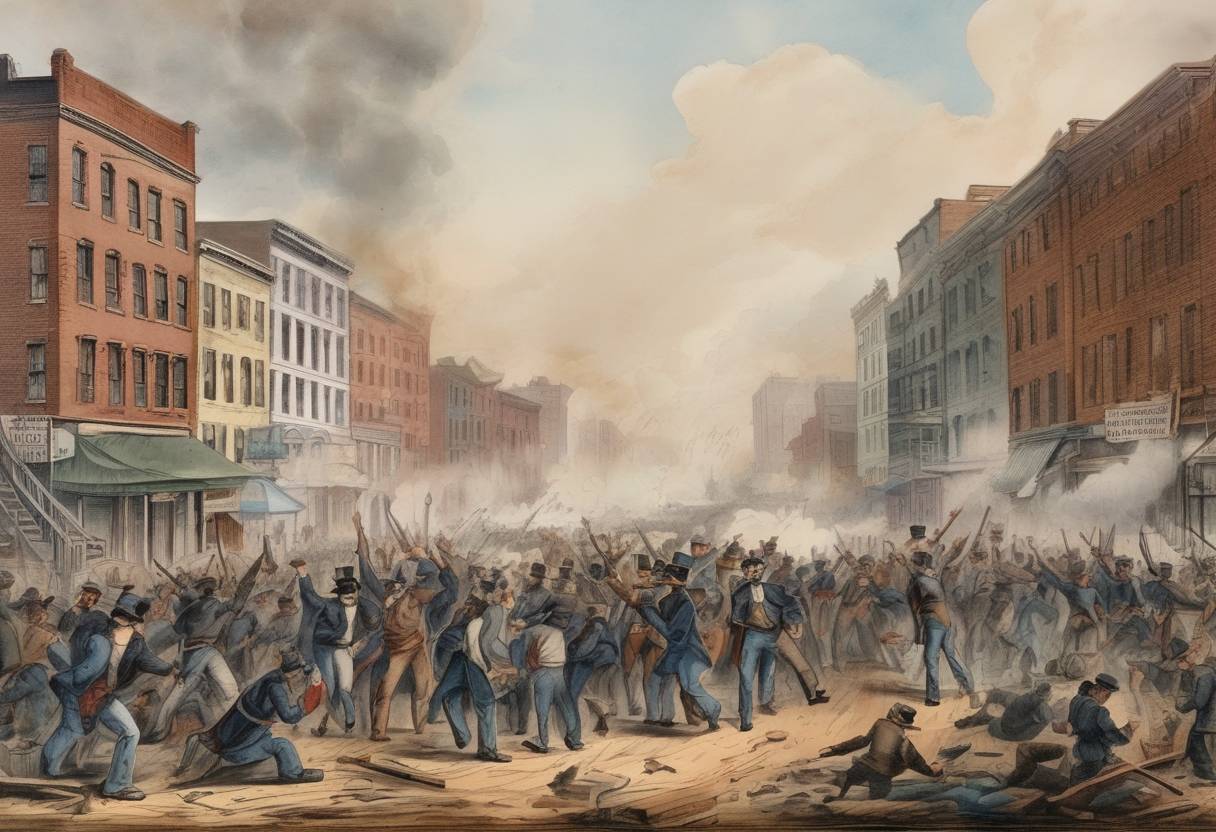
The New York City Draft Riots, which began on July 13, 1863, stand as one of the most significant instances of civil unrest in American history. These riots were a direct response to the Union’s implementation of the Conscription Act during the American Civil War, which mandated a draft to bolster the Union Army’s numbers.
The Conscription Act: Enacted in March 1863, the Conscription Act was the first federal draft in U.S. history. It required all male citizens aged 20 to 45 to register for military service. However, the act allowed wealthier individuals to avoid service by hiring substitutes or paying a $300 commutation fee, leading to widespread resentment among the working class.
Economic and Social Tensions: New York City, with its large immigrant population, particularly Irish immigrants, was already a hotbed of economic disparity and racial tension. Many working-class citizens feared that freed African Americans would migrate north and compete for jobs, exacerbating existing prejudices.
The Civil War’s Impact: The war had strained the city’s economy and increased the cost of living, further fueling discontent among the lower classes who felt disproportionately burdened by the draft.
Outbreak: The riots began on the morning of July 13, 1863, when a mob of predominantly Irish working-class men attacked the draft office on Third Avenue. The violence quickly spread throughout the city.
Targets and Violence: Rioters targeted government buildings, symbols of wealth, and African American communities. The Colored Orphan Asylum was burned down, and numerous African Americans were lynched or beaten. The violence was not only an anti-draft protest but also an expression of racial and class animosity.
Duration and Suppression: The riots lasted for four days, from July 13 to July 16. The local police were initially overwhelmed, and it wasn’t until Union troops, fresh from the Battle of Gettysburg, were deployed that the riots were quelled.
Casualties and Damage: The riots resulted in the deaths of an estimated 119 people, though some estimates suggest the toll could be higher. Property damage was extensive, with millions of dollars in damages reported.
Impact on African American Communities: The African American population in New York City significantly decreased as many fled the city due to the violence and hostility they faced.
Political and Social Repercussions: The riots highlighted the deep divisions within Northern society over the Civil War, conscription, and racial issues. They underscored the challenges faced by the Union in maintaining support for the war effort.
Long-term Effects: The draft riots had lasting effects on New York City’s demographics and race relations. They also prompted changes in how the draft was administered, including increased efforts to address the grievances of the working class.
The New York City Draft Riots remain a stark reminder of the complexities and internal conflicts that characterized the American Civil War era, illustrating how issues of race, class, and economic inequality can intersect with national policies to provoke widespread unrest.
Source: en.wikipedia.org