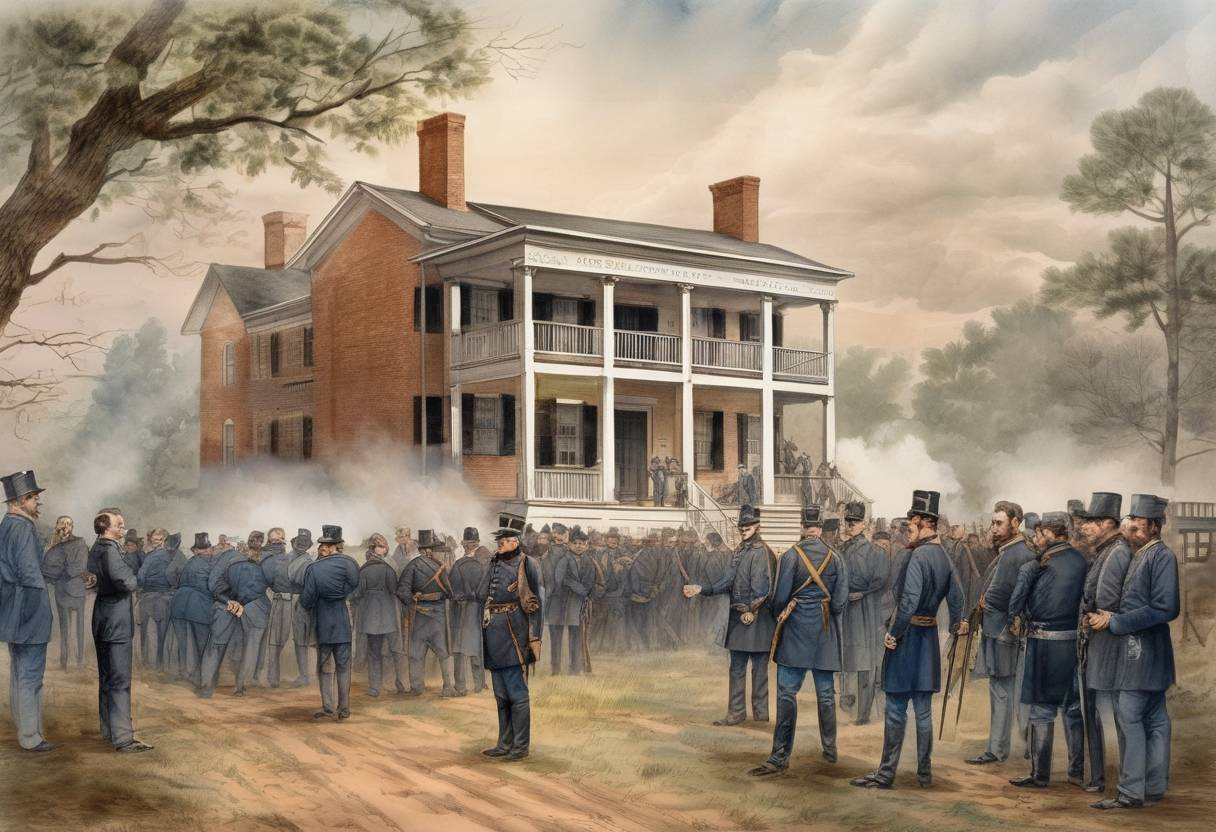
The Surrender at Appomattox Court House: April 9, 1865
On April 9, 1865, a pivotal moment in American history unfolded as Confederate General Robert E. Lee surrendered to Union General Ulysses S. Grant at the Appomattox Court House in Virginia. This event effectively marked the end of the American Civil War, a conflict that had raged for four years, from 1861 to 1865, and resulted in significant loss of life and profound social and political changes in the United States.
Context Leading to the Surrender
The surrender at Appomattox was the culmination of a series of events that had weakened the Confederate forces:
Union Victories: In the months leading up to the surrender, Union forces had achieved significant victories, including the capture of Atlanta by General William T. Sherman in September 1864 and his subsequent March to the Sea, which devastated the Southern infrastructure and economy.
Siege of Petersburg: The prolonged Siege of Petersburg, which lasted from June 1864 to April 1865, drained Confederate resources and morale. The fall of Petersburg on April 2, 1865, forced Lee to evacuate Richmond, the Confederate capital.
Retreat and Pursuit: As Lee’s Army of Northern Virginia retreated westward, they were pursued relentlessly by Grant’s forces. The Confederates, suffering from exhaustion, lack of supplies, and dwindling numbers, found themselves increasingly cornered.
The Meeting at Appomattox
The surrender took place in the parlor of the home of Wilmer McLean in the village of Appomattox Court House. The meeting between Lee and Grant was marked by mutual respect and a focus on reconciliation:
Terms of Surrender: Grant offered generous terms to Lee and his men. Confederate soldiers were allowed to return home with their personal possessions, horses, and sidearms. Additionally, they were provided with food rations, as many were starving.
Symbol of Reconciliation: The dignified manner in which the surrender was conducted set a tone for the post-war period. Grant’s leniency and Lee’s acceptance helped to ease tensions and laid the groundwork for the reunification of the nation.
Aftermath and Significance
End of Major Confederate Resistance: While some Confederate forces continued to fight for a few weeks, Lee’s surrender signaled the collapse of organized Confederate resistance. Other Confederate armies soon followed suit, with General Joseph E. Johnston surrendering to Sherman on April 26, 1865.
Reconstruction Era: The end of the Civil War ushered in the Reconstruction Era, a complex and often contentious period focused on rebuilding the South and integrating formerly enslaved people into American society.
Legacy: The Civil War and its conclusion at Appomattox had lasting impacts on the United States, including the abolition of slavery (formalized by the 13th Amendment) and the strengthening of federal authority over the states.
The surrender at Appomattox Court House remains a defining moment in American history, symbolizing the end of the bloodiest conflict on American soil and the beginning of a long and challenging journey toward national healing and unity.