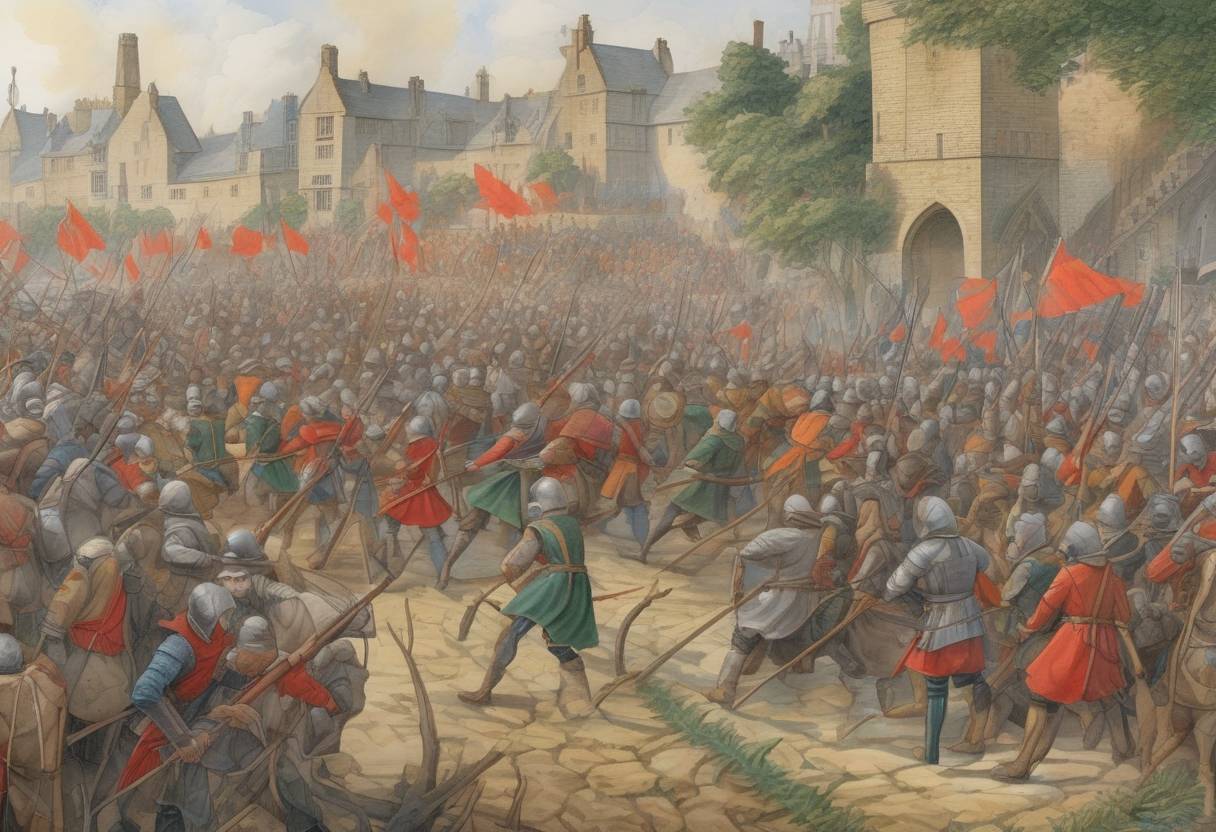
The Peasants’ Revolt: Climax in London on June 13, 1381
The Peasants’ Revolt of 1381, also known as Wat Tyler’s Rebellion, was a major uprising across large parts of England. It was driven by socio-economic and political tensions exacerbated by the Black Death, high taxes, and oppressive feudal practices. The revolt reached a critical juncture on June 13, 1381, when the rebels, led by Wat Tyler, entered London.
Context and Causes
The Black Death (1347-1351): The pandemic drastically reduced the population, leading to labor shortages. Surviving peasants demanded higher wages and better living conditions, challenging the traditional feudal system.
Poll Taxes: The government imposed a series of poll taxes to fund military campaigns, particularly the Hundred Years’ War against France. The third poll tax in 1380 was especially burdensome, sparking widespread discontent.
Feudal Oppression: Peasants were frustrated by the rigid feudal system, which bound them to the land and subjected them to the whims of landowners.
Key Events Leading to June 13, 1381
Initial Uprisings: The revolt began in Essex and Kent in late May 1381. Rebels attacked tax collectors and local officials, quickly gaining momentum.
Leadership of Wat Tyler: Wat Tyler emerged as a charismatic leader, rallying the rebels with promises of freedom from serfdom and oppressive taxes.
March on London: The rebels, numbering in the tens of thousands, marched towards London, gathering support along the way. Their demands included the abolition of serfdom, reduction of taxes, and removal of corrupt officials.
The Climax in London
Entry into London: On June 13, 1381, the rebels entered London, aided by sympathizers within the city. They were initially welcomed by some citizens who shared their grievances.
Targeting Symbols of Authority: The rebels attacked symbols of royal authority and wealth, including the Savoy Palace, home of John of Gaunt, a key advisor to King Richard II. They also destroyed legal records and attacked the Temple Inns, centers of legal training.
Confrontation with the King: The rebels demanded to meet with King Richard II to present their grievances. The young king, only 14 years old at the time, agreed to meet them at Mile End on June 14.
Aftermath and Consequences
Meeting at Mile End: On June 14, King Richard II met with the rebels and agreed to their demands, including the abolition of serfdom. However, these promises were made under duress and were not intended to be honored.
Death of Wat Tyler: On June 15, during a subsequent meeting at Smithfield, Wat Tyler was killed under contentious circumstances, leading to the collapse of the revolt.
Repression and Retaliation: In the aftermath, the government quickly reasserted control, reneging on concessions and executing many rebel leaders. The revolt was ultimately suppressed, but it left a lasting impact on English society.
Historical Significance
The Peasants’ Revolt of 1381 was a pivotal moment in English history, highlighting the deep-seated tensions between the ruling classes and the peasantry. Although the immediate demands of the rebels were not met, the revolt signaled the beginning of the end for the feudal system in England. It also underscored the growing power and agency of the common people, setting the stage for future social and political changes.