Posthumous Execution of Oliver Cromwell's Remains - January 30, 1661
1661 · London, England
Oliver Cromwell's remains were exhumed and subjected to a posthumous execution.
January 30, 1649
King Charles I of England was executed for treason after being convicted by a High Court of Justice.
London, England | High Court of Justice
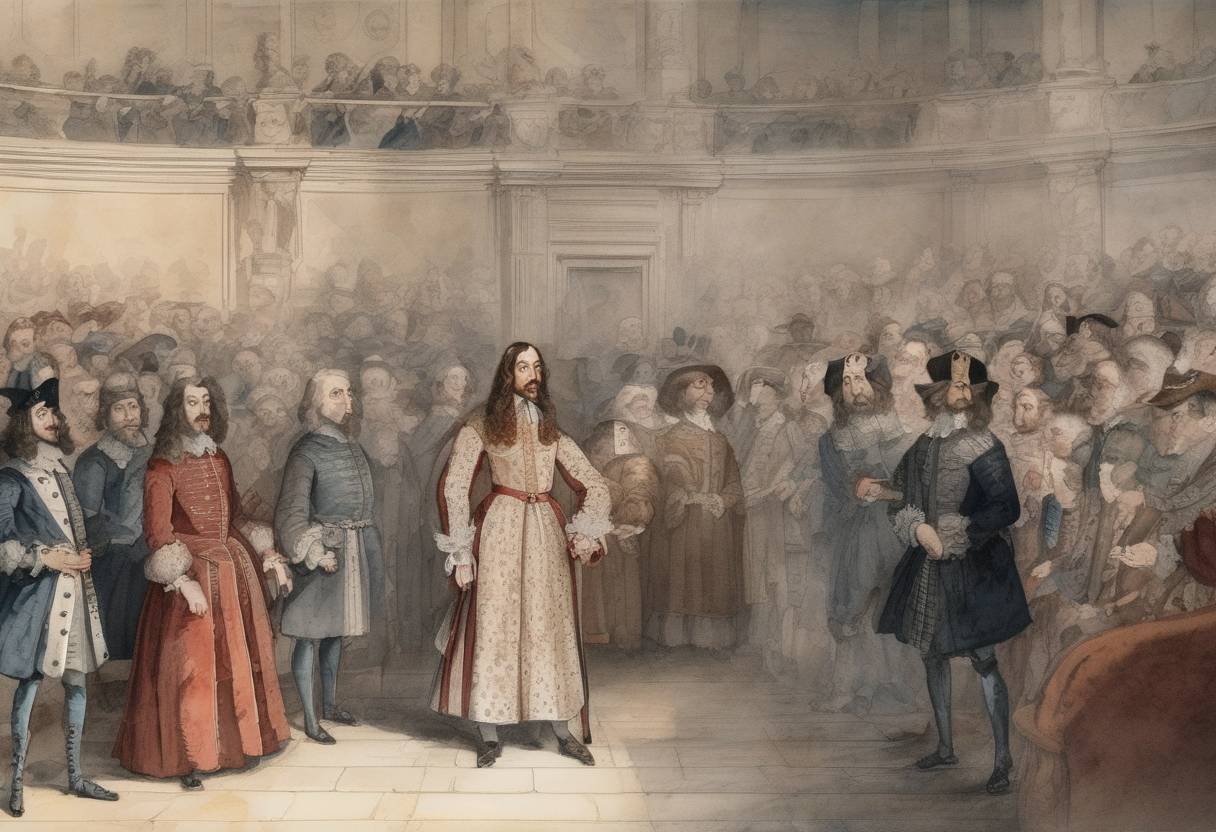
On January 30, 1649, King Charles I of England was executed for treason, marking a pivotal moment in British history. This event was the culmination of a series of conflicts and political upheavals that had plagued England for years, known as the English Civil Wars.
The English Civil Wars (1642–1651) were a series of armed conflicts and political machinations between Parliamentarians (“Roundheads”) and Royalists (“Cavaliers”). The wars were primarily over issues of governance and the extent of the monarch’s power. King Charles I, who ascended to the throne in 1625, believed in the divine right of kings, which put him at odds with Parliament, leading to a struggle over authority and governance.
Personal Rule (1629-1640): Charles I dissolved Parliament and ruled without it for 11 years, a period known as the Personal Rule. His methods of raising revenue without parliamentary consent, such as ship money, were deeply unpopular.
The Long Parliament (1640): Financially strained, Charles was forced to call Parliament. This led to the Long Parliament, which sought to limit the king’s powers, culminating in the Grand Remonstrance, a list of grievances against Charles.
Outbreak of Civil War (1642): Tensions escalated into armed conflict. The first phase of the war ended with the capture of Charles by Parliamentary forces in 1646.
Second Civil War (1648): Charles attempted to regain power, leading to a brief second civil war, which ended in his defeat.
Trial and Conviction: In January 1649, Charles was brought to trial before a High Court of Justice, specially convened by the Rump Parliament. He was charged with treason against England by attempting to maintain absolute power and waging war against Parliament.
On January 30, 1649, Charles I was executed outside the Banqueting House in Whitehall, London. He was beheaded in front of a large crowd, maintaining his composure and dignity to the end. His execution was a radical act, as it was the first time a reigning monarch had been tried and executed by his own subjects.
The Commonwealth: Following Charles’s execution, England was declared a republic, known as the Commonwealth, under the leadership of Oliver Cromwell as Lord Protector.
Restoration of the Monarchy (1660): The monarchy was eventually restored in 1660 with Charles II, Charles I’s son, ascending the throne. This period highlighted the enduring tensions between monarchy and Parliament.
Legacy: The execution of Charles I set a precedent for the accountability of the monarchy and contributed to the development of constitutional monarchy in Britain. It also had profound effects on the political landscape, influencing future governance and the balance of power between the monarchy and Parliament.
The execution of Charles I remains a significant event in British history, symbolizing the struggle for power and governance that shaped the future of the British Isles.
Source: en.wikipedia.org