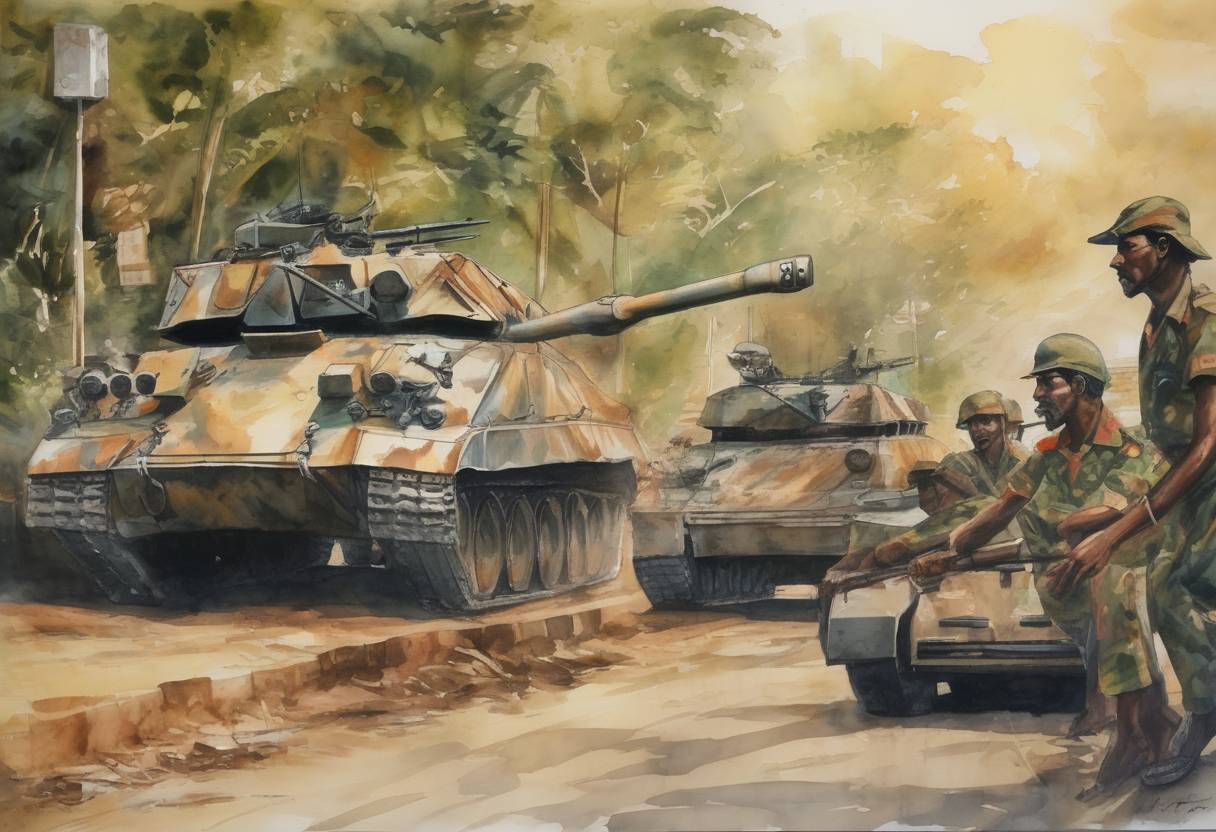
End of the Sri Lankan Civil War: May 19, 2009
On May 19, 2009, the Sri Lankan government officially declared victory over the Liberation Tigers of Tamil Eelam (LTTE), marking the end of a brutal civil war that had lasted nearly 26 years. This conflict, one of the longest-running civil wars in Asia, had profound implications for Sri Lanka and its people.
Background
The roots of the Sri Lankan Civil War can be traced back to ethnic tensions between the majority Sinhalese and the minority Tamil populations. Following Sri Lanka’s independence from British rule in 1948, these tensions were exacerbated by policies perceived as discriminatory against Tamils, including the “Sinhala Only Act” of 1956, which made Sinhala the sole official language.
The LTTE, also known as the Tamil Tigers, was formed in 1976 under the leadership of Velupillai Prabhakaran. The group sought to create an independent Tamil state, Tamil Eelam, in the north and east of Sri Lanka. The conflict officially began in 1983, following a deadly ambush by the LTTE on Sri Lankan soldiers, which triggered anti-Tamil riots and widespread violence.
Key Events Leading to the End
2006 Ceasefire Collapse: A ceasefire brokered in 2002 collapsed in 2006, leading to renewed hostilities. The Sri Lankan government, under President Mahinda Rajapaksa, launched a determined military campaign to defeat the LTTE.
Military Offensive: From 2006 to 2009, the Sri Lankan military conducted a series of offensives, gradually capturing LTTE-held territories. The final phase of the war saw intense fighting in the northern regions, particularly in the Vanni area.
Humanitarian Concerns: The final stages of the conflict were marked by significant humanitarian concerns. Thousands of civilians were trapped in the conflict zone, leading to international calls for a ceasefire and investigations into alleged human rights abuses by both sides.
The End of the War
On May 18, 2009, the Sri Lankan military announced that it had killed LTTE leader Velupillai Prabhakaran. The following day, May 19, the government declared victory, effectively ending the civil war. The LTTE’s defeat was a significant military achievement for the Sri Lankan government, but it came at a high cost in terms of human lives and suffering.
Aftermath and Consequences
Humanitarian Impact: The war resulted in the deaths of an estimated 80,000 to 100,000 people, with many more displaced. The final months were particularly devastating for civilians caught in the crossfire.
Reconstruction and Reconciliation: Post-war, the Sri Lankan government faced the challenge of rebuilding war-torn areas and addressing the grievances of the Tamil population. Efforts at reconciliation and accountability have been ongoing, with varying degrees of success.
International Reactions: The end of the war was met with relief but also criticism from the international community, particularly regarding allegations of war crimes and human rights violations during the final stages of the conflict.
Broader Historical Significance
The end of the Sri Lankan Civil War marked a significant turning point in the country’s history. It provided an opportunity for peace and development but also highlighted the need for genuine reconciliation and justice to ensure long-term stability and harmony among Sri Lanka’s diverse communities. The legacy of the conflict continues to influence Sri Lankan politics and society today.