The Third Siege of Rome by the Visigoths: August 14, 410
410 · Rome, Western Roman Empire
The Visigoths, led by King Alaric I, begin their third siege of Rome, which eventually leads to the sack of the city later in August.
August 27, 0410
The Visigoths, led by King Alaric I, complete their sack of Rome, marking a significant event in the decline of the Western Roman Empire.
Rome, Italy | Visigoths
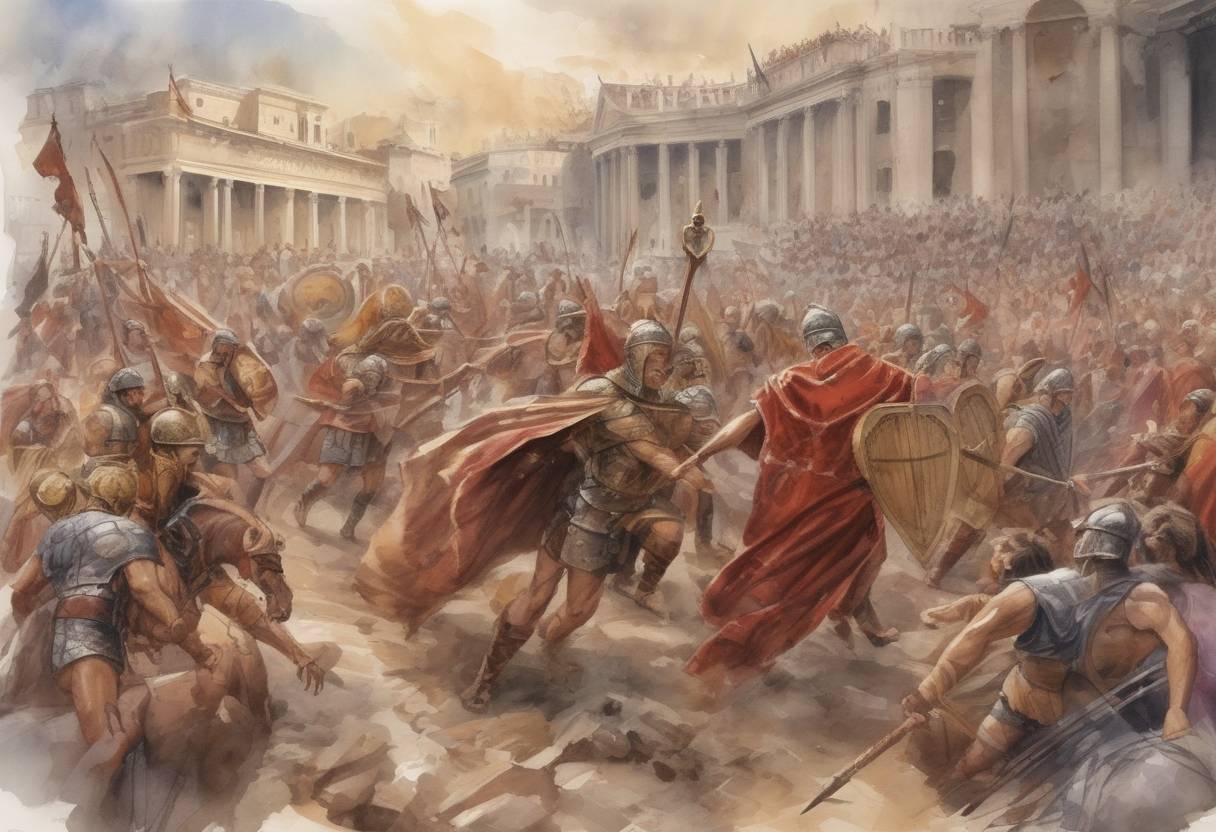
The sack of Rome on August 27, 410, by the Visigoths under the leadership of King Alaric I, stands as a pivotal moment in the history of the Western Roman Empire. This event marked the first time in nearly 800 years that Rome had fallen to a foreign enemy, signaling a significant decline in the power and prestige of the once-mighty empire.
The roots of this event trace back to the broader crisis of the Roman Empire during the late 4th and early 5th centuries. The Western Roman Empire was plagued by internal strife, economic troubles, and increasing pressure from various barbarian groups along its borders. The Visigoths, originally a Germanic tribe, had been displaced by the Huns and sought refuge within the Roman Empire’s borders.
Alaric I emerged as a prominent leader among the Visigoths. Initially serving as a commander in the Roman army, he became disillusioned with the empire due to unmet promises of land and payment. In 395, Alaric was declared king of the Visigoths and began a series of campaigns against Roman territories, seeking to secure a homeland for his people.
By 408, tensions between the Visigoths and the Roman Empire had escalated. Alaric led his forces into Italy, laying siege to Rome in 408 and again in 409. Despite negotiations and ransom payments, the Roman government failed to satisfy Alaric’s demands for land and recognition.
On August 24, 410, Alaric’s forces entered Rome after a prolonged siege. The city was subjected to three days of plundering, although historical accounts suggest that the Visigoths exercised a degree of restraint, sparing many of the city’s churches and religious sites.
The sack of Rome sent shockwaves throughout the Roman world and beyond. It was a symbolic blow to the empire’s authority and a harbinger of its eventual collapse. The event underscored the vulnerability of the Western Roman Empire and highlighted the shifting power dynamics in Europe.
In conclusion, the sack of Rome by the Visigoths under Alaric I was not just a military conquest but a transformative event that marked the beginning of the end for the Western Roman Empire and set the stage for the medieval era in Europe.
Source: en.wikipedia.org