2010 · Bishkek, Kyrgyzstan
Kyrgyzstan experienced a violent uprising that led to the ousting of President Kurmanbek Bakiyev. The unrest was fueled by public dissatisfaction with corruption and rising utility prices.
April 7, 2010
Kyrgyz President Kurmanbek Bakiyev was ousted from power following a violent uprising in the capital, Bishkek.
Bishkek, Kyrgyzstan | Kyrgyz opposition
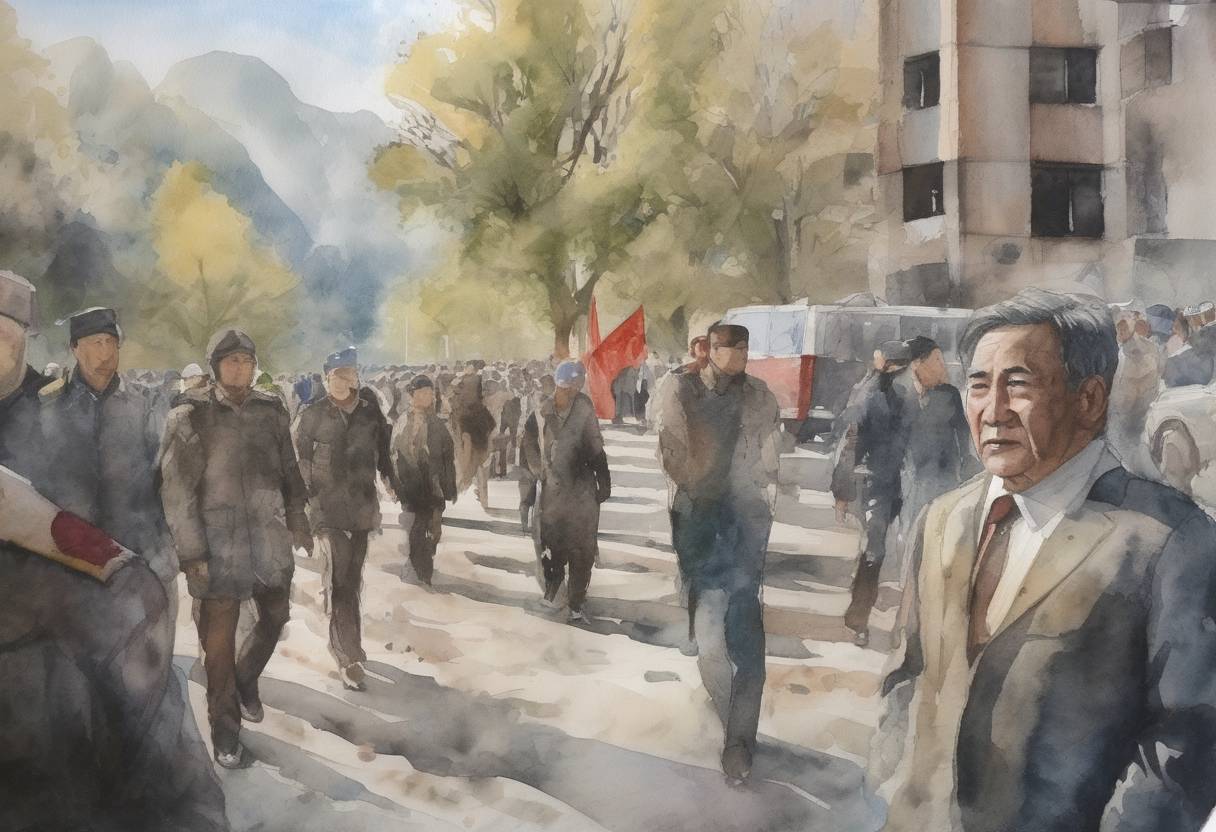
On April 7, 2010, Kyrgyzstan experienced a significant political upheaval when President Kurmanbek Bakiyev was ousted from power following a violent uprising in the capital city, Bishkek. This event marked a pivotal moment in the country’s history, characterized by widespread public discontent and political instability.
Kurmanbek Bakiyev came to power in 2005 after the Tulip Revolution, which itself was a response to allegations of corruption and authoritarianism against the then-president Askar Akayev. Bakiyev’s presidency, however, soon faced similar criticisms. His administration was marred by accusations of nepotism, corruption, and the suppression of political dissent. Economic challenges, including rising utility prices and widespread poverty, further fueled public dissatisfaction.
The unrest began in early April 2010, with protests erupting in various parts of Kyrgyzstan. Demonstrators were motivated by grievances over government corruption, economic hardship, and the perceived authoritarian nature of Bakiyev’s rule. The situation escalated on April 7, when thousands of protesters gathered in Bishkek, demanding Bakiyev’s resignation.
The protests turned violent as clashes broke out between demonstrators and security forces. Government buildings were stormed, and there were reports of looting and arson. The confrontation resulted in significant casualties, with over 80 people killed and hundreds injured.
Amidst the chaos, Bakiyev fled Bishkek and sought refuge in his home region of Jalal-Abad in southern Kyrgyzstan. Despite attempts to rally support, he faced mounting pressure both domestically and internationally to step down. On April 15, 2010, Bakiyev officially resigned and subsequently went into exile, first in Kazakhstan and later in Belarus.
Following Bakiyev’s ouster, an interim government was established, led by Roza Otunbayeva. The new leadership promised to restore order and implement democratic reforms. A constitutional referendum held in June 2010 paved the way for a parliamentary system, reducing the powers of the presidency.
The events of April 2010 had significant implications for Kyrgyzstan’s political landscape. They underscored the challenges of governance in a country grappling with ethnic tensions, economic difficulties, and a history of political volatility. The uprising also highlighted the importance of addressing corruption and ensuring political accountability to maintain stability.
In the broader context, the ousting of Bakiyev was part of a series of political transformations in the post-Soviet space, reflecting the complex interplay between authoritarianism and democratization efforts in the region.
Source: www.britannica.com