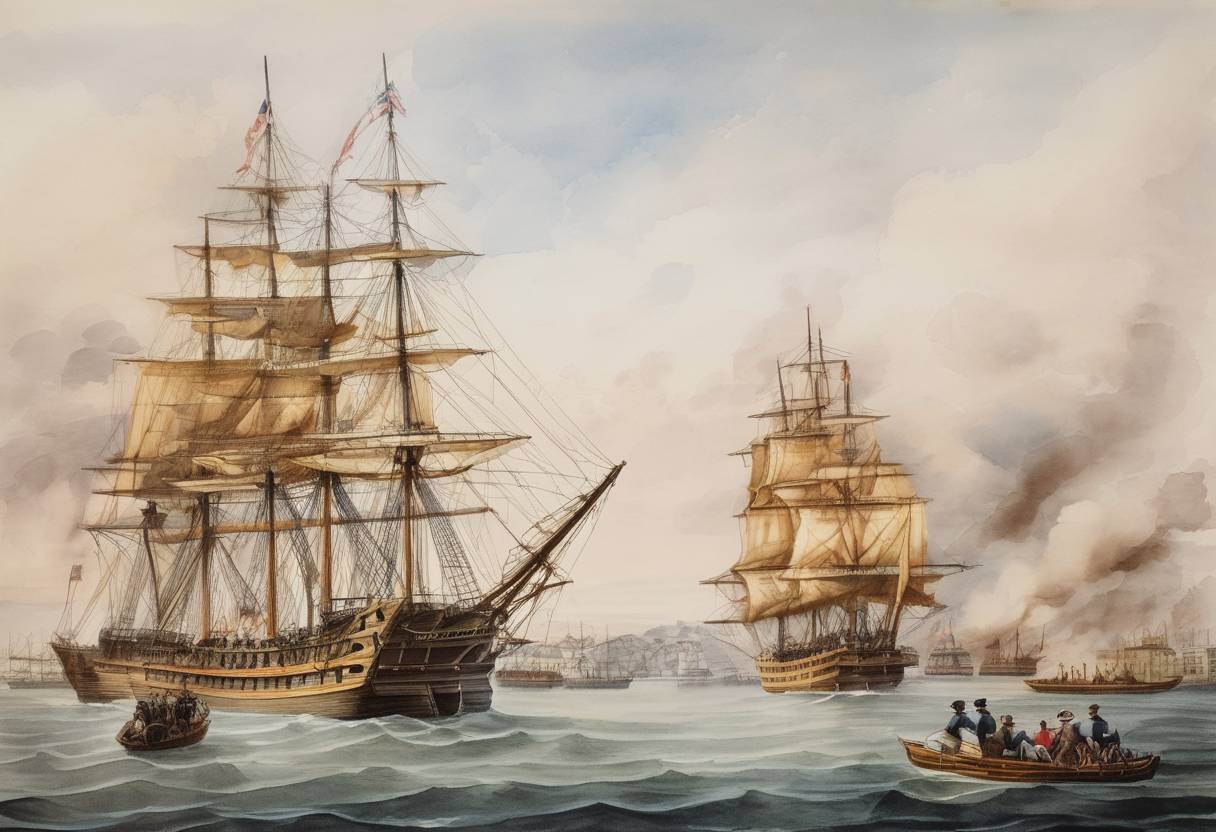
The Embargo Act of 1807
On December 22, 1807, the United States Congress passed the Embargo Act, a significant piece of legislation that aimed to protect American interests by prohibiting American ships from trading in all foreign ports. This act was signed into law by President Thomas Jefferson and represented a critical moment in early American foreign policy.
Context and Background
The Embargo Act was enacted during a period of intense international conflict, primarily between Great Britain and France, known as the Napoleonic Wars. Both nations sought to restrict the other’s trade, and as a result, they imposed blockades that affected neutral parties, including the United States. The British Royal Navy’s practice of impressment, forcibly recruiting American sailors into their service, further exacerbated tensions.
President Jefferson, seeking to avoid war and protect American interests, proposed the Embargo Act as a means of exerting economic pressure on Britain and France. The idea was to leverage American trade as a tool of diplomacy, hoping that the loss of American goods would compel these European powers to respect U.S. neutrality and maritime rights.
Key Provisions
- Prohibition of Trade: The act forbade American ships from leaving U.S. ports for foreign destinations. It effectively halted all international trade conducted by American merchants.
- Scope: The embargo applied to all U.S. ships and vessels, regardless of their destination, and included both imports and exports.
- Enforcement: The act granted the government authority to enforce the embargo, including the power to seize ships that violated the law.
Consequences and Aftermath
The Embargo Act had significant economic and political repercussions:
- Economic Impact: The embargo severely damaged the American economy, particularly affecting merchants and shipowners in New England, who relied heavily on international trade. The agricultural sector also suffered due to the inability to export goods.
- Political Backlash: The act was highly unpopular and led to widespread smuggling and non-compliance. It also contributed to political divisions, with the Federalist Party, which opposed Jefferson, gaining strength in regions most affected by the embargo.
- Repeal and Legacy: Due to its unpopularity and economic impact, the Embargo Act was repealed in March 1809, shortly before Jefferson left office. It was replaced by the Non-Intercourse Act, which specifically targeted Britain and France while allowing trade with other nations.
Historical Significance
The Embargo Act of 1807 is a notable example of early American attempts to use economic policy as a tool of foreign diplomacy. While it failed to achieve its intended goals and caused significant domestic strife, it underscored the challenges the young nation faced in navigating international conflicts without resorting to war. The act also highlighted the limitations of economic sanctions as a means of influencing foreign powers, a lesson that would resonate in future U.S. foreign policy decisions.