Christopher Columbus Sights Dominica - November 3, 1493
1493 · Dominica, Dominica
Christopher Columbus first sights the island of Dominica during his second voyage to the Americas.
March 4, 1493
Christopher Columbus returned to Lisbon, Portugal, after his first voyage to the Americas.
Lisbon, Portugal | Spanish Crown
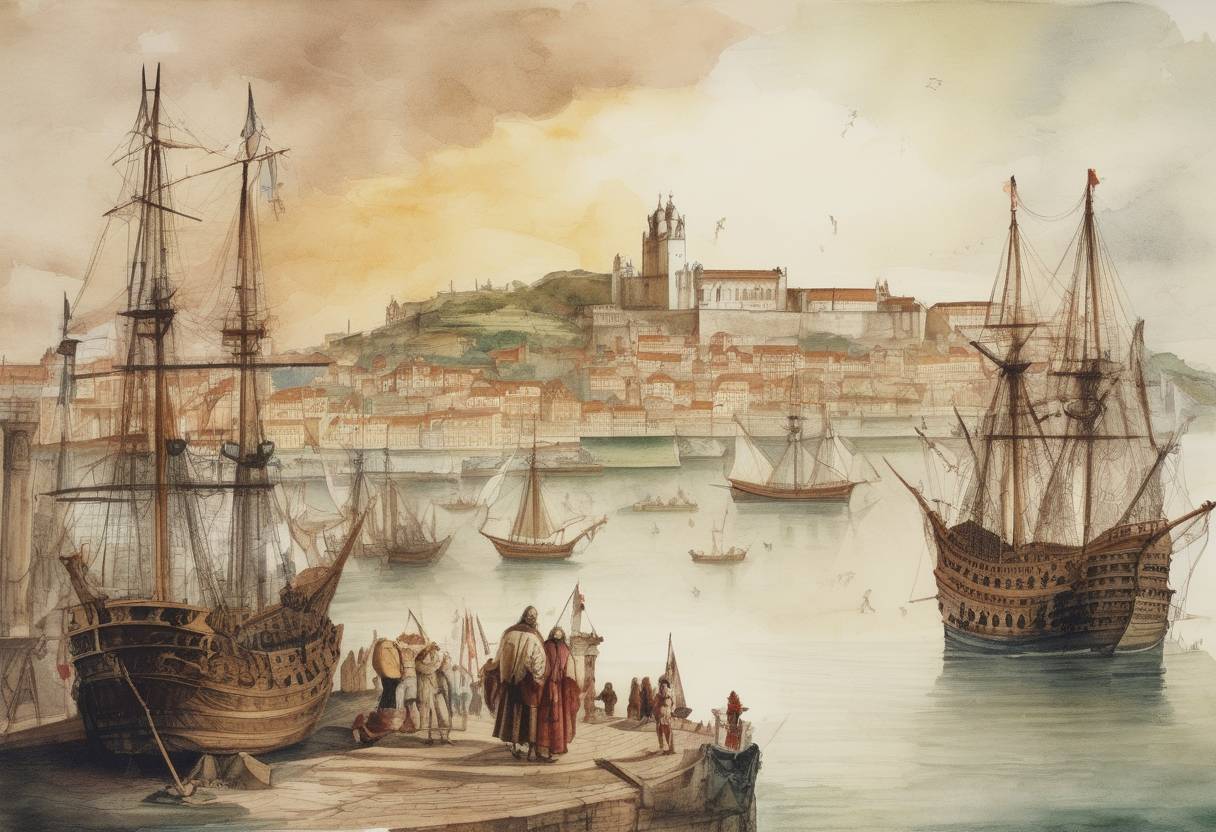
On March 4, 1493, Christopher Columbus made a significant return to Lisbon, Portugal, following his first voyage to the Americas. This event marked a pivotal moment in the Age of Exploration, as Columbus brought news of his discoveries back to Europe, setting the stage for further exploration and eventual colonization of the New World.
Christopher Columbus, an Italian navigator sailing under the auspices of the Spanish Crown, embarked on his first voyage across the Atlantic Ocean on August 3, 1492. His mission, backed by King Ferdinand II and Queen Isabella I of Spain, was to find a westward sea route to the lucrative markets of Asia. Instead, Columbus stumbled upon the islands of the Caribbean, which he initially believed to be part of the East Indies.
Departure from the New World: Columbus departed from the New World on January 16, 1493, after exploring several islands, including what is now known as the Bahamas, Cuba, and Hispaniola.
Storms and Detours: During the return journey, Columbus’s fleet encountered severe storms, which forced him to seek refuge. Initially aiming for Spain, the adverse weather conditions diverted his ship, the Niña, to the coast of Portugal.
Unexpected Arrival: Columbus’s arrival in Lisbon was unexpected. Portugal, a rival maritime power, was deeply invested in its own exploration efforts, primarily along the African coast and towards India.
Reception by King John II: Despite the competitive tensions, Columbus was received by King John II of Portugal. The Portuguese monarch was keenly interested in Columbus’s findings, as they had potential implications for Portugal’s own exploratory ambitions.
Return to Spain: After a brief stay in Lisbon, Columbus continued his journey to Spain, arriving in Palos de la Frontera on March 15, 1493. His return was met with great acclaim, and he was celebrated as a hero.
Impact on Exploration: Columbus’s voyage and subsequent return to Europe were instrumental in opening the Americas to European exploration and colonization. His reports of the New World sparked a wave of expeditions by other European powers, eager to explore and claim new territories.
Treaty of Tordesillas: The discoveries led to the negotiation of the Treaty of Tordesillas in 1494, which divided the newly discovered lands outside Europe between Portugal and Spain along a meridian 370 leagues west of the Cape Verde islands.
Columbus’s return to Lisbon on March 4, 1493, was a momentous event that not only marked the success of his first voyage but also set in motion a series of events that would profoundly alter the course of world history.
Source: en.wikipedia.org