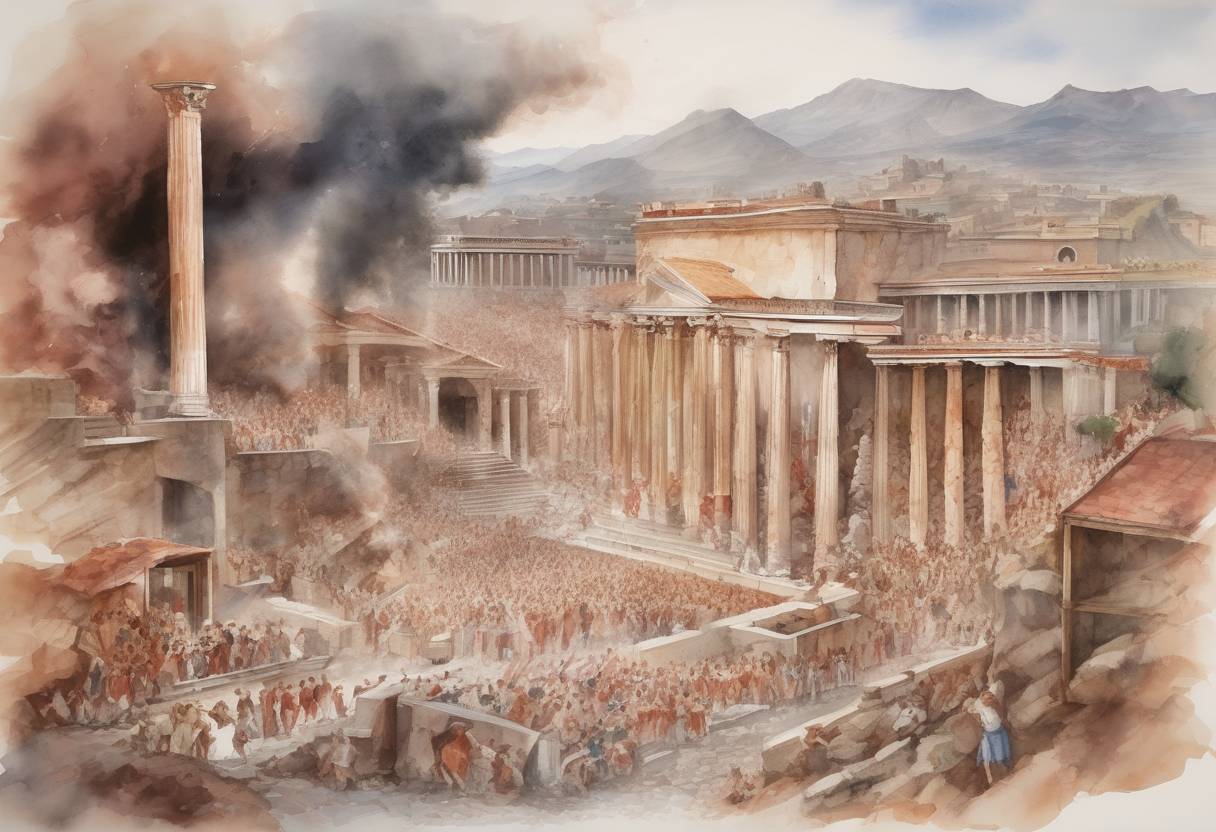
The Eruption of Mount Vesuvius: August 24-25, 79 AD
The catastrophic eruption of Mount Vesuvius in 79 AD is one of the most infamous volcanic events in history, leading to the destruction of the Roman cities of Pompeii, Herculaneum, and several other settlements. This event is a pivotal moment in ancient history, providing profound insights into Roman life and the power of natural disasters.
Context and Background
Mount Vesuvius is a stratovolcano located in the Gulf of Naples, Italy. Prior to the eruption in 79 AD, the region was a thriving area of the Roman Empire, known for its fertile land and prosperous cities. Pompeii and Herculaneum were bustling urban centers, with Pompeii being a significant commercial hub and Herculaneum a smaller, wealthier town.
The Eruption
The eruption began on August 24, 79 AD, although some historical sources suggest it may have started on August 24 or 25. The eruption unfolded over two days and can be divided into several phases:
Plinian Phase: Named after Pliny the Younger, who provided a detailed eyewitness account, this phase involved a massive column of volcanic debris and gases being ejected into the stratosphere. The column is estimated to have reached heights of up to 33 kilometers (20 miles).
Pyroclastic Surges and Flows: These fast-moving currents of hot gas and volcanic matter descended upon the surrounding areas, devastating everything in their path. Pompeii was buried under a thick layer of pumice and ash, while Herculaneum was engulfed by pyroclastic surges that preserved many of its structures and organic materials.
Impact and Aftermath
Destruction: The eruption resulted in the complete destruction of Pompeii, Herculaneum, and several other settlements. Thousands of inhabitants perished, with many bodies preserved in the ash, providing a haunting glimpse into the final moments of the victims.
Preservation: The volcanic material that buried these cities preserved buildings, artifacts, and even organic materials, offering an unparalleled archaeological record of Roman life. Excavations have revealed intricate frescoes, mosaics, and everyday items that provide insight into the culture, economy, and daily activities of the time.
Historical Significance: The eruption of Vesuvius has had a lasting impact on both historical scholarship and popular culture. It serves as a poignant reminder of the power of nature and the vulnerability of human settlements. The preserved sites of Pompeii and Herculaneum are UNESCO World Heritage Sites and continue to be major tourist attractions and subjects of academic study.
Conclusion
The eruption of Mount Vesuvius in 79 AD is a defining event in ancient history, illustrating the intersection of natural disaster and human civilization. The tragedy of Pompeii and Herculaneum has provided invaluable insights into Roman life and continues to captivate the imagination of people around the world.