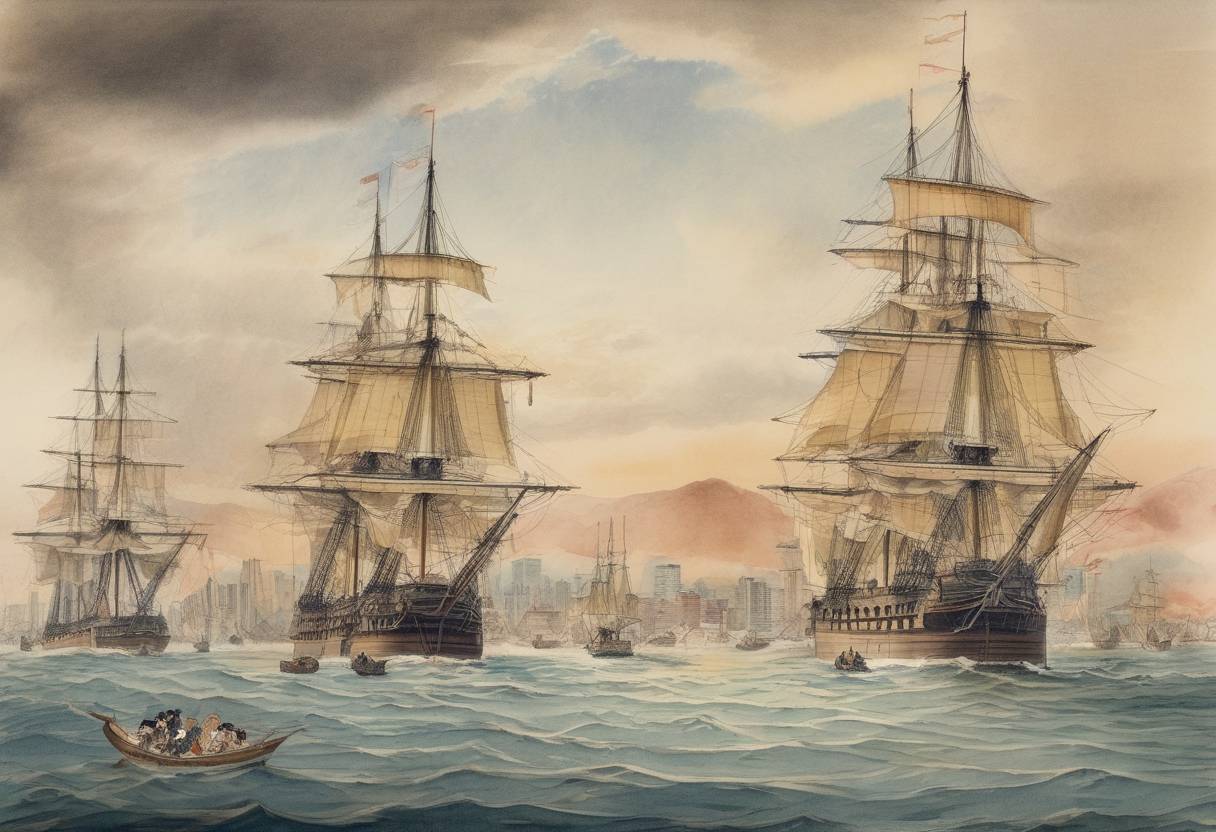
Commodore Matthew Perry’s Expedition to Japan - July 8, 1853
On July 8, 1853, Commodore Matthew Perry of the United States Navy sailed into Tokyo Bay, Japan, with a squadron of four ships. This event marked a pivotal moment in Japanese history, as it initiated the end of Japan’s over 200-year period of self-imposed isolation, known as sakoku.
Background
- Sakoku Policy: Since the early 17th century, Japan had adopted a policy of national seclusion under the Tokugawa shogunate. This policy restricted foreign influence and trade, allowing only limited interaction with the Dutch and Chinese through the port of Nagasaki.
- Western Interest: By the mid-19th century, Western nations, particularly the United States, were eager to open Japan to trade and establish diplomatic relations. The U.S. was motivated by the need for coaling stations for its steamships and the desire to expand its commercial reach in Asia.
The Expedition
- Commodore Matthew Perry: A seasoned naval officer, Perry was tasked by U.S. President Millard Fillmore to lead the mission to Japan. His orders were to negotiate a treaty that would open Japanese ports to American trade and ensure the humane treatment of shipwrecked sailors.
- The Squadron: Perry’s fleet consisted of four ships, including the steam-powered frigates USS Mississippi and USS Susquehanna, which demonstrated the technological advancements of the West and underscored the seriousness of the mission.
Arrival in Tokyo Bay
- First Contact: On July 8, 1853, Perry’s squadron entered Tokyo Bay, a bold move that surprised and alarmed the Japanese authorities. The sight of the “Black Ships,” as they were called due to their black hulls and billowing smoke, was a powerful display of Western naval power.
- Diplomatic Approach: Perry refused to meet with lower-ranking officials and insisted on delivering a letter from President Fillmore directly to a representative of the Japanese Emperor. This assertive stance was intended to convey respect and seriousness.
Consequences and Aftermath
- Treaty of Kanagawa: After months of deliberation and a return visit by Perry in 1854, Japan signed the Treaty of Kanagawa on March 31, 1854. This treaty opened the ports of Shimoda and Hakodate to American ships, established a U.S. consulate in Japan, and guaranteed better treatment for shipwrecked sailors.
- End of Isolation: Perry’s expedition effectively ended Japan’s isolationist policy and set the stage for the country’s rapid modernization and industrialization during the Meiji Restoration.
- Global Impact: The opening of Japan had significant implications for global trade and geopolitics, as it paved the way for other Western nations to establish similar treaties with Japan.
Commodore Perry’s mission to Japan is a landmark event in world history, symbolizing the intersection of Western imperial ambitions and the transformation of Japan into a modern state.