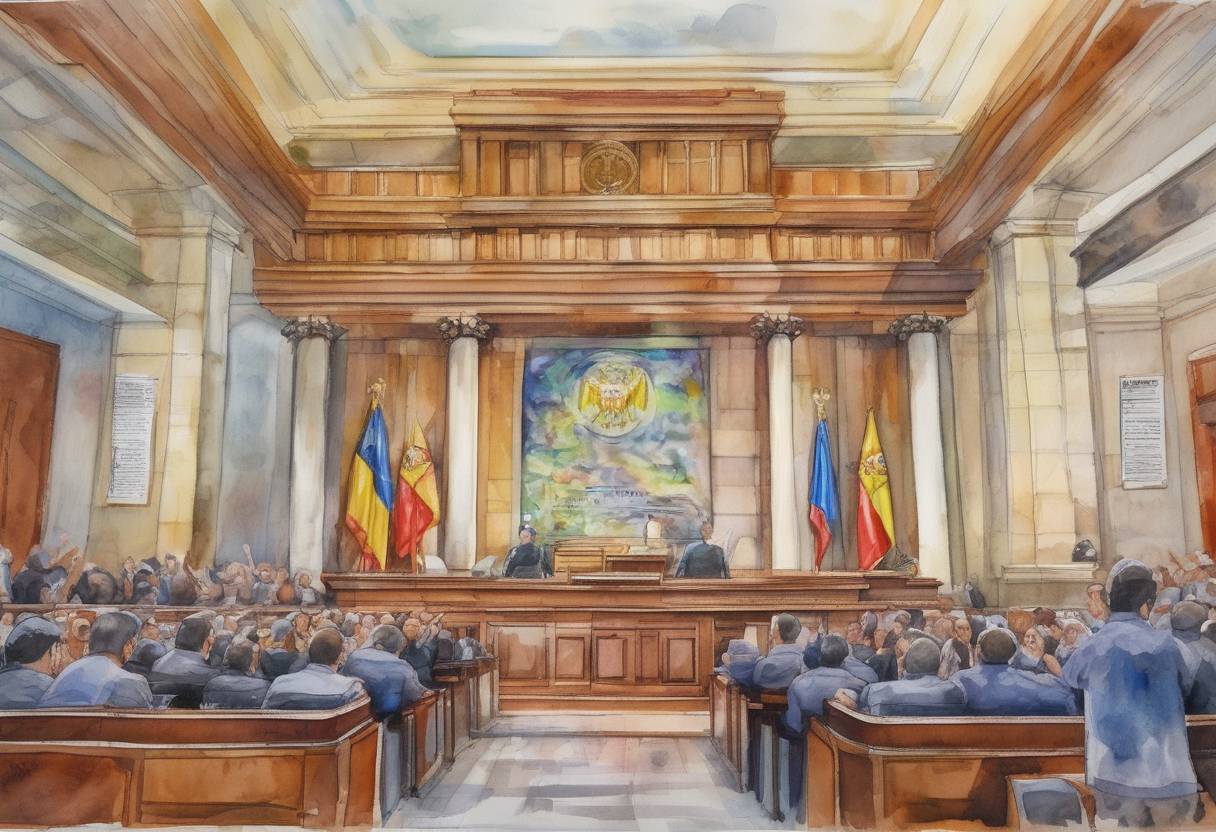
Venezuelan Supreme Court Reverses Decision - April 2, 2017
On April 2, 2017, the Venezuelan Supreme Court reversed its controversial decision to strip the National Assembly of its legislative powers. This reversal was a significant moment in the ongoing political crisis in Venezuela, which had drawn widespread protests and international condemnation.
Context and Background
Political Crisis: Venezuela had been experiencing a severe political and economic crisis, marked by hyperinflation, food and medicine shortages, and widespread social unrest. The crisis was exacerbated by a power struggle between President Nicolás Maduro and the opposition-controlled National Assembly.
Supreme Court’s Initial Decision: On March 29, 2017, the Supreme Court, which was seen as being aligned with President Maduro, issued a ruling that effectively dissolved the National Assembly and transferred its legislative powers to itself. This decision was justified by the court as a response to the Assembly’s alleged contempt of court.
Domestic and International Reaction: The ruling was met with immediate backlash both domestically and internationally. Opposition leaders and citizens took to the streets in protest, viewing the decision as a move towards authoritarianism. International bodies, including the Organization of American States (OAS) and several foreign governments, condemned the ruling as a breach of democratic norms.
The Reversal
Reversal Announcement: Amid mounting pressure, the Supreme Court reversed its decision on April 2, 2017. The reversal was announced after a meeting of the National Defense Council, which was convened by President Maduro.
Significance: The reversal was seen as a temporary de-escalation of the political crisis, but it did not resolve the underlying tensions between the government and the opposition. The opposition continued to demand the restoration of democratic processes and the release of political prisoners.
Aftermath and Consequences
Continued Protests: Despite the reversal, protests continued across the country, with citizens demanding broader political reforms and solutions to the economic crisis.
International Scrutiny: The incident further isolated Venezuela on the international stage, with many countries and organizations calling for increased scrutiny of the Maduro administration’s actions.
Long-term Impact: The events of early 2017 were part of a series of political confrontations that would continue to shape Venezuela’s political landscape, leading to further protests and international interventions in the following years.
The reversal of the Supreme Court’s decision was a pivotal moment in Venezuela’s ongoing struggle for democratic governance and highlighted the deep divisions within the country’s political system.