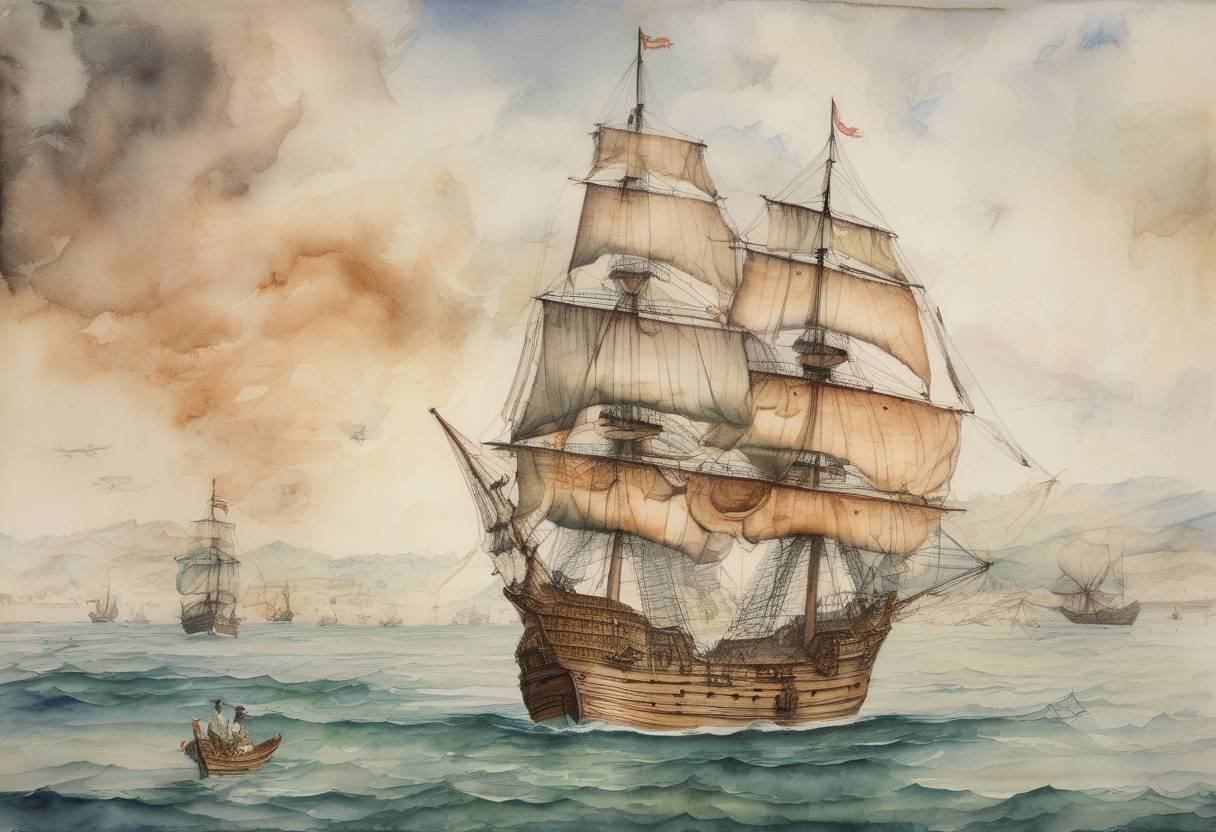
Sir Francis Drake Completes His Circumnavigation of the Globe
On September 26, 1580, Sir Francis Drake completed his historic circumnavigation of the globe, becoming the first Englishman to achieve this remarkable feat. This journey not only marked a significant milestone in the Age of Exploration but also had profound implications for England’s maritime ambitions and its rivalry with Spain.
Background
- Early Life and Career: Francis Drake was born around 1540 in Tavistock, Devon, England. He began his seafaring career at a young age, quickly gaining a reputation as a skilled navigator and privateer.
- Commission by Queen Elizabeth I: In 1577, Queen Elizabeth I commissioned Drake to lead an expedition against the Spanish along the Pacific coast of the Americas. This mission was part of England’s broader strategy to challenge Spanish dominance and expand its own influence.
The Voyage
- Departure: Drake set sail from Plymouth, England, on December 13, 1577, with a fleet of five ships. The flagship was the Pelican, later renamed the Golden Hind.
- Route and Challenges: The expedition faced numerous challenges, including treacherous weather, hostile encounters, and the loss of several ships. Drake navigated through the Strait of Magellan and ventured into the Pacific Ocean, where he raided Spanish settlements and captured valuable treasures.
- Pacific and Indian Oceans: After exploring the western coast of the Americas, Drake crossed the Pacific Ocean, reaching the Moluccas (Spice Islands) and then sailing through the Indian Ocean.
Completion of the Circumnavigation
- Return to England: On September 26, 1580, nearly three years after his departure, Drake returned to Plymouth aboard the Golden Hind. He was greeted as a hero and knighted by Queen Elizabeth I in 1581.
- Significance: Drake’s successful circumnavigation bolstered England’s maritime reputation and demonstrated the potential for English expansion and trade. It also intensified the rivalry with Spain, contributing to the tensions that would eventually lead to the Anglo-Spanish War.
Aftermath and Legacy
- Impact on Exploration: Drake’s voyage inspired further English exploration and colonization efforts, laying the groundwork for England’s future as a global maritime power.
- Cultural Influence: Drake became a legendary figure in English history, celebrated for his daring and adventurous spirit. His exploits were chronicled in numerous accounts, cementing his status as one of the most famous explorers of his time.
In conclusion, Sir Francis Drake’s circumnavigation of the globe was a landmark achievement in the history of exploration. It not only showcased the capabilities of English seafaring but also set the stage for England’s emergence as a dominant force in global exploration and trade.