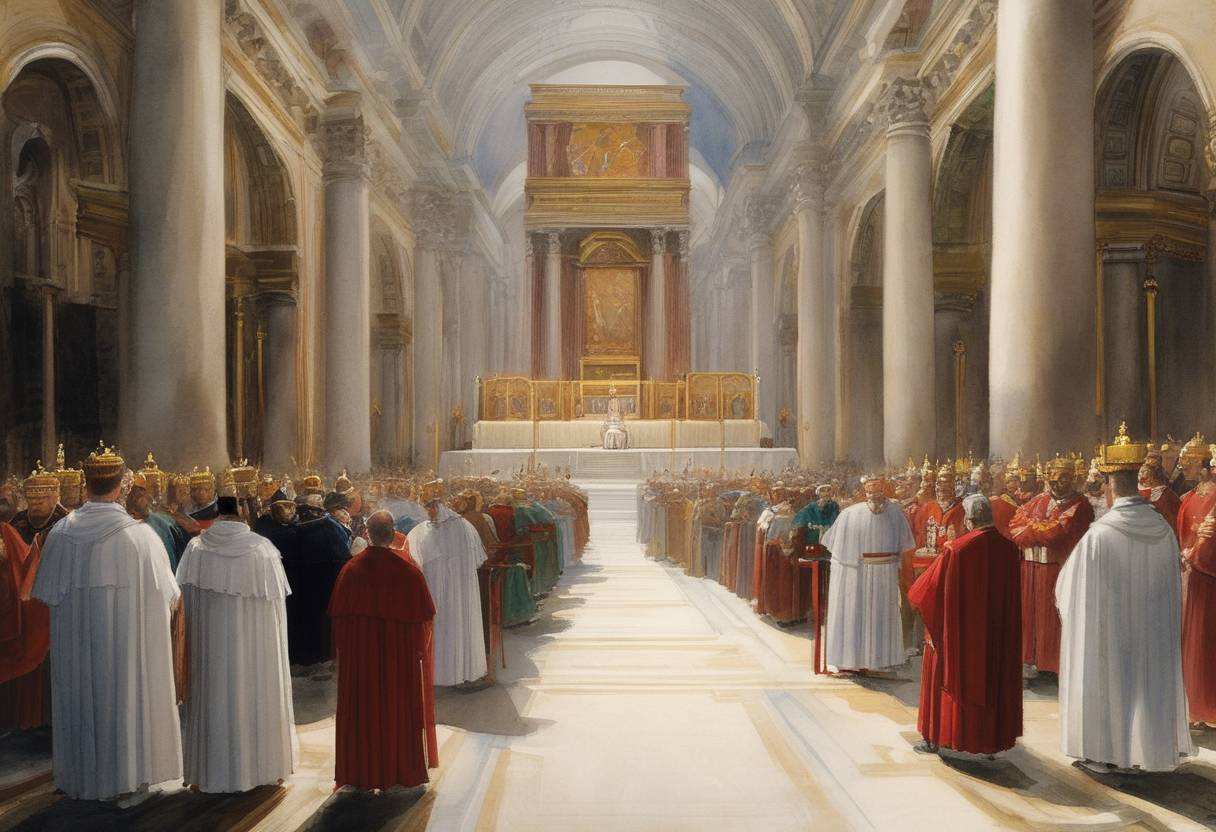
The Second Lateran Council
Opening Date
On April 8, 1139, the Second Lateran Council was convened by Pope Innocent II in Rome. This ecumenical council was primarily aimed at addressing significant internal issues within the Church and reaffirming essential Church doctrines.
Historical Context
The council was convened following a period of ecclesiastical dispute and political turmoil within the Church, specifically the papal schism sparked by the contested papal election of 1130. During this schism, Pope Innocent II faced opposition from Antipope Anacletus II. The council aimed to restore order and unity within the Church after the schism was resolved in Innocent II’s favor.
Key Resolutions
Clerical Celibacy
One of the pivotal issues addressed was the reaffirmation of clerical celibacy. The council reiterated the Church’s stance that all clergy members were required to adopt a life of celibacy. This was essential to maintaining the spiritual purity and dedication expected of the clergy.
Condemnation of Usury
The council also issued a condemnation of usury, the practice of charging interest on lent money. This was seen as a grave sin that contradicted Christian values of compassion and community.
Other Resolutions
Apart from these major topics, the council dealt with various disciplinary reforms within the Church. It enacted measures to regulate clerical conduct, curb simony (the buying or selling of ecclesiastical privileges), and reinforce ecclesial hierarchy and religious life.
Significance and Aftermath
The Second Lateran Council was significant for consolidating Church doctrine and authority following a turbulent period. By addressing issues such as clerical celibacy and usury, the council contributed to a marked shift in church policy and discipline, eventually influencing the medieval Church’s structure and practices. The resolutions of the council helped restore papal authority and set a precedent for future Church councils in regulating the clerical and doctrinal matters.
The Second Lateran Council thus played a crucial role in shaping the medieval Catholic Church, influencing its operation, governance, and its interactions with broader medieval European society.