William Caxton and the Printing of Aesop's Fables
1484 · Westminster, England
William Caxton printed his translation of Aesop's Fables, one of the earliest printed books in English.
November 25, 1477
William Caxton, an English merchant and diplomat, established the first book printed in English, "Dictes or Sayengis of the Philosophres," in his shop in Westminster, thus marking the start of printing in England.
Westminster, England | Caxton's Printing House
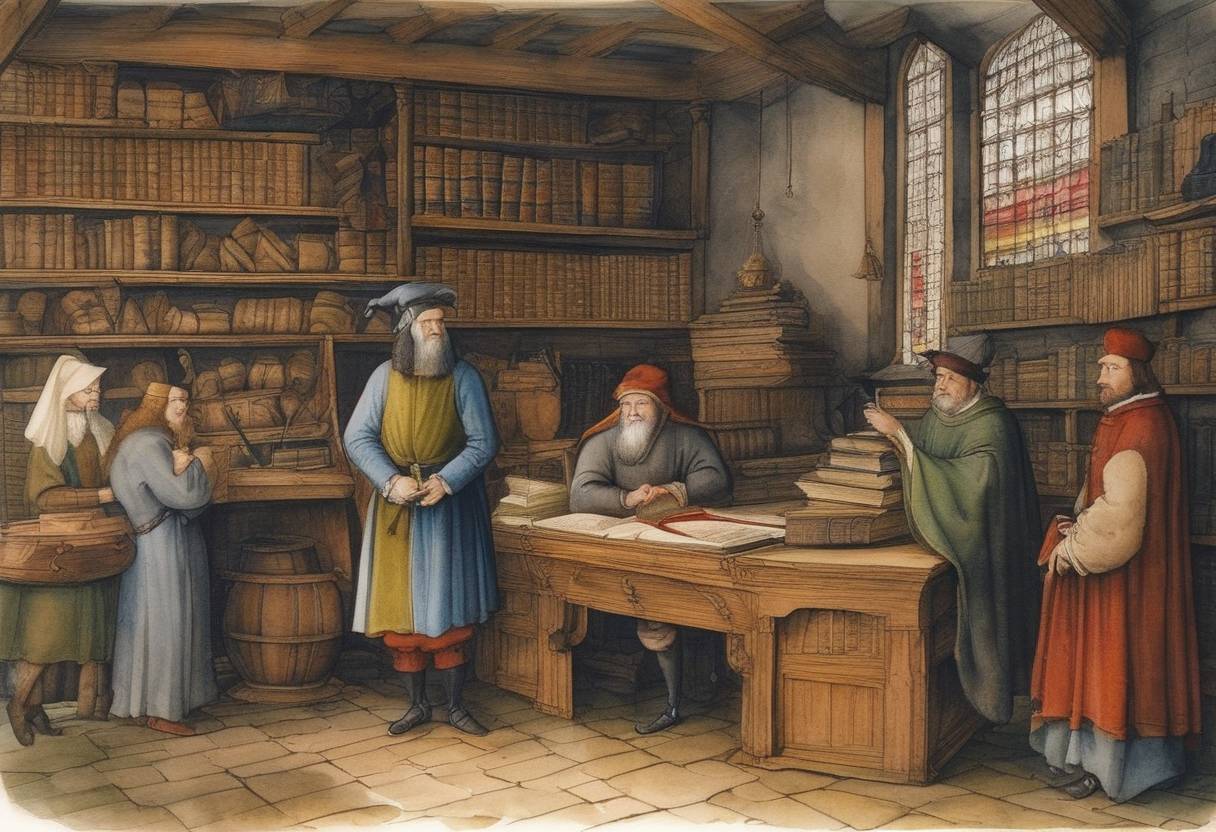
On November 25, 1477, William Caxton, an English merchant and diplomat, made history by printing the first book in English, “The Dictes or Sayengis of the Philosophres.” This landmark event took place at his shop located in Westminster, England, marking the commencement of the printing revolution in the country.
Caxton, originally a merchant in the wool trade, developed an interest in literature and the burgeoning technology of print during his time in the Low Countries, then part of Burgundy. While there, he learned the art of printing and recognized its potential to significantly broaden the accessibility of texts.
Before printing arrived in England, books were laboriously handwritten by scribes, making them expensive and scarce. With the advent of the printing press, books became more affordable and widely available, democratizing knowledge and learning.
“The Dictes or Sayengis of the Philosophres” is an English translation of a collection of moral and philosophical sayings attributed to various classical philosophers. The translation was done by Anthony Woodville, Earl Rivers, who was a close associate of the future King Edward V and the brother-in-law of King Edward IV.
Caxton’s printing work played a crucial role in standardizing the English language and its literature. It allowed for the mass production of texts, contributing significantly to the spread of literacy and learning. Caxton’s establishment of a printing press in Westminster set the foundation for the flourishing of English literature and scholarship in the years that followed.
This event on November 25, 1477, not only marked the beginning of the printing industry in England but also highlighted the importance of technological advancements in the proliferation of culture, knowledge, and education. Through his work, William Caxton is remembered as a pivotal figure in English history, instrumental in the transition from the medieval manuscript tradition to the modern era of print.
Source: www.britannica.com