Chartering of the University of Rome - August 31, 1303
1303 · Rome, Italy
On August 31, 1303, the University of Rome was chartered by Pope Boniface VIII.
April 20, 1303
The Sapienza University of Rome was founded by Pope Boniface VIII, becoming one of the world's oldest and most prestigious educational institutions.
Rome, Papal States (now Italy) | Catholic Church
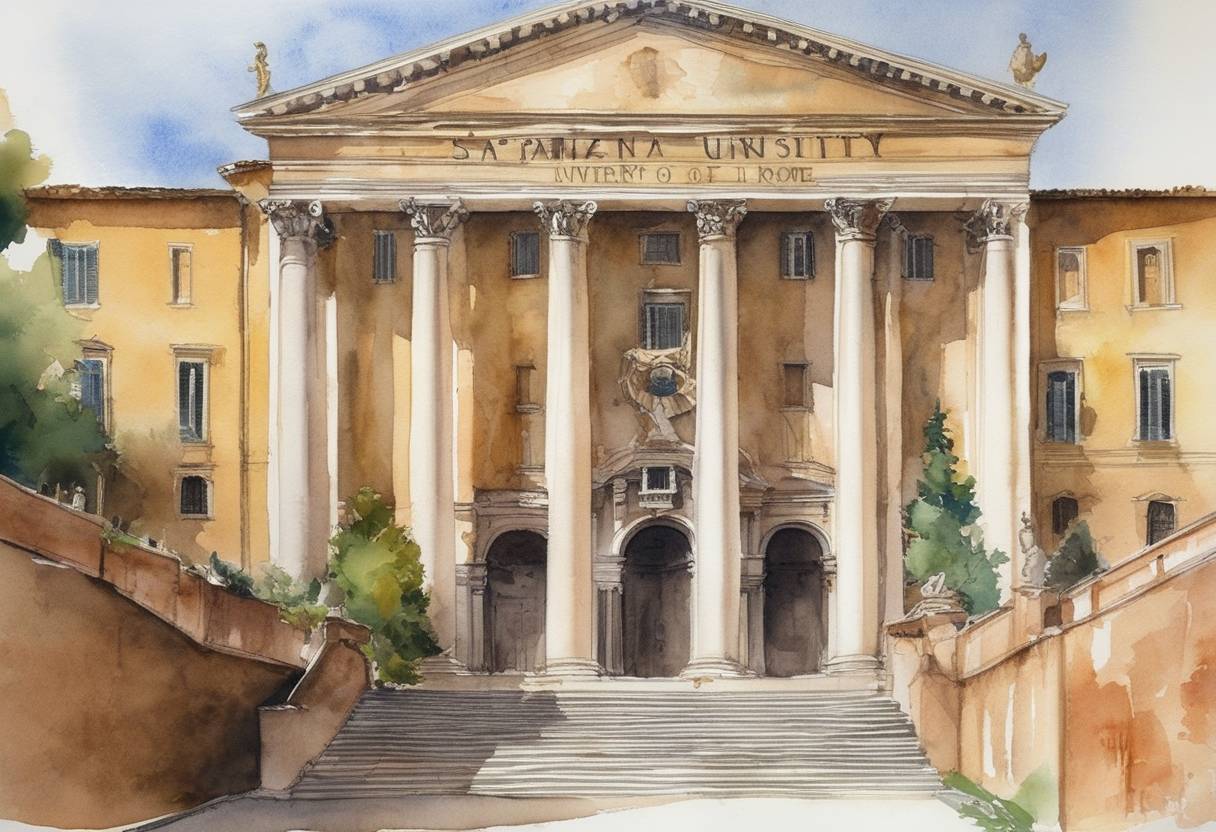
On April 20, 1303, Pope Boniface VIII officially established the Sapienza University of Rome, which has since become one of the world’s oldest and most esteemed institutions of higher learning. This foundation marked a significant development in the landscape of European education during the medieval period.
The early 14th century was a time when the church held significant sway over educational developments. Boniface VIII, known for his intellectual pursuits and appreciation of scholarship, sought to create an institution that would advance theological knowledge and improve the education of clergy within the Papal States and beyond.
The founding of the university was part of a broader movement during the Middle Ages to create centers of learning across Europe. This process was driven by the need for an educated clergy and administrators, as well as the growing influence of scholasticism, which emphasized structured debate and reasoning.
Initially, the university was established within Rome, a city of great religious and political importance. It attracted scholars from across Europe, becoming a nucleus where ideas and knowledge could be freely exchanged. The university originally emphasized the study of law, theology, philosophy, and natural sciences, reflecting the priorities and intellectual currents of the time.
The growth of Sapienza University contributed to Rome’s status as an intellectual and cultural center. It played a pivotal role in shaping the educational framework of Europe during the Renaissance, helping to foster a climate of intellectual inquiry and debate that would influence the course of Western civilization. The university’s influence extended beyond theology, fostering developments in law, medicine, and the natural sciences throughout its long history.
Sapienza University of Rome has retained its reputation for excellence through the centuries. It has produced countless notable alumni, including Nobel laureates, and continues to be a leader in research and education. Its founding on April 20, 1303, by Pope Boniface VIII stands as a significant milestone in the history of higher education, signifying the enduring value placed on learning and intellectual advancement.
Source: www.sapienza.it