The Soviet Union Captures Warsaw, Poland - January 17, 1945
1945 · Warsaw, Poland
The Soviet Union captures Warsaw, Poland, from Nazi Germany during World War II.
January 12, 1945
The Soviet Union began the Vistula-Oder Offensive in Eastern Europe against Nazi forces.
Warsaw, Poland | Red Army
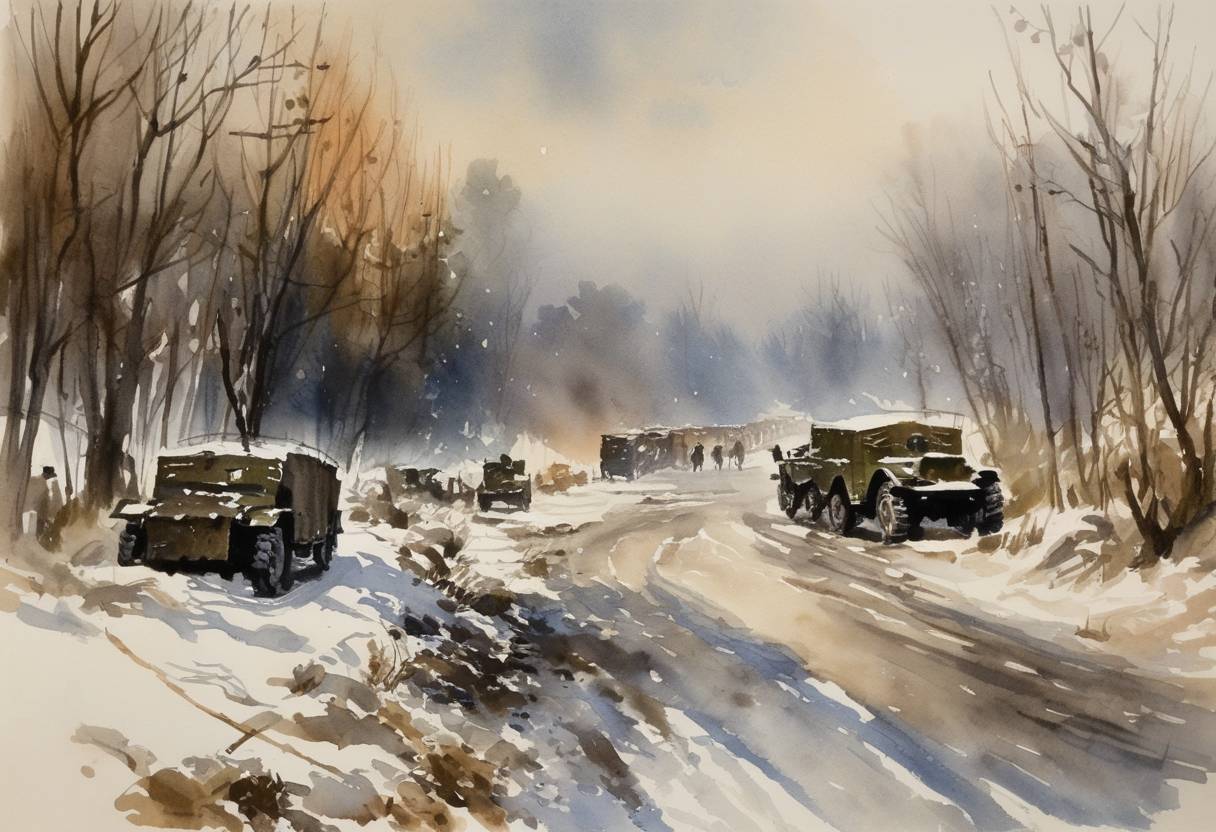
The Vistula-Oder Offensive was a major Red Army operation launched on January 12, 1945, during World War II. This strategic military assault was aimed at ending Nazi Germany’s occupation of Eastern Europe by advancing Soviet troops rapidly from the Vistula River in Poland to the Oder River in Germany.
The offensive came on the heels of the successful Soviet operations that liberated substantial portions of Eastern Europe from Nazi control. By late 1944, the Soviet Union had established powerful positions along the Vistula River, having worn down German forces through their relentless summer and autumn campaigns. The Red Army was poised to exploit the weakened Wehrmacht, which grappled with dwindling resources and a deteriorating strategic position.
Preparation and Forces: The offensive involved two main fronts—the 1st Byelorussian Front under the command of Marshal Georgy Zhukov and the 1st Ukrainian Front led by Marshal Ivan Konev. Combined, these forces numbered over 2.2 million soldiers and were equipped with thousands of tanks and aircraft.
Objectives and Strategy: The initial aims were to breach German defenses along the Vistula River, capture Warsaw, and push towards the Oder River, within striking distance of Berlin. Surprise and speed were critical components of the Soviet strategy, exploiting the poor winter conditions to mask troop movements.
Execution: The offensive commenced with a massive artillery bombardment, which demolished German defensive positions. Soviet tanks and infantry swiftly moved westward, encircling Warsaw and liberating the city on January 17. Continuing their advance, Soviet troops reached the Oder River by late January, just 70 kilometers (about 43 miles) from Berlin.
The Vistula-Oder Offensive was a decisive campaign that underscored the strategic prowess of Soviet military command and momentum gathered by Allied forces in the final months of World War II.
Source: www.worldwar2facts.org