1541 · Tula, present-day United States
Spanish conquistador Hernando de Soto entered Tula, an important Native American polity in present-day Arkansas.
May 9, 1540
Hernando de Soto, a Spanish explorer and conquistador, reached the Mississippi River, the first documented European to do so.
Mississippi River, Present-day United States | Spanish Crown
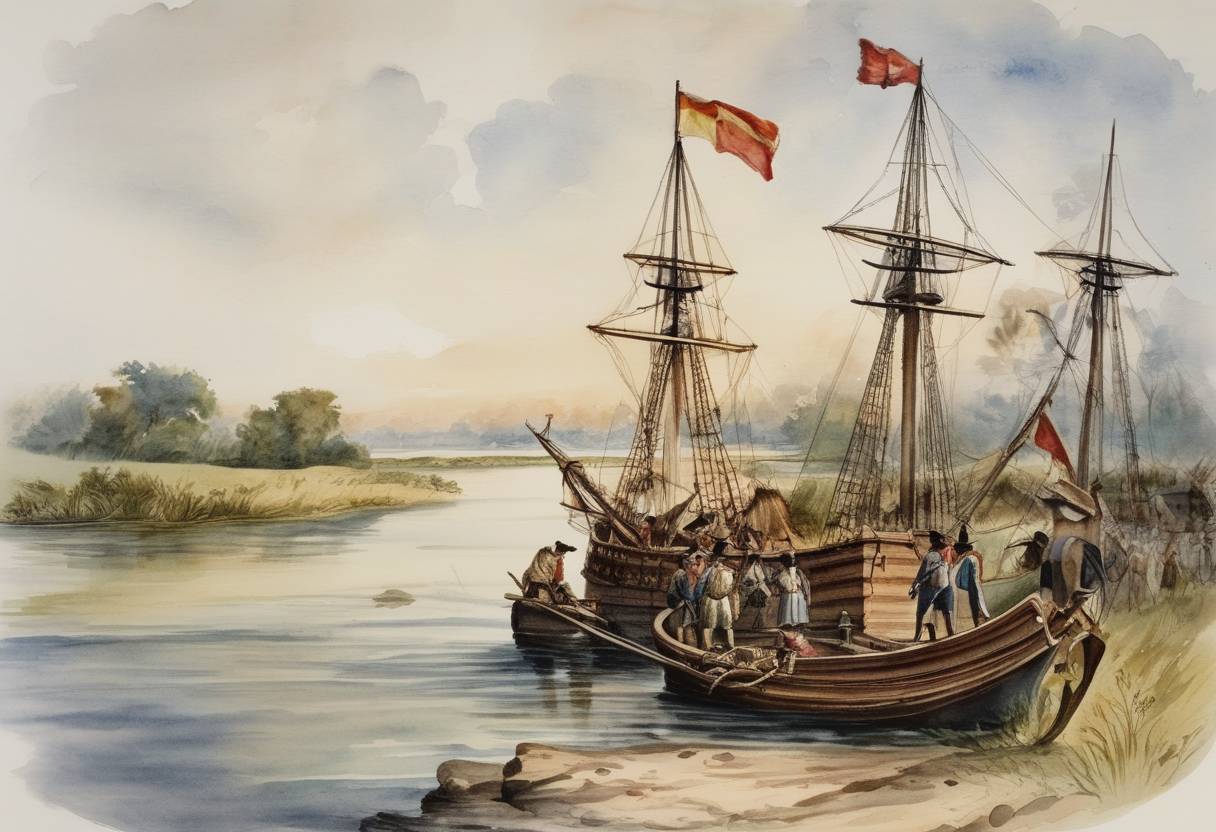
On May 9, 1540, Hernando de Soto, a Spanish explorer and conquistador, became the first European documented to discover the Mississippi River. This moment was a pivotal event in the European exploration of North America and marked a significant moment of intercultural contact.
De Soto had garnered considerable wealth and experience as part of the conquest of Peru alongside Francisco Pizarro. Buoyed by his success, he was granted the right to explore and colonize La Florida, a region then comprising much of the southeastern part of what is now the United States.
Setting out in 1539 with approximately 600 men, de Soto’s expedition traversed through parts of what are now the states of Florida, Georgia, South Carolina, and Alabama. The journey was marked by interactions with various Indigenous tribes, often resulting in conflicts due to de Soto’s aggressive tactics and quest for riches, particularly gold.
On May 9, 1540, during their northward trek through the southeastern territories, de Soto and his men reached the banks of the Mississippi River, near present-day Mississippi. This monumental discovery was recorded by the Spanish chroniclers accompanying the expedition, marking the first documented European encounter with one of America’s great rivers.
The discovery of the Mississippi River opened a gateway for subsequent exploration and eventual European colonization campaigns deeper into the North American interior. Although de Soto’s expedition did not result in the immediate wealth or colonization he had hoped for, it provided valuable geographic and cultural information.
De Soto continued his expedition, pushing further westward but suffering from numerous hardships, including dwindling supplies and hostile encounters with Indigenous peoples. He died on May 21, 1542, and was secretly buried in the Mississippi River by his men to conceal his death from the Native tribes, whom he had led to believe was an immortal deity.
The encounter with the Mississippi was part of the broader Age of Exploration, a period marked by European powers expanding their empires through exploration, conquest, and colonization. This event not only highlights the era’s spirit of discovery but also its complex legacies, including the cultural and territorial disruptions inflicted upon Indigenous populations.
De Soto’s journey laid the groundwork for future explorations and maps that further chronicled the North American continent, solidifying European interest and subsequent settlement in the area.