The East German Uprising of June 17, 1953
1953 · East Berlin, East Germany
The East German uprising occurs as workers protest against the government, leading to Soviet military intervention.
February 8, 1950
The Stasi, or Ministry for State Security, was established in East Germany to conduct domestic surveillance and espionage.
East Berlin, East Germany | Stasi
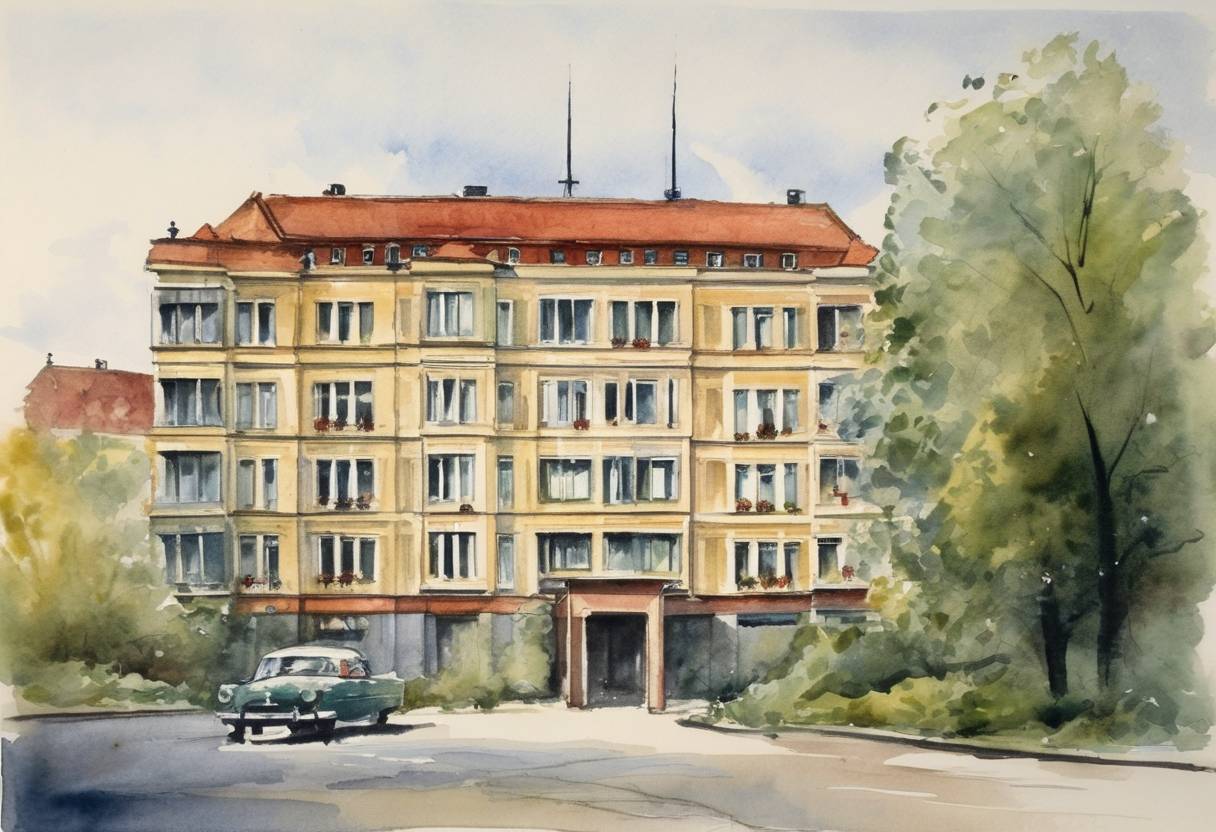
On February 8, 1950, the German Democratic Republic (GDR) formally established the Ministry for State Security, known as the “Stasi” (Staatssicherheit). The Stasi quickly became one of the most effective — and notorious — intelligence and secret police agencies in the world.
The creation of the Stasi took place in the context of the early Cold War era. Following World War II, Germany was divided into East and West, with the Eastern part governed by the Socialist Unity Party (SED) under Soviet influence. The East German government perceived a need for a formidable security apparatus to maintain its power and counteract perceived threats from the West, as well as from within its own borders.
From its inception, the Stasi was tasked with internal and external security. Domestically, it focused on surveillance, identifying and eliminating dissent, and maintaining the Communist Party’s control over East Germany. It employed a vast network of informants to monitor ordinary citizens’ activities, ensuring compliance and loyalty to the state. Estimates suggest there was approximately one informant for every 6.5 citizens at the height of its operation.
In the realm of foreign intelligence, the Stasi conducted espionage primarily directed at NATO countries and Western allies. It worked closely with the Soviet KGB to gather intelligence and to influence events beyond the Iron Curtain.
The Stasi’s headquarters was located in East Berlin, but its reach extended throughout the GDR via a network of regional offices. It utilized a range of methods, from wiretapping to personal observation, psychological intimidation, and infiltration of organizations. The Stasi archives, discovered after the fall of the Berlin Wall, revealed extensive records on millions of individuals.
The Stasi remained operational until the dissolution of East Germany in 1990. Its extensive surveillance activities have since become emblematic of the totalitarian control exercised by the GDR government. The archives serve as a stark reminder of the Stasi’s pervasive monitoring practices and have been instrumental in post-unification Germany’s process of reckoning with its communist past.
Today, the Stasi’s history is studied to understand the dynamics of state surveillance, the suppression of individual freedoms, and the broader impact of such practices on society. The physical remnants of the Stasi’s operations, including its headquarters, now serve as a museum dedicated to educating the public on the dangers of unchecked governmental power.
Source: en.wikipedia.org