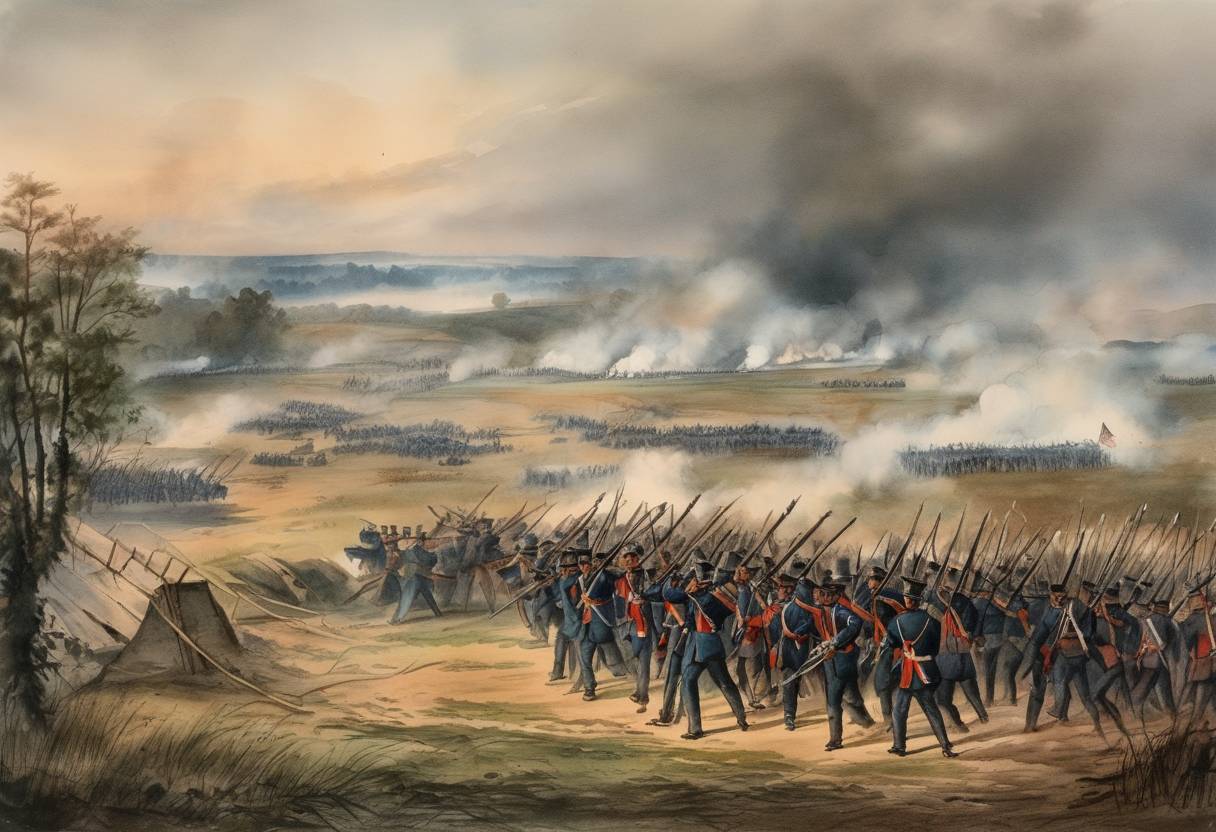
The Battle of Fort Stedman: March 25, 1865
The Battle of Fort Stedman, a pivotal engagement during the final stages of the American Civil War, took place on March 25, 1865. This battle was a desperate Confederate attempt to break through Union lines encircling Petersburg, Virginia. Led by Major General John B. Gordon, the Confederate forces aimed to disrupt Union supply lines and relieve pressure on General Robert E. Lee’s Army of Northern Virginia.
Context Leading to the Battle
By early 1865, the Confederate forces were under increasing pressure from Union troops who had laid siege to Petersburg since June 1864. The siege aimed to cut off crucial supply lines to the Confederate capital of Richmond, Virginia. In a last-ditch effort to alter the course of the war, Lee ordered Gordon to coordinate a surprise attack on the Union fortifications at Fort Stedman, potentially creating an opportunity for a breakthrough.
Key Events on March 25, 1865
Pre-Dawn Assault: The attack began in the early hours before dawn. Gordon’s forces silently advanced and initially succeeded in capturing Fort Stedman by surprising the Union defenders. The Confederates cut gaps in Union lines, aiming to exploit their advance and reach further into Union-held territory.
Union Response: The initial Confederate success was short-lived. Union troops quickly reorganized and launched a counterattack. Under the command of Major General John G. Parke, the Union forces conducted swift and coordinated maneuvers to reinforce their positions and encircle the breached area.
Retreat and Defeat: As the morning progressed, the Confederate troops, unable to maintain their advance, faced mounting losses and were forced to retreat back to their original positions. The Union counteroffensive successfully contained the breach, leading to significant Confederate casualties.
Aftermath and Significance
Casualties: The Confederates suffered approximately 4,000 casualties, including killed, wounded, and captured, while Union losses were significantly lower, estimated at around 1,000.
Strategic Impact: The failure of the Confederate assault at Fort Stedman weakened Lee’s army during a critical phase of the Overland Campaign. It diminished their ability to defend against subsequent Union attacks.
Prelude to Appomattox: The inability to break the siege of Petersburg foreshadowed the imminent collapse of the Confederate defense. This battle was among the final engagements before the eventual surrender of Lee’s army at Appomattox Court House on April 9, 1865, essentially ending the Civil War.
The Battle of Fort Stedman exemplified the desperation of the Confederate forces during the closing weeks of the Civil War and underscored the Union’s unwavering strategic advantage and effective military leadership leading up to the conflict’s conclusion.