The Yalta Conference: February 4, 1945
1945 · Yalta, Soviet Union
The Yalta Conference began, where Franklin D. Roosevelt, Winston Churchill, and Joseph Stalin met to discuss the post-war reorganization of Europe.
February 5, 1945
The Yalta Conference begins in Crimea, bringing together leaders Franklin D. Roosevelt, Winston Churchill, and Joseph Stalin to discuss the reorganization of post-World War II Europe.
Yalta, Soviet Union | Allied Powers
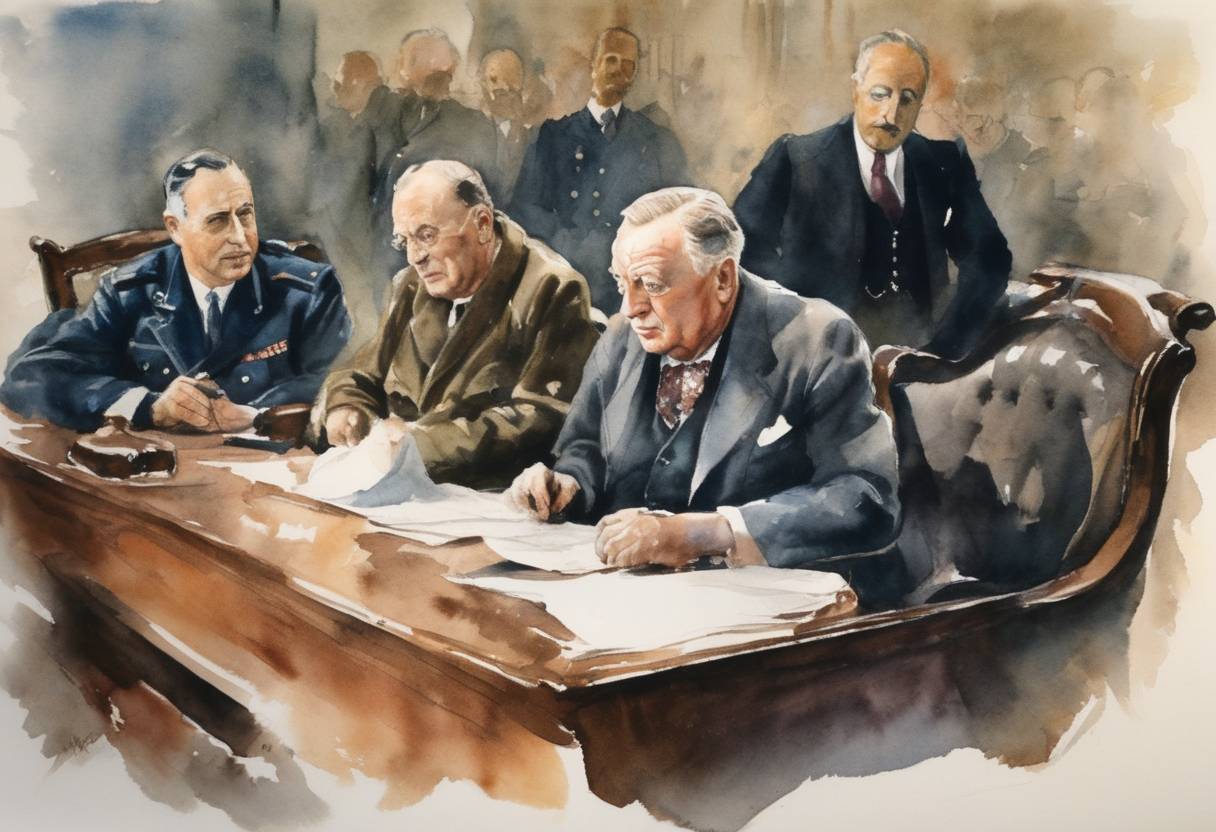
On February 5, 1945, the leaders of the Allied powers convened at the Livadia Palace in Yalta, Crimea, marking the beginning of the momentous Yalta Conference. This pivotal meeting was attended by U.S. President Franklin D. Roosevelt, British Prime Minister Winston Churchill, and Soviet Premier Joseph Stalin. The conference aimed to shape the post-World War II order and address critical issues facing the Allied forces as they anticipated the end of the conflict in Europe.
In the wake of significant military victories by the Allies in 1944, including the successful D-Day invasion and Soviet advances on the Eastern Front, it became increasingly clear that the defeat of Nazi Germany was imminent. The Big Three—Roosevelt, Churchill, and Stalin—sought to discuss strategies for establishing a stable and lasting peace, addressing territorial disputes, and laying the groundwork for the reconstruction of Europe.
During the conference, the following crucial topics were addressed:
Division of Germany and Berlin: The leaders agreed on the division of both Germany and its capital, Berlin, into occupation zones controlled by the United States, the United Kingdom, the Soviet Union, and later France. This division was intended to prevent any resurgence of German militarism.
Poland’s Future: A contentious issue, Poland’s future borders and government were discussed. Stalin’s Red Army occupied much of Poland, and it was agreed that Poland would receive territorial compensation in the west, with a pro-Soviet government to be installed.
United Nations Formation: Agreement on the establishment of the United Nations was solidified, with a focus on international cooperation and security. It was important to ensure that such an institution would prevent future global conflicts.
Soviet Entry into the War Against Japan: Stalin committed to joining the war against Japan within three months following Germany’s defeat, in return for concessions in Asia, including territorial interests in Manchuria and the Kuril Islands.
Free Elections in Eastern Europe: Roosevelt and Churchill secured agreements from Stalin to allow free elections in Eastern European countries liberated by the Soviet Union, although the implementation of this agreement proved problematic in subsequent years.
The Yalta Conference set the stage for the eventual formation of the geopolitical landscape during the Cold War era. While it succeeded in aligning the Allied powers on several fronts, systemic differences in political ideology and interpretation of agreements between the Western powers and the Soviet Union would later contribute to rising tensions and the eventual divide of Europe.
Several decisions made at Yalta, particularly concerning the future of Eastern Europe, led to criticism and accusations of appeasement towards Soviet expansion. However, the conference remains a critical moment in understanding how the Allies attempted to secure peace and manage the aftermath of one of the most destructive conflicts in human history.
Source: www.history.com