The Premiere of Igor Stravinsky's *The Rite of Spring*
1913 · Paris, France
Igor Stravinsky's ballet 'The Rite of Spring' premiered in Paris, causing a riot due to its avant-garde music and choreography.
June 25, 1910
Igor Stravinsky's ballet 'The Firebird' premiered at the Opéra de Paris.
Paris, France | Opéra de Paris
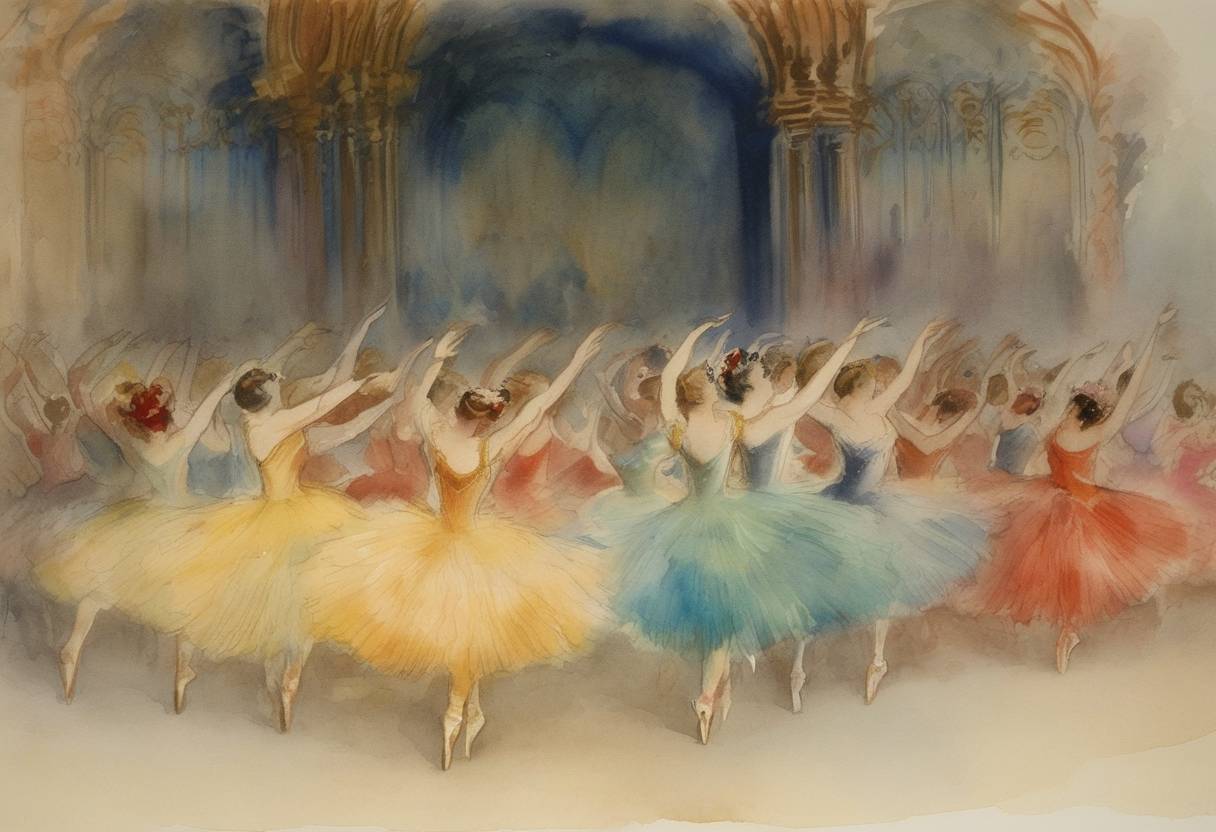
Igor Stravinsky’s ballet ‘The Firebird’ premiered on June 25, 1910, at the Opéra de Paris. This event marked a pivotal moment in Stravinsky’s career, establishing him as a leading composer of the 20th century. The ballet was a production of Sergei Diaghilev’s Ballets Russes, a company renowned for its innovative and avant-garde contributions to dance and music.
The narrative of ‘The Firebird’ is based on Russian fairy tales, centering around the mythical creature, the Firebird, and Prince Ivan, who captures her. In exchange for her freedom, the Firebird offers him a magical feather and later assists him in overcoming the evil sorcerer Kashchei.
The premiere in Paris was an immediate success, celebrated for its innovative fusion of Russian cultural motifs and modernist musical and artistic elements. The Opéra de Paris audience was enthralled by Stravinsky’s vivid orchestration, which vividly depicted the fantastical world of the ballet.
Following the triumphant debut, ‘The Firebird’ continued to be performed frequently by the Ballets Russes and remains a staple in the repertoire of ballet companies worldwide. Stravinsky’s score, notably its orchestral suites, is celebrated independently in concert halls globally.
The success of ‘The Firebird’ reinforced the reputation of the Ballets Russes as a transformative force in the arts, while also launching Stravinsky as a titular figure in the modernist movement.
Source: en.wikipedia.org