Zimbabwe's 2018 General Election
2018 · Harare, Zimbabwe
Zimbabwe holds its first general election since the resignation of Robert Mugabe, with Emmerson Mnangagwa winning the presidency amid allegations of electoral fraud.
June 22, 2008
Zimbabwe holds a presidential run-off election between Robert Mugabe and Morgan Tsvangirai amidst widespread controversy and violence.
Harare, Zimbabwe | Zimbabwe Electoral Commission
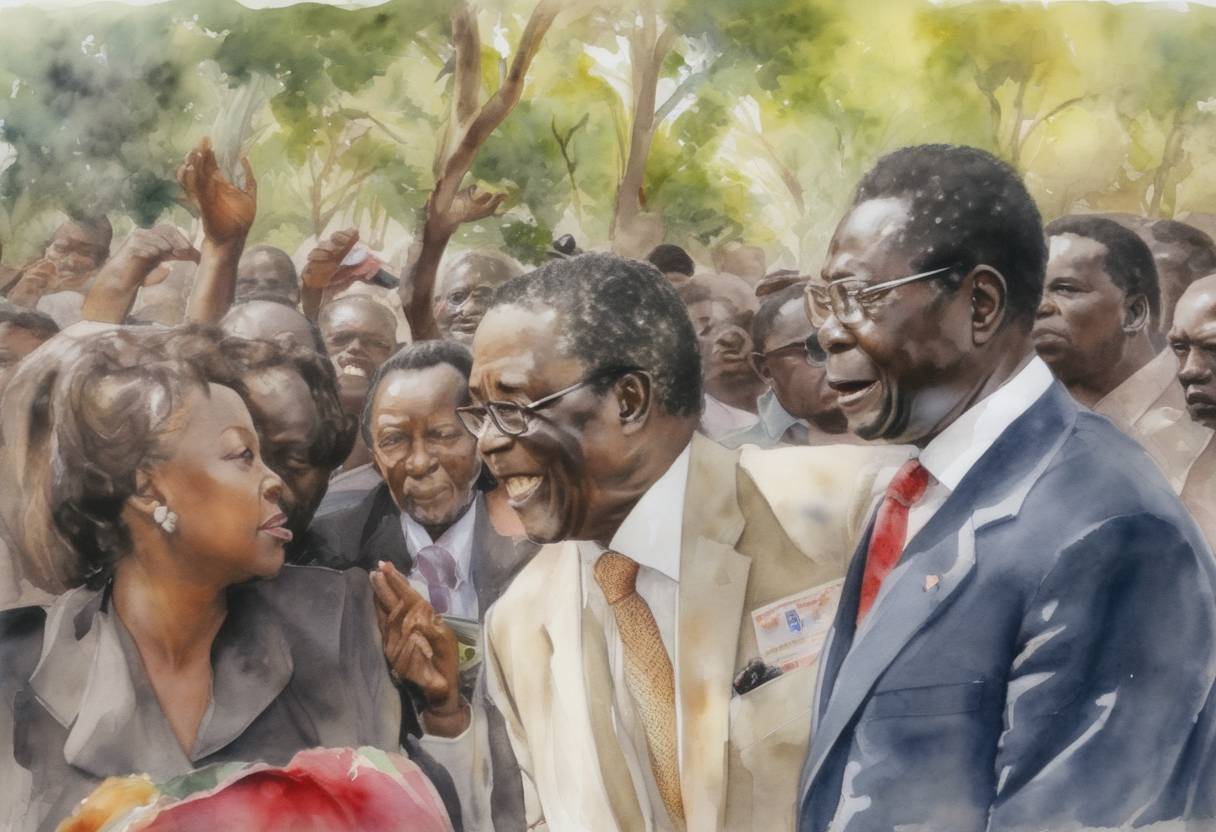
On June 22, 2008, Zimbabwe was expected to hold a presidential run-off election between incumbent President Robert Mugabe and opposition leader Morgan Tsvangirai. This election followed the initial round of voting which took place on March 29, 2008, where Tsvangirai, leader of the Movement for Democratic Change (MDC), won more votes than Mugabe, who led the Zimbabwe African National Union – Patriotic Front (ZANU-PF). However, Tsvangirai did not achieve the necessary majority to avoid a second round, necessitating a run-off.
The political climate in Zimbabwe was tense and fraught with economic hardship, characterized by hyperinflation and political unrest. The March election results, although showing a lead for Tsvangirai, were delayed in their announcement, leading to suspicions of manipulation. The ensuing period saw an escalation of violence and intimidation primarily targeted at MDC supporters. Human rights organizations reported widespread abuses, including assaults, harassment, and displacement aimed at swaying the electorate through fear.
Amidst escalating violence, the credibility of the electoral process was severely undermined. International observers and human rights groups criticized the environment as not conducive to a free and fair election. The MDC reported that over 80 of its supporters were killed, thousands were injured, and countless others were displaced due to orchestrated violence by government-backed militias and security forces.
In response to the widespread violence and electoral irregularities, Morgan Tsvangirai announced his withdrawal from the run-off on June 22, 2008, citing the impossibility of a fair election under the prevailing conditions. His withdrawal was formalized on June 23, 2008, although it did not stop the election process.
Despite Tsvangirai’s withdrawal, the run-off proceeded on June 27, 2008, with Mugabe as the sole candidate. Consequently, Mugabe declared victory, and was swiftly inaugurated for another term. The international community widely criticized the election, with several Western nations and regional bodies condemning the process and refusing to recognize the legitimacy of the outcome.
The events highlighted the deep political crisis in Zimbabwe, drawing attention to the need for reform and negotiations between the contending parties. The crisis eventually led to a power-sharing agreement in September 2008, mediated by the Southern African Development Community (SADC), which resulted in the formation of a Government of National Unity with Mugabe as President and Tsvangirai as Prime Minister.
This period in Zimbabwe’s history is significant as it underscored the challenges of electoral democracy in a politically polarized and economically unstable environment. It served as a critical moment that forced both regional and global actors to re-evaluate their strategies concerning governance and conflict resolution in Zimbabwe.
Source: www.bbc.com