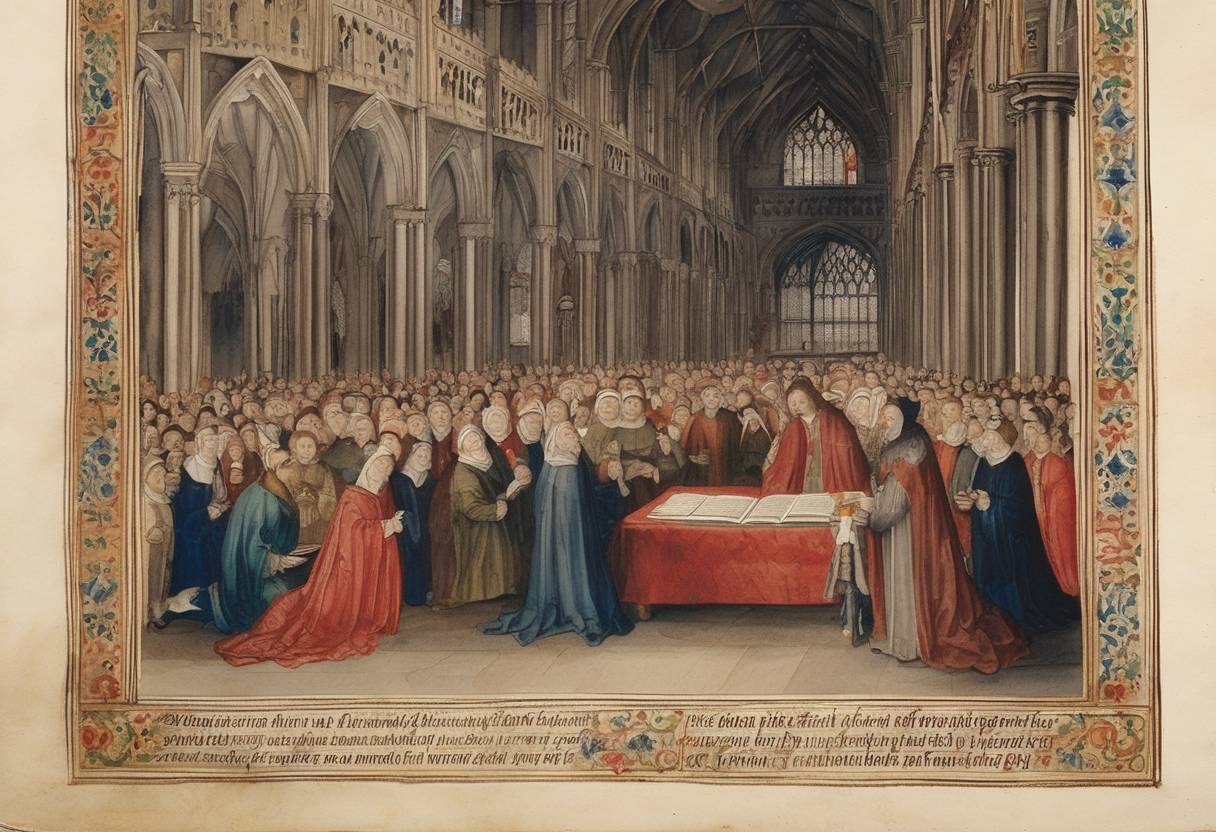
Translation and First Use of the English Book of Common Prayer - June 9, 1549
On June 9, 1549, a significant event unfolded in England as the Book of Common Prayer, translated into English, was utilized in its first national church service. This milestone was declared by King Edward VI, marking an essential development in the history of English Christianity and the Reformation.
Context and Background
The Book of Common Prayer was conceived during the English Reformation, a period of religious transformation initiated under King Henry VIII and continued by his son, Edward VI. The aim was to create a uniform and standardized form of worship, reflecting Protestant principles. Until this point, church services in England were conducted in Latin, which was not understood by the majority of congregants. The introduction of the English Book of Common Prayer was a move towards making religious services more accessible to the common people.
Key Developments Leading to June 9, 1549
Archbishop Thomas Cranmer: A leading figure in the English Reformation, Cranmer played a pivotal role in compiling and editing the Book of Common Prayer. His work was instrumental in incorporating Reformation theology into English liturgy.
Act of Uniformity 1549: This Act of Parliament, passed in January 1549, made it mandatory for the Book of Common Prayer to be used in all churches in England. It legally established English as the language of religious services.
Significance of the Event
The first use of the Book of Common Prayer on June 9, 1549, in public worship marked a profound cultural and religious shift. It was a clear demonstration of England’s commitment to the Protestant cause and the break from Roman Catholic practices. This change directly impacted religious practices, clergy responsibilities, and the laity’s engagement in the church.
Consequences and Aftermath
Widespread Adoption: The use of the Book of Common Prayer became widespread throughout England, aligning religious worship with Protestant ideals.
Reactions and Resistance: Despite its significance, the introduction of the prayer book was met with resistance, particularly in regions with strong Catholic sympathies. Notably, the Prayer Book Rebellion in the summer of 1549 saw uprisings in Devon and Cornwall.
Long-term Influence: The Book of Common Prayer would be revised several times, but its initial publication laid the groundwork for a uniquely English approach to worship, influencing Anglican liturgy to the present day.
The introduction of the Book of Common Prayer in 1549 is a cornerstone event in religious history, highlighting the complex interplays of power, theology, and language during a transformative era in England.