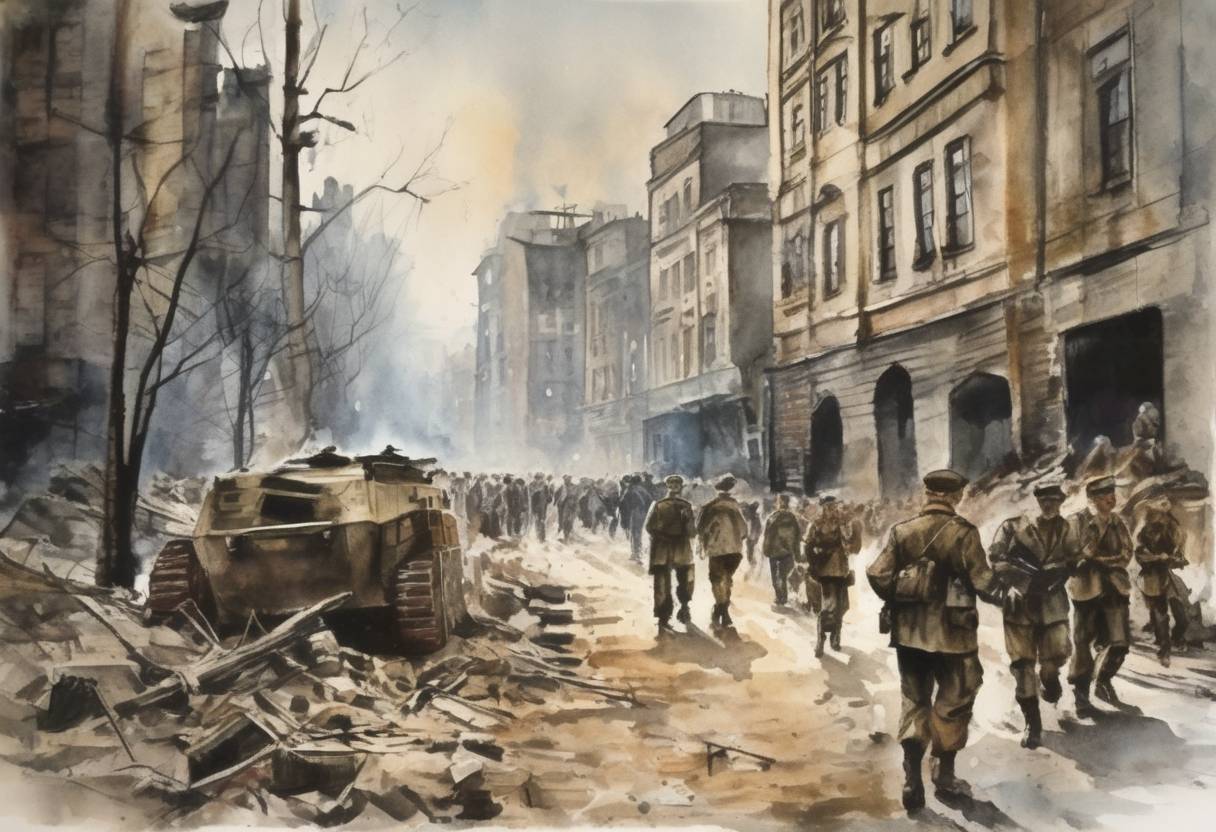
The Warsaw Uprising: August 1, 1944
On August 1, 1944, the Warsaw Uprising began as a major operation by the Polish resistance movement, the Home Army (Armia Krajowa), to liberate Warsaw from German occupation during World War II. This event marked a significant moment in Polish history and the broader context of the war in Europe.
Background
- German Occupation: Since the invasion of Poland in 1939, Warsaw had been under brutal German occupation. The Polish population suffered severe repression, including mass executions, deportations, and forced labor.
- Polish Resistance: The Home Army, the primary resistance force in Poland, was loyal to the Polish government-in-exile based in London. By 1944, it had grown to be a formidable underground military organization.
- Strategic Timing: The uprising was timed to coincide with the Soviet Union’s advance into Poland. The Polish resistance hoped to liberate Warsaw before the Soviets arrived, thereby asserting Polish sovereignty and preventing a Soviet takeover.
The Uprising
- Commencement: At 5:00 PM on August 1, 1944, the Home Army launched its attack against the German forces in Warsaw. The operation was codenamed “W Hour” (Godzina “W”).
- Initial Successes: The resistance initially captured significant parts of the city, including key buildings and infrastructure. However, they faced a well-armed and numerically superior German force.
- German Counterattack: The Germans, under the command of SS General Erich von dem Bach-Zelewski, responded with overwhelming force, including air raids, artillery bombardments, and the deployment of elite SS units.
Consequences
- Duration and Casualties: The uprising lasted for 63 days, ending on October 2, 1944. It resulted in the deaths of approximately 16,000 Polish resistance fighters and between 150,000 and 200,000 Polish civilians. The city was left in ruins.
- Soviet Inaction: Despite being positioned nearby, the Soviet Red Army did not intervene to assist the Polish fighters. This inaction has been attributed to Stalin’s political motives, as he aimed to weaken the Polish resistance and facilitate Soviet control over Poland post-war.
- Aftermath: Following the uprising, the Germans systematically destroyed much of what remained of Warsaw. The failure of the uprising led to a tragic loss of life and further devastation of the city.
Historical Significance
- Symbol of Resistance: The Warsaw Uprising remains a powerful symbol of Polish resistance and the struggle for national sovereignty.
- Post-War Impact: The event had lasting implications for Poland’s post-war history, as it influenced the country’s political landscape and its relationship with the Soviet Union.
- Commemoration: Today, the Warsaw Uprising is commemorated annually in Poland, honoring the bravery and sacrifice of those who fought for freedom.
The Warsaw Uprising stands as a testament to the resilience and courage of the Polish people during one of the darkest periods of their history.