Vasco da Gama's Second Voyage to India - February 12, 1502
1502 · Lisbon, Portugal
Vasco da Gama sets sail from Lisbon, Portugal, on his second voyage to India, further establishing the sea route around the Cape of Good Hope.
July 8, 1497
Portuguese explorer Vasco da Gama set sail from Lisbon, Portugal, on a mission to reach India and open a sea route from Europe to the East.
Lisbon, Portugal | Portuguese Crown
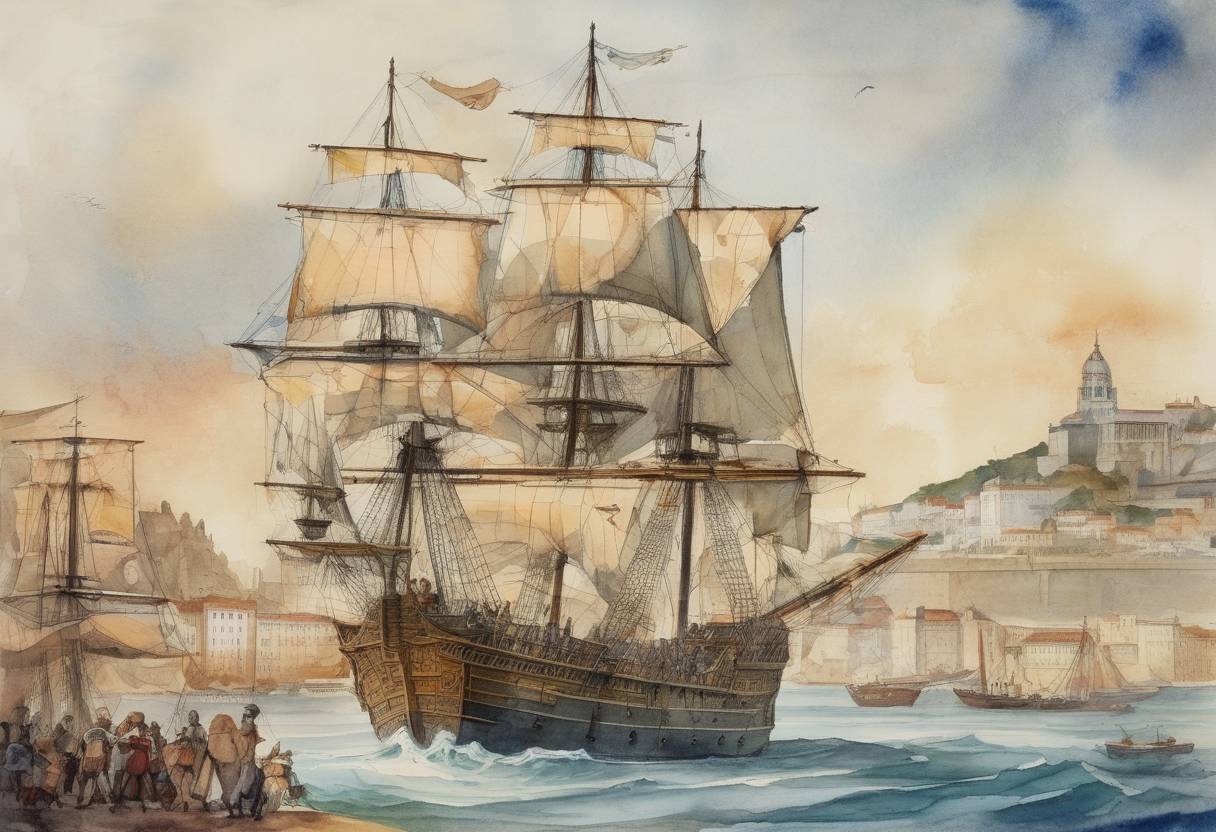
On July 8, 1497, the Portuguese explorer Vasco da Gama embarked on a historic voyage from Lisbon, Portugal, with the ambitious goal of establishing a sea route to India. This expedition marked a pivotal moment in the Age of Discovery, as it aimed to secure a direct maritime path to the lucrative spice markets of the East, bypassing the overland routes dominated by Middle Eastern and Venetian traders.
Portugal’s Maritime Ambitions: By the late 15th century, Portugal had emerged as a leading maritime power, driven by the desire to expand trade and spread Christianity. Under the guidance of Prince Henry the Navigator, Portuguese explorers had already made significant advances along the West African coast.
The Spice Trade: Spices such as pepper, cinnamon, and cloves were highly prized in Europe for their culinary and preservative qualities. The traditional overland trade routes were long, expensive, and controlled by various intermediaries, prompting European powers to seek alternative routes.
King Manuel I’s Vision: King Manuel I of Portugal was determined to break the monopoly of the spice trade held by the Venetians and the Ottomans. He commissioned Vasco da Gama to find a direct sea route to India, building on the earlier explorations of Bartolomeu Dias, who had rounded the Cape of Good Hope in 1488.
Fleet Composition: Vasco da Gama’s fleet consisted of four ships: the São Gabriel, the São Rafael, the Berrio, and a supply ship. The fleet was equipped with the latest navigational tools and manned by experienced sailors.
Route and Challenges: The expedition sailed south along the West African coast, rounded the Cape of Good Hope, and then navigated the eastern coast of Africa. The journey was fraught with challenges, including treacherous seas, scurvy, and hostile encounters with local populations.
Reaching Calicut: In May 1498, after nearly a year at sea, Vasco da Gama and his fleet arrived at the port of Calicut (now Kozhikode) on the southwestern coast of India. This marked the first time a European fleet had reached India by sea.
Diplomatic and Trade Efforts: Da Gama’s initial attempts to establish trade relations were met with mixed success. While he managed to secure some spices, the local rulers were wary of the Portuguese intentions and unimpressed by the goods offered in exchange.
Return to Portugal: Vasco da Gama returned to Portugal in 1499, hailed as a hero. His successful voyage demonstrated the feasibility of a sea route to India, paving the way for future expeditions.
Impact on Global Trade: The opening of the sea route to India had profound implications for global trade. It led to the establishment of a Portuguese colonial empire in Asia and significantly altered the balance of power in the spice trade.
Legacy: Vasco da Gama’s expedition marked the beginning of European colonialism in Asia and the integration of the Indian Ocean into the global economy. It also set the stage for subsequent explorations and the eventual European dominance of the seas.
Vasco da Gama’s journey was a monumental achievement in the history of exploration, symbolizing the relentless pursuit of knowledge and wealth that characterized the Age of Discovery.
Source: en.wikipedia.org