Execution of Robert Devereux, 2nd Earl of Essex - February 25, 1601
1601 · London, England
Robert Devereux, 2nd Earl of Essex, is executed for treason following his unsuccessful rebellion against Queen Elizabeth I of England.
December 28, 1598
The Earl of Essex, Robert Devereux, is made Lord Lieutenant of Ireland. His appointment is part of the broader English efforts to quell unrest in Ireland during the Nine Years' War.
London, England | English Crown
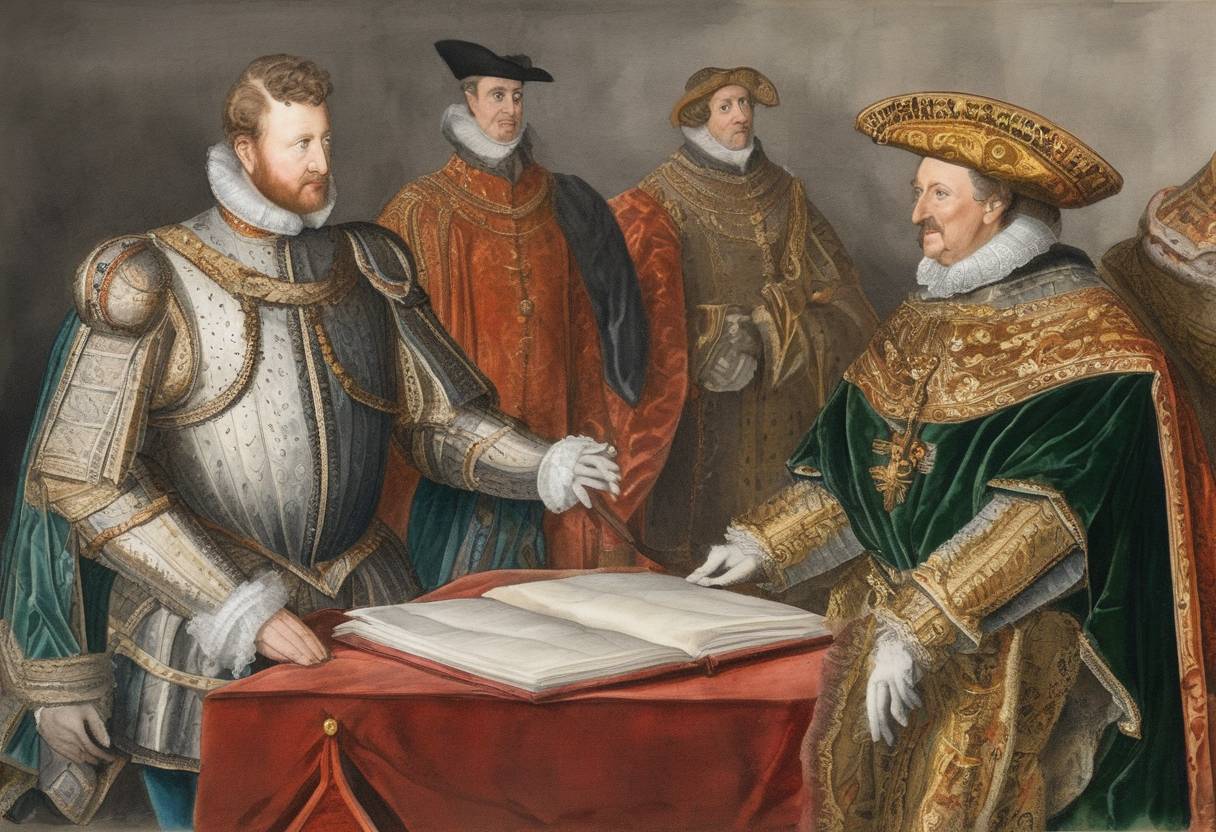
On December 28, 1598, Robert Devereux, the 2nd Earl of Essex, was appointed the Lord Lieutenant of Ireland, a significant military role within the context of the ongoing Nine Years’ War (1593–1603). This war was primarily a conflict between the English government and an alliance of Gaelic Irish chiefs led by Hugh O’Neill, the Earl of Tyrone. It was one of the largest and most protracted conflicts of Elizabethan Ireland aimed at resisting the Tudor conquest of Ireland.
Nine Years’ War (Ireland): The war, also known as Tyrone’s Rebellion, was ignited by tensions over English encroachments on Gaelic Irish territories and attempts to impose English law and Protestantism. This conflict was exacerbated by the centralization efforts under the Tudor monarchy aiming to integrate Ireland more closely under English control.
Robert Devereux: A favorite of Queen Elizabeth I, Devereux was a charismatic yet ambitious nobleman. Despite his aspirations, he lacked the military experience and temperament required for the delicate task of dealing with Irish affairs, a land deeply divided by factionalism and ongoing wars.
Strategic Significance: His appointment aimed to bring a decisive end to the Irish resistance amidst ongoing threats of collaboration between Irish leaders and Catholic powers in Europe, such as Spain. Queen Elizabeth I expected a swift and effective suppression of the rebellion to reassert English dominance.
Military Objectives: Devereux’s mandate was to subdue Hugh O’Neill, seize key strategic locations, and restore English authority across Ireland. His role also involved securing the loyalty of Irish clans who were wavering between neutrality and rebellion.
Military Campaign: Essex’s campaign in Ireland ultimately met with limited success. He struggled with supply problems, a lack of resources, and complex Irish alliances. His inability to maintain discipline and deploy English forces effectively led to little strategic gain. His actions culminated in a truce with O’Neill, returning to England without achieving a significant victory.
Downfall: Essex’s failure in Ireland prefaced his political decline. Upon his unauthorized return to England, he faced the Queen’s anger, leading to his house arrest. His subsequent rebellion against Elizabeth in 1601 resulted in his execution for treason.
English-Irish Relations: The appointment of Essex and his unsuccessful campaign illustrate the challenges of implementing English rule in Ireland during the late 16th century. It highlighted the complexities of English colonial policy and the resistance it faced from indigenous leadership.
Long-term Impact: The failure of Essex’s leadership contributed to prolonging the Nine Years’ War, which eventually ended after his time. This demonstrated the need for more strategic and diplomatic approaches in addressing Irish resistance and foreshadowed the methods of conquest used in the subsequent centuries.
Source: www.britannica.com