Founding of Boston, Massachusetts - September 17, 1630
1630 · Boston, United States
The city of Boston, Massachusetts was founded by Puritan colonists.
September 13, 1660
The controversial trial and execution of Mary Dyer, an English Quaker, in Boston. She was hanged for defying a Puritan law banishing Quakers from the colony.
Boston, United States | Massachusetts Bay Colony
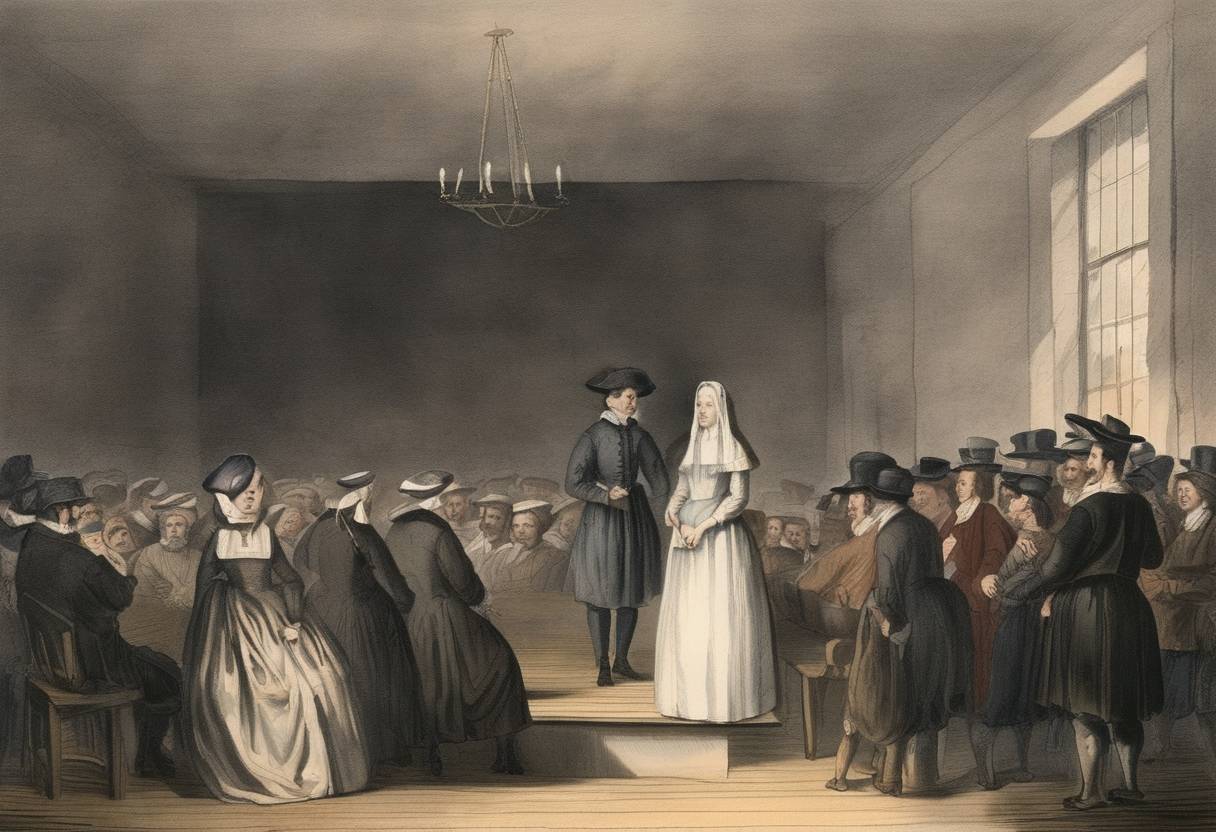
Mary Dyer, an English Puritan-turned-Quaker, was a notable figure in the history of religious freedom in colonial America. Her execution took place not on September 13, 1660, but rather earlier on June 1, 1660, in Boston, Massachusetts, for defying a law that prohibited Quakers from entering the Massachusetts Bay Colony.
Mary Dyer emigrated to the Massachusetts Bay Colony from England in the late 1630s. Initially a Puritan, her religious views evolved, and she became a follower of the Quaker movement, which was gaining traction in England during the mid-17th century. The Quakers, known formally as the Religious Society of Friends, advocated for pacifism, the inner light of personal revelation, and equality, ideas that clashed with the strict orthodoxy of the Puritan leadership in Massachusetts.
The Massachusetts Bay Colony Puritans viewed Quakers as heretics and a threat to their societal order. From 1656 onwards, they enacted laws to punish Quakers, including fines, imprisonment, whippings, and banishment under penalty of death if they returned. The colony’s leadership was determined to maintain its religious orthodoxy and held firm against the Quaker challenge to their authority.
Mary Dyer defied these orders on multiple occasions. She was arrested several times for her Quaker activities. Despite the threat of capital punishment, she repeatedly returned to Massachusetts to challenge the laws, alongside other Quakers who were committed to the cause of religious liberty.
On June 1, 1660, after previously being reprieved from execution due to the intercession of her husband and petitions from individuals in England, Mary Dyer returned once more to Boston. Her resolve to stand by her beliefs and protest the anti-Quaker laws led to her execution by hanging on Boston Common. Her bravery and martyrdom became a symbol of the struggle for religious freedom in the face of oppressive laws.
Mary Dyer’s execution sparked further public outcry and contributed to increasing dissent against the harsh measures imposed by the Puritan authorities. Her death stirred sentiments that eventually led to the relaxation of laws against Quakers in the colony. Moreover, her sacrifice was a critical event in the broader narrative of the fight for religious tolerance and freedom, influencing future American values and legislation regarding religious expression.
Source: en.wikipedia.org