The Sudden Death of Pope John Paul I and the Election of Pope John Paul II
1978 · Vatican City, Vatican City
Pope John Paul I dies suddenly after only 33 days in office, leading to the election of Pope John Paul II.
December 8, 1851
Giovanni Maria Mastai-Ferretti was crowned Pope Pius IX.
Vatican City, Papal States | Roman Catholic Church
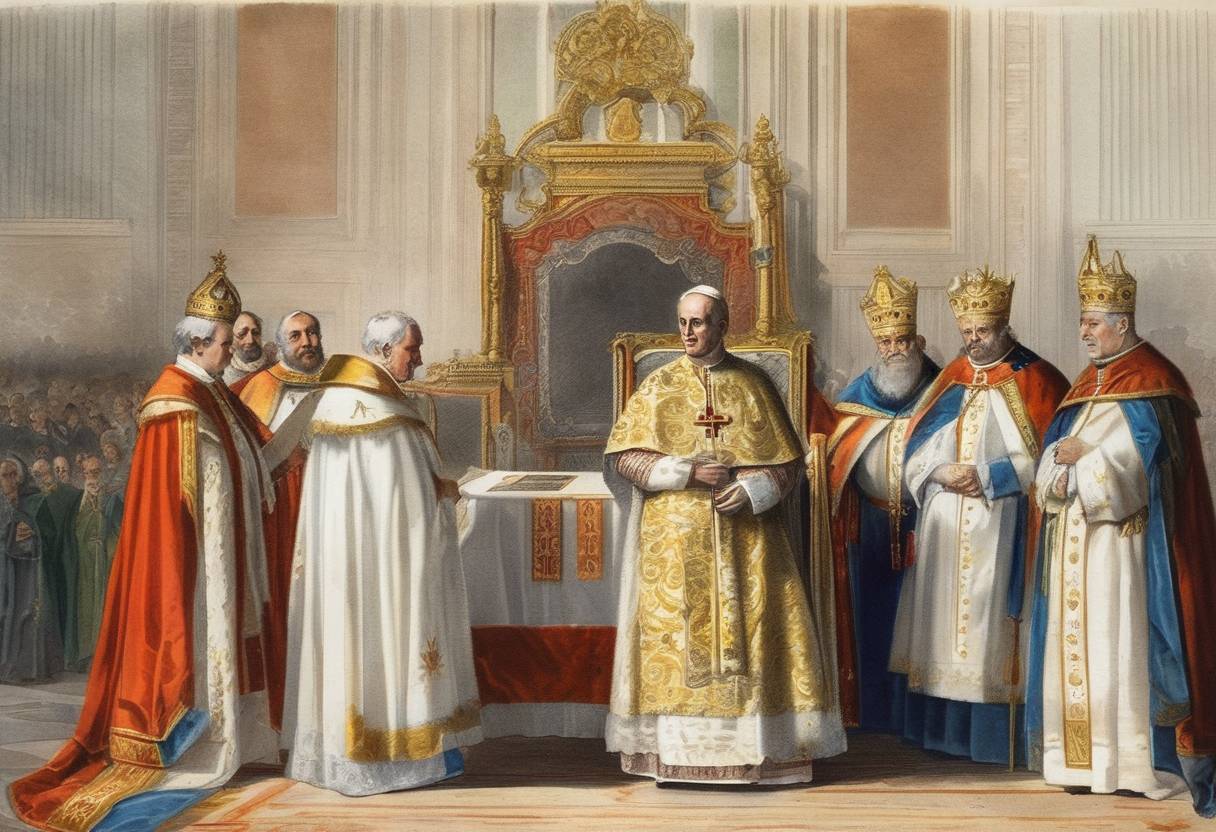
Giovanni Maria Mastai-Ferretti was not crowned Pope Pius IX on December 8, 1851. His papal coronation actually took place much earlier, on June 21, 1846. Giovanni Maria Mastai-Ferretti was elected as the 255th pope of the Roman Catholic Church on June 16, 1846, following the death of Pope Gregory XVI. He was coronated a few days later on June 21, 1846, in the Sistine Chapel.
Giovanni Maria Mastai-Ferretti’s elevation to the papacy marked the beginning of one of the longest pontificates in history, lasting until his death in 1878. His early years as pope were characterized by liberal reforms; however, the Revolutions of 1848 in the Italian states and elsewhere in Europe greatly influenced his later conservatism and strong stance against liberalism.
Liberal Beginnings: Initially, Pope Pius IX was seen as a liberal figure, supporting ecclesiastical and administrative reforms, granting amnesty to political prisoners, and contemplating the establishment of a constitutional government in the Papal States.
Revolutions of 1848: The revolutionary upheaval across Europe in 1848 severely impacted his papacy. The Pope fled Rome that year when the establishment of a Roman Republic forced him into exile in Gaeta. He returned in 1849 after the republic was overthrown with French military aid.
Later Conservatism: His experiences during the revolutionary period led to a conservative shift. He opposed modernist liberal changes, condemned the ideologies of socialism and communism, and reasserted the doctrine of Papal Infallibility during the First Vatican Council in 1869-1870.
First Vatican Council: Under his leadership, the council promulgated the dogma of Papal Infallibility, declaring that the pope is infallible when he speaks ex cathedra (from the chair of Saint Peter) on matters of faith and morals.
Pope Pius IX’s papacy was marked by transformative and often tumultuous events, leaving a mixed legacy of liberal ideals in the early years and staunch conservatism post-1848. His papacy ended with diminishing temporal powers due to the unification of Italy, significantly impacting the political landscape of the Catholic Church. Despite controversies, Pope Pius IX remains a significant figure in the history of the papacy, having been beatified by Pope John Paul II in 2000.
Source: www.britannica.com