Approval of the Franciscan Order by Pope Honorius III
1223 · Rome, Italy
Pope Honorius III formally approved the Franciscan Order, founded by St. Francis of Assisi, which became one of the most influential religious orders in the Catholic Church.
December 22, 1216
Pope Honorius III officially approved the Dominican Order, a Roman Catholic religious order founded by Saint Dominic.
Rome, Italy | Catholic Church
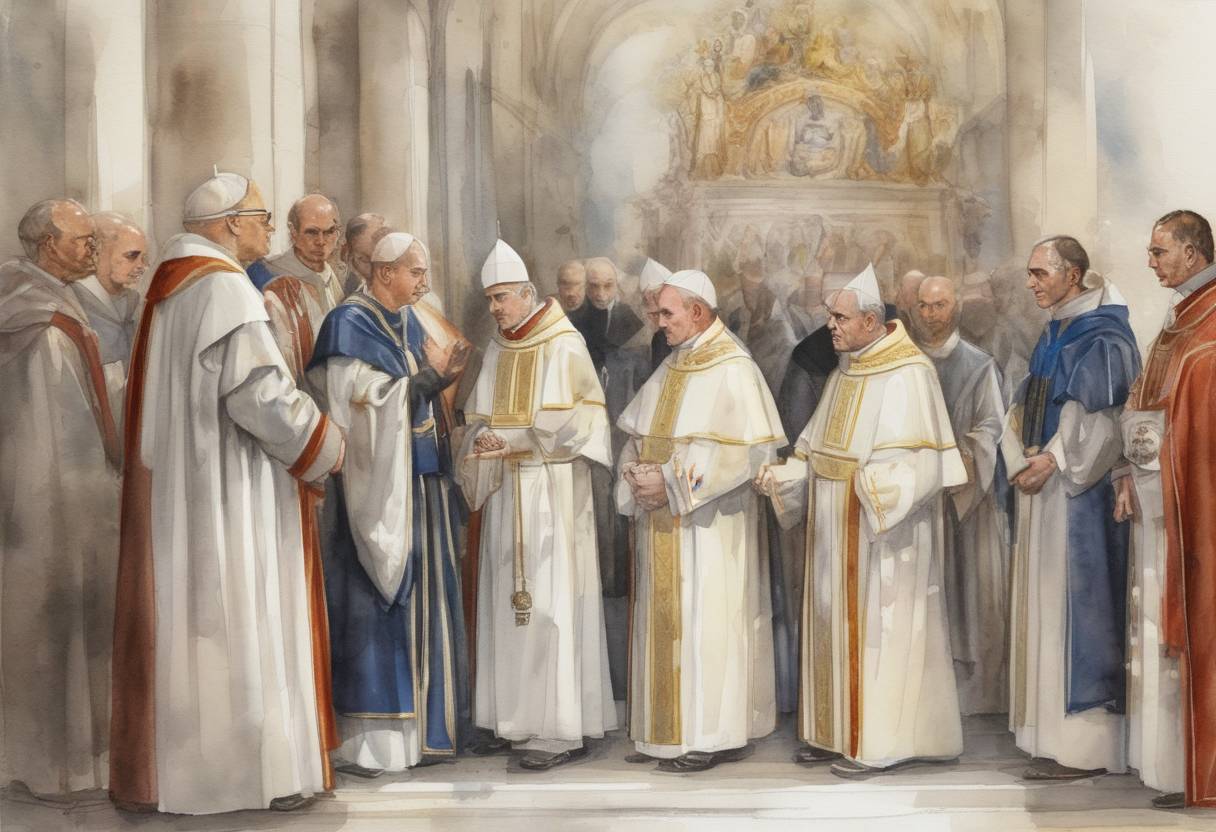
On December 22, 1216, Pope Honorius III officially approved the Dominican Order, a significant event in the history of the Roman Catholic Church. This approval marked the formal recognition of the Order of Preachers, commonly known as the Dominicans, which was founded by Saint Dominic de Guzmán.
Saint Dominic de Guzmán: Born in 1170 in Caleruega, Spain, Dominic was a Spanish priest and canon regular. He became deeply concerned with the spread of heretical movements, particularly the Albigensian heresy in southern France. Dominic believed that a well-educated clergy was essential to combat heresy and promote orthodox teachings.
Foundation of the Order: Around 1215, Dominic gathered a group of followers who shared his vision of preaching and teaching. They adopted a lifestyle of poverty, study, and active preaching, inspired by the apostolic life of the early Christians.
Fourth Lateran Council (1215): The council, convened by Pope Innocent III, emphasized the need for reform and education within the Church. Dominic attended the council, which influenced his vision for a new kind of religious order focused on preaching and education.
Initial Papal Support: In 1216, Dominic sought papal approval for his order. Pope Innocent III, who had initially encouraged Dominic’s mission, passed away in July 1216. His successor, Pope Honorius III, continued to support Dominic’s efforts.
Growth and Influence: Following papal approval, the Dominican Order rapidly expanded throughout Europe. Its members, known as Dominicans or “Black Friars” due to their black cloaks, became renowned for their scholarship and preaching.
Educational Contributions: The Dominicans established schools and universities, significantly contributing to the intellectual life of the Middle Ages. Notable Dominicans, such as Thomas Aquinas, became influential theologians and philosophers.
Role in the Inquisition: The order played a prominent role in the medieval Inquisition, tasked with identifying and addressing heretical beliefs. This involvement has been a subject of historical scrutiny and debate.
The official approval of the Dominican Order by Pope Honorius III on December 22, 1216, was a pivotal moment in the history of the Catholic Church. It laid the foundation for a religious order that would become integral to the Church’s mission of education and evangelization, leaving a lasting legacy on Christian theology and the broader intellectual landscape of Europe.
Source: en.wikipedia.org