Assassination Attempt on Napoleon III by Felice Orsini - January 14, 1858
1858 · Paris, France
Napoleon III of France escapes an assassination attempt by Felice Orsini, an Italian nationalist.
December 2, 1852
Louis-Napoléon Bonaparte declared himself Emperor Napoleon III, establishing the Second French Empire.
Paris, France | Second French Empire
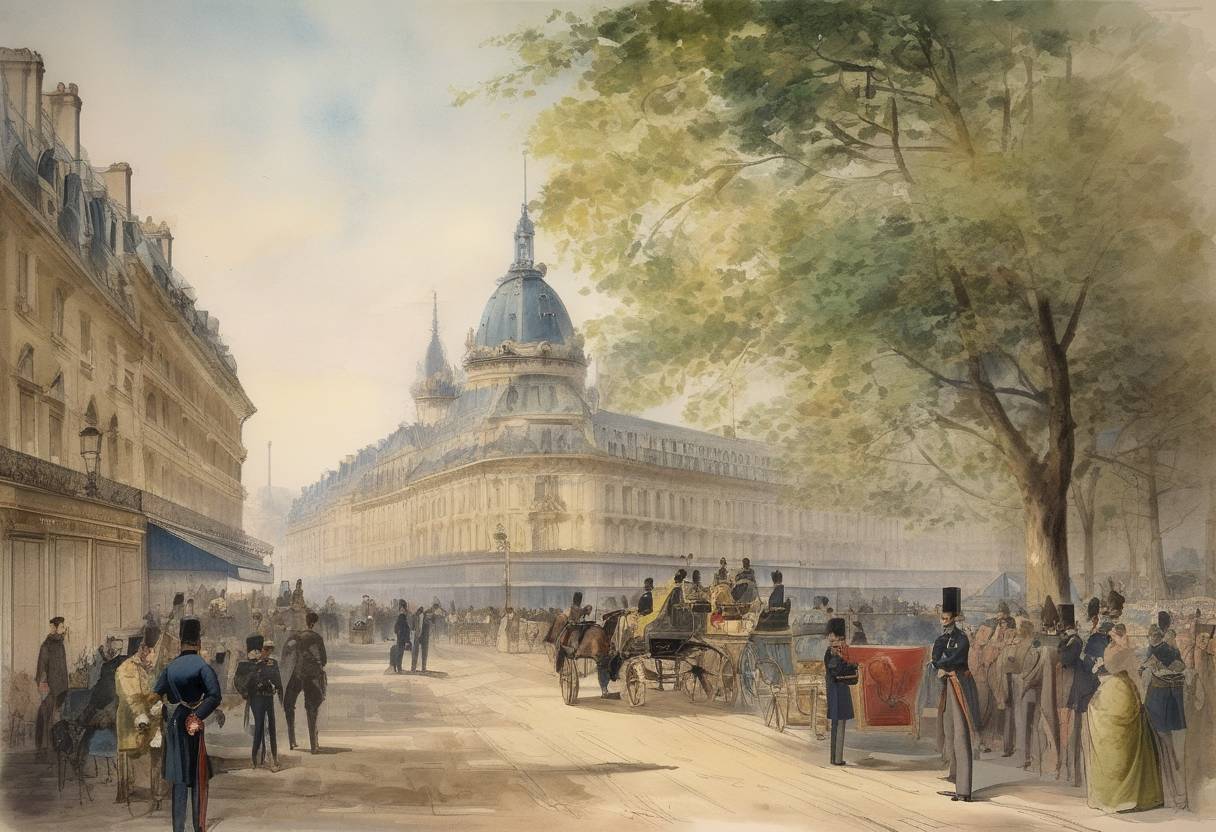
On December 2, 1852, Louis-Napoléon Bonaparte declared himself Emperor Napoleon III, marking the establishment of the Second French Empire. This event was a pivotal moment in French history, as it signified the end of the Second Republic and the beginning of an imperial regime that would last until 1870.
Louis-Napoléon Bonaparte: The nephew of Napoleon Bonaparte, Louis-Napoléon was born in 1808. After several failed attempts to seize power, he was elected President of the French Second Republic in December 1848, following the revolution that had overthrown King Louis-Philippe.
Political Climate: The period leading up to his presidency was marked by political instability and economic challenges. The 1848 Revolution had left France in a state of uncertainty, with various factions vying for power.
Consolidation of Power: As President, Louis-Napoléon worked to consolidate his power. In 1851, facing constitutional limits on his term, he staged a coup d’état on December 2, dissolving the National Assembly and establishing himself as the de facto ruler of France.
Plebiscite: Following the coup, Louis-Napoléon sought to legitimize his rule through a plebiscite. The French people voted overwhelmingly in favor of restoring the empire, with over 7 million votes in support and only 250,000 against.
Proclamation: On December 2, 1852, exactly one year after his coup and the anniversary of his uncle’s coronation as Emperor and the Battle of Austerlitz, Louis-Napoléon proclaimed himself Emperor Napoleon III. This symbolic choice of date was intended to evoke the glory of the Napoleonic era.
Second French Empire: The establishment of the Second Empire marked a return to authoritarian rule in France. Napoleon III’s reign was characterized by significant industrialization, modernization of the French economy, and ambitious foreign policy.
Domestic Policies: Domestically, Napoleon III implemented various reforms, including the expansion of the railway network, modernization of Paris, and social welfare initiatives. However, his regime also faced criticism for its authoritarian nature and suppression of political dissent.
Foreign Policy: Napoleon III pursued an active foreign policy, involving France in the Crimean War, the unification of Italy, and the ill-fated intervention in Mexico. These ventures aimed to restore France’s influence in Europe and beyond.
Downfall: The Second Empire ultimately fell in 1870 after France’s defeat in the Franco-Prussian War, leading to Napoleon III’s capture and the proclamation of the Third Republic.
The declaration of Napoleon III as Emperor was a defining moment in 19th-century European history, influencing the political landscape of France and its relations with other nations.
Source: en.wikipedia.org