Establishment of Greenwich as the Universal Time Meridian
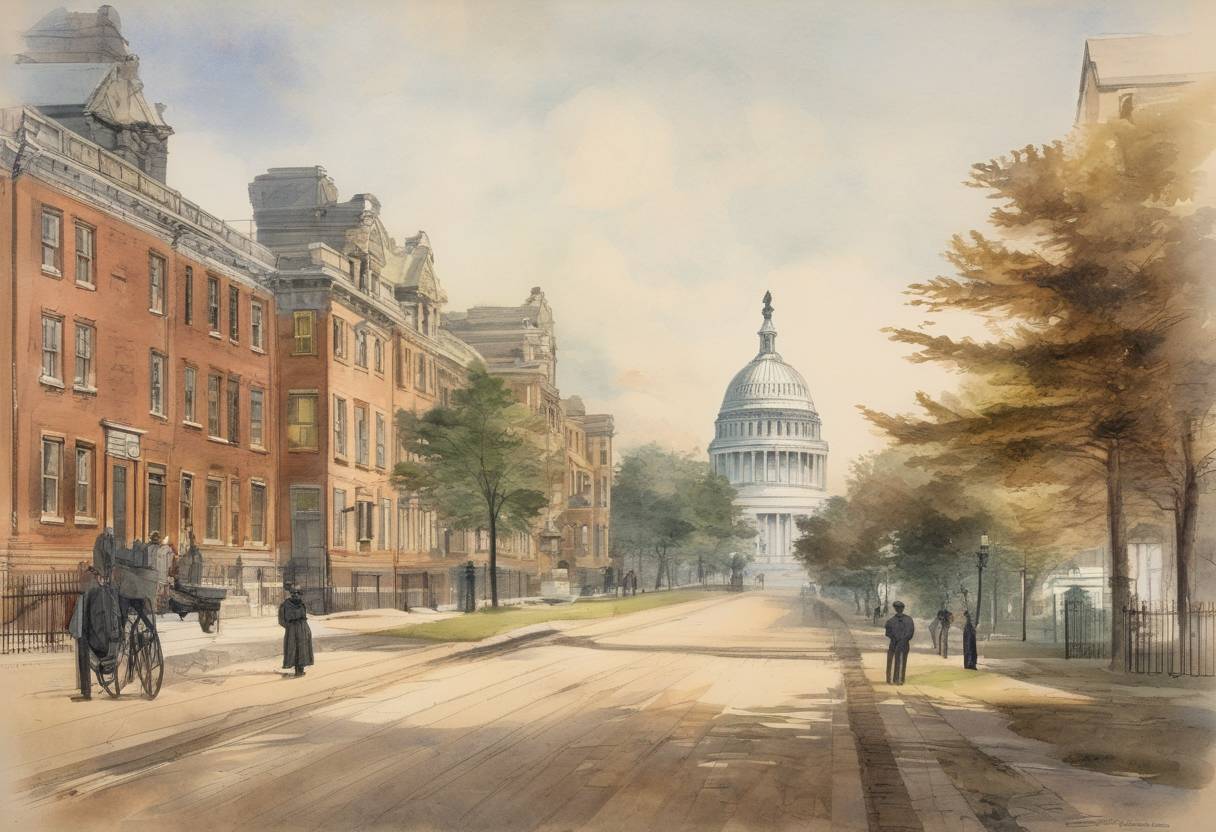
On October 13, 1884, the International Meridian Conference, held in Washington, D.C., made a pivotal decision in the history of global timekeeping and navigation by establishing the Greenwich Meridian as the universal prime meridian of longitude. This decision had far-reaching implications for international time standards and global navigation.
Context and Background
Before the establishment of a universal prime meridian, there was no standardized system for timekeeping or navigation. Different countries and even cities used their own meridians, leading to confusion and inefficiencies, particularly in navigation and the burgeoning field of international travel and communication. The need for a standardized system became increasingly apparent with the expansion of railways and telegraph systems in the 19th century.
The International Meridian Conference
The International Meridian Conference was convened in Washington, D.C., from October 1 to October 22, 1884. It was attended by delegates from 25 nations, including major powers such as the United States, the United Kingdom, France, and Germany. The primary objective of the conference was to establish a single prime meridian for the purposes of timekeeping and navigation.
Key Decisions
Greenwich as the Prime Meridian: The conference voted to adopt the meridian passing through the Royal Observatory in Greenwich, England, as the universal prime meridian. This decision was influenced by the fact that by the late 19th century, a significant portion of the world’s shipping and navigation charts already used Greenwich as the reference point.
Universal Day: It was decided that the universal day would begin at midnight at Greenwich and would be counted on a 24-hour clock.
Longitude Measurement: Longitude would be measured in degrees, with 0° at Greenwich, extending 180° east and west.
No Obligation for Local Time: The adoption of Greenwich as the prime meridian did not obligate countries to change their local time systems, allowing for flexibility in local timekeeping.
Aftermath and Significance
The adoption of the Greenwich Meridian as the universal prime meridian facilitated the standardization of time zones and improved global navigation and communication. It laid the groundwork for the development of the Coordinated Universal Time (UTC) system used today.
The decision also underscored the importance of international cooperation in addressing global challenges, setting a precedent for future international agreements in various fields.
In conclusion, the establishment of Greenwich as the universal time meridian was a landmark moment in the history of timekeeping and navigation, reflecting the growing interconnectedness of the world in the late 19th century. It remains a cornerstone of global time standards to this day.