The Battle of Hastings - October 14, 1066
1066 · Hastings, England
The Battle of Hastings took place, where William the Conqueror defeated King Harold II of England, leading to the Norman conquest of England.
September 18, 1066
Harold Godwinson, King of England, lands on the Isle of Wight with his army, preparing to defend against the impending Norman invasion.
Isle of Wight, England
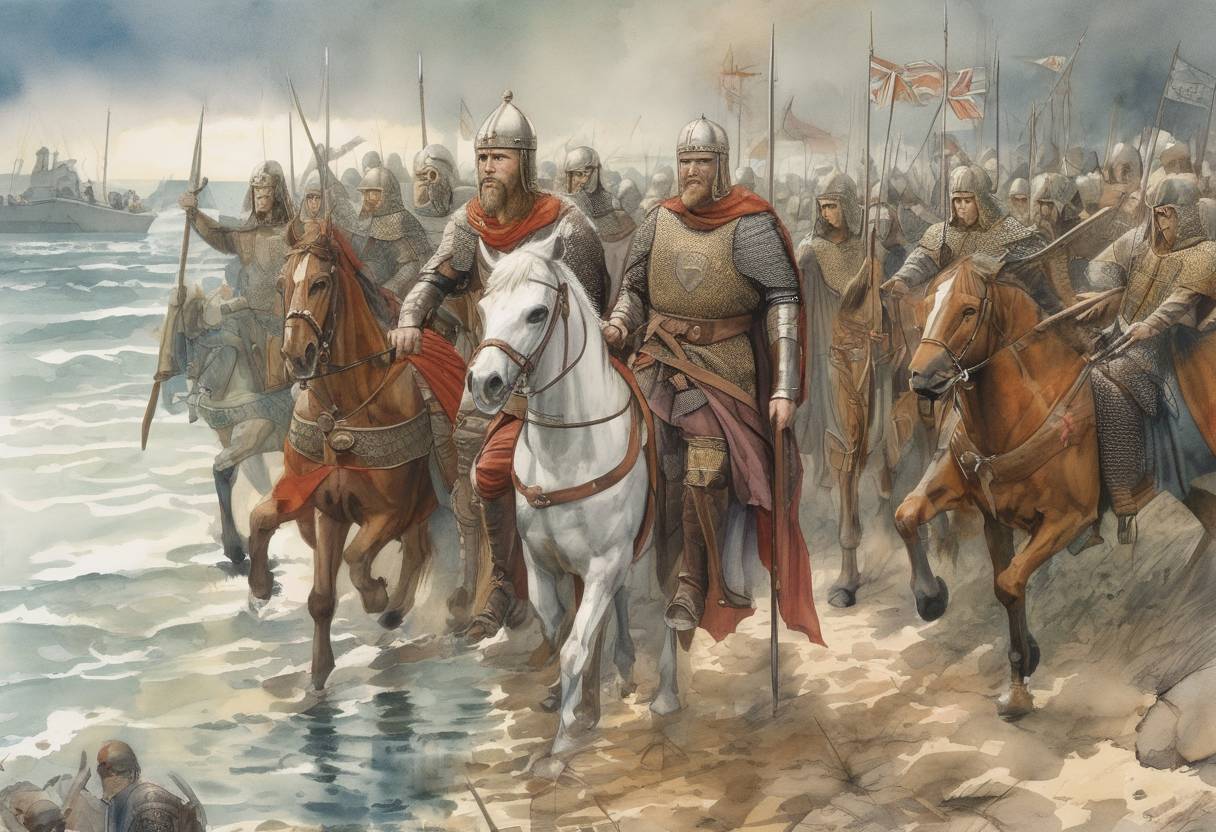
On September 18, 1066, Harold Godwinson, the last Anglo-Saxon king of England, landed on the Isle of Wight with his army. This strategic move was part of his preparations to defend England against the anticipated Norman invasion led by William, Duke of Normandy.
Harold Godwinson ascended to the English throne on January 6, 1066, following the death of King Edward the Confessor. His claim was contested by several rivals, most notably William of Normandy, who asserted that Edward had promised him the throne. Additionally, Harald Hardrada of Norway also laid claim to the English crown, leading to a year fraught with military threats.
The events of 1066, particularly the Norman Conquest, marked a turning point in English history. The conquest brought significant cultural, political, and social changes, including the introduction of Norman feudalism and the reshaping of the English aristocracy. Harold’s efforts to defend his kingdom, though ultimately unsuccessful, remain a testament to the turbulent and transformative nature of this period.