Battle of the Gates of Trajan - August 17, 986
986 · Trajan's Gate, Bulgaria
Byzantine–Bulgarian Wars: The Byzantine army under Emperor Basil II is defeated in the Battle of the Gates of Trajan by the forces of Tsar Samuel of Bulgaria.
October 18, 0629
The Battle of Mu'tah took place, where Muslim forces under the command of Zayd ibn Harithah faced the Byzantine Empire's army. This battle was significant as it marked the first military engagement between the Muslims and the Byzantine Empire.
Mu'tah, Jordan | Byzantine Empire
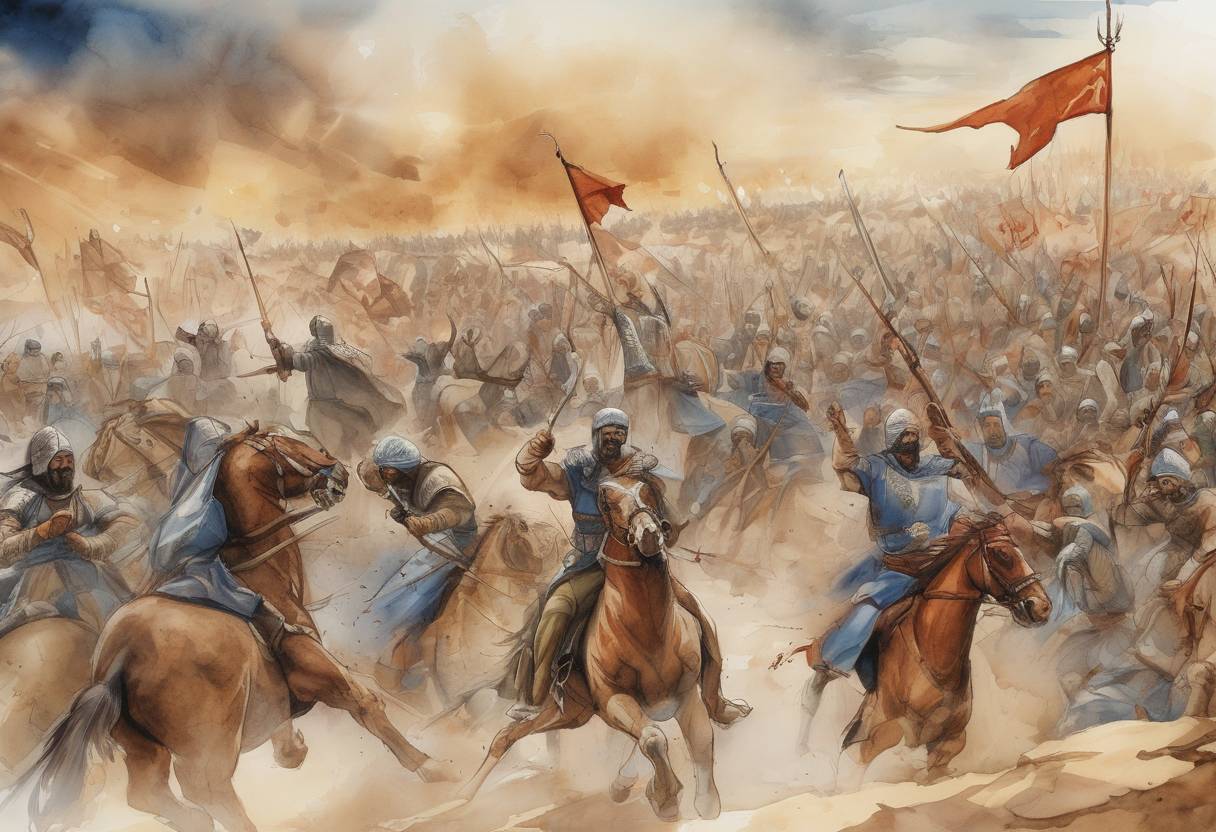
The Battle of Mu’tah, which occurred on October 18, 629, was a significant military engagement between the early Muslim community and the Byzantine Empire. This battle is notable for being the first encounter between the Muslims and the Byzantine forces, marking a pivotal moment in the early Islamic military campaigns.
The battle took place in Mu’tah, a village near the city of Karak in modern-day Jordan. The confrontation was triggered by the killing of a Muslim envoy, which was considered a grave violation of diplomatic norms. The Prophet Muhammad dispatched a force of approximately 3,000 men to address this affront and to assert the growing influence of the Muslim community in the region.
Upon reaching Mu’tah, the Muslim forces encountered a significantly larger Byzantine army, reportedly numbering between 100,000 to 200,000 troops, including local Arab Christian allies. Despite being heavily outnumbered, the Muslim army engaged in battle.
After the deaths of the appointed commanders, Khalid ibn al-Walid, a skilled military strategist, took command. He managed to organize a strategic retreat, minimizing further losses and preserving the core of the Muslim forces.
The Battle of Mu’tah, despite being a tactical retreat for the Muslims, demonstrated their resilience and ability to confront a major power like the Byzantine Empire. It also highlighted the leadership and strategic acumen of Khalid ibn al-Walid, who would later become one of Islam’s most celebrated military leaders.
The battle had several significant consequences:
The Battle of Mu’tah is remembered as a testament to the courage and determination of the early Muslim community, laying the groundwork for future expansions and engagements with major empires of the time.
Source: en.wikipedia.org