Abraham Lincoln's Inauguration as the 16th President of the United States
1861 · Washington, D.C., United States
Abraham Lincoln was inaugurated as the 16th President of the United States.
October 3, 1863
President Abraham Lincoln issued a proclamation designating the last Thursday in November as Thanksgiving Day, which became a national holiday in the United States.
Washington, D.C., United States | United States Government
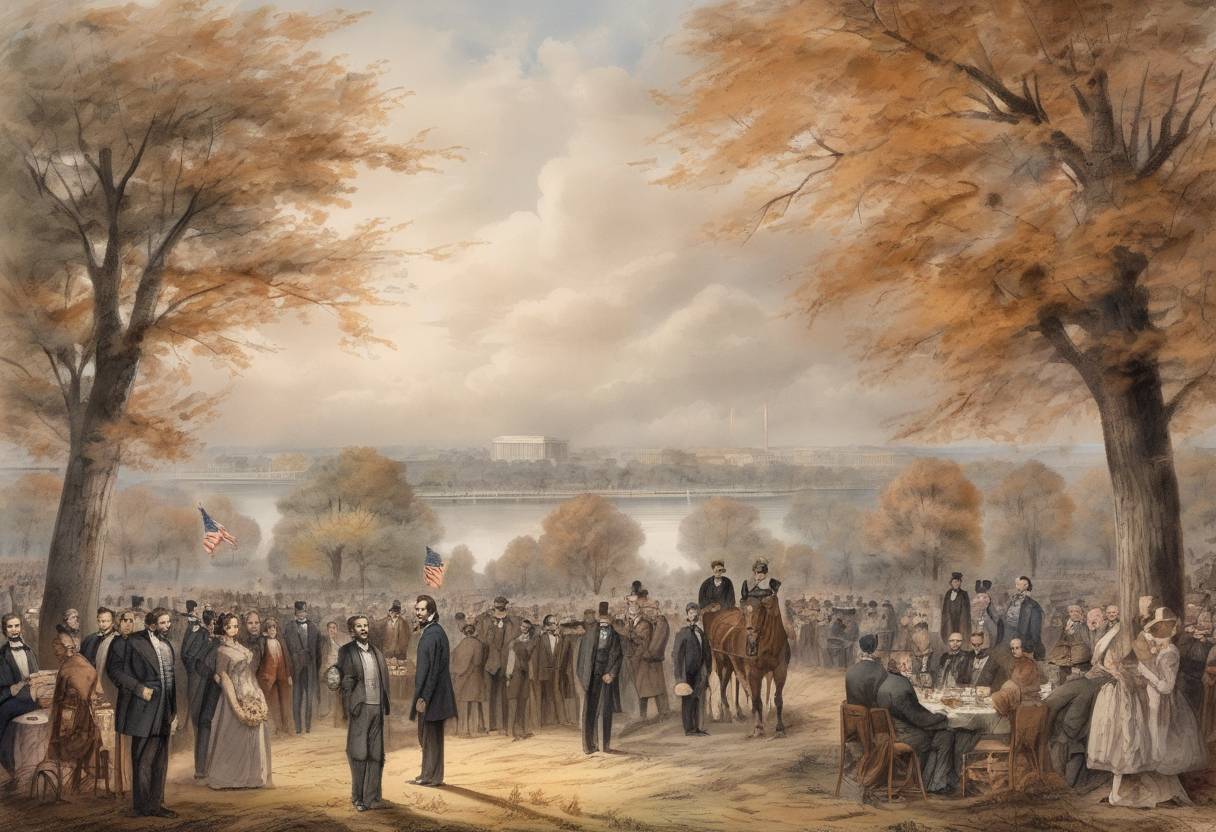
On October 3, 1863, President Abraham Lincoln issued a proclamation that established Thanksgiving Day as a national holiday in the United States, to be celebrated on the last Thursday of November. This proclamation was a significant moment in American history, as it set the precedent for the modern Thanksgiving holiday.
Before Lincoln’s proclamation, Thanksgiving celebrations were primarily regional and varied in timing. The tradition of giving thanks dates back to the early 17th century, with the Pilgrims’ harvest feast in 1621 often cited as the first Thanksgiving. However, it was not an official or consistent national holiday.
The push for a national Thanksgiving holiday gained momentum in the mid-19th century, largely due to the efforts of Sarah Josepha Hale, a prominent magazine editor and writer. For years, Hale campaigned for a national day of thanks, writing letters to politicians and editorials in her publications.
Lincoln’s proclamation came during the American Civil War, a time of great division and hardship in the country. The proclamation was partly influenced by Hale’s persistent advocacy and partly by the desire to foster a sense of unity and gratitude among the American people.
In his proclamation, Lincoln emphasized the importance of recognizing the blessings and mercies that had been bestowed upon the nation, even amidst the ongoing conflict. He called upon the American people to observe the day with acts of thanksgiving and prayer, acknowledging the “gracious gifts of the Most High God.”
The proclamation reads, in part:
“I do therefore invite my fellow citizens in every part of the United States, and also those who are at sea and those who are sojourning in foreign lands, to set apart and observe the last Thursday of November next, as a day of Thanksgiving and Praise to our beneficent Father who dwelleth in the Heavens.”
Lincoln’s establishment of Thanksgiving as a national holiday helped to unify the country by creating a shared tradition. The holiday has since evolved into a time for family gatherings, feasting, and reflection on gratitude.
The tradition of celebrating Thanksgiving on the last Thursday of November continued until 1939, when President Franklin D. Roosevelt briefly moved it to the third Thursday to extend the holiday shopping season. This change was met with controversy, and in 1941, Congress passed a law officially setting the fourth Thursday of November as Thanksgiving Day, where it remains today.
Lincoln’s 1863 proclamation is remembered as a pivotal moment in the institutionalization of Thanksgiving as a cherished American holiday, reflecting themes of gratitude, unity, and reflection that continue to resonate.
Source: en.wikipedia.org