1553 · Rome, Italy
The election of Julius III as Pope of the Roman Catholic Church, overseeing significant reforms during his papacy.
March 28, 1285
The death of Pope Martin IV occurred. As the pope from 1281 to 1285, Martin IV was a key figure in the political and religious dynamics of the period, notably known for his excommunication of the King of Sicily, Peter III.
Perugia, Italy | Catholic Church
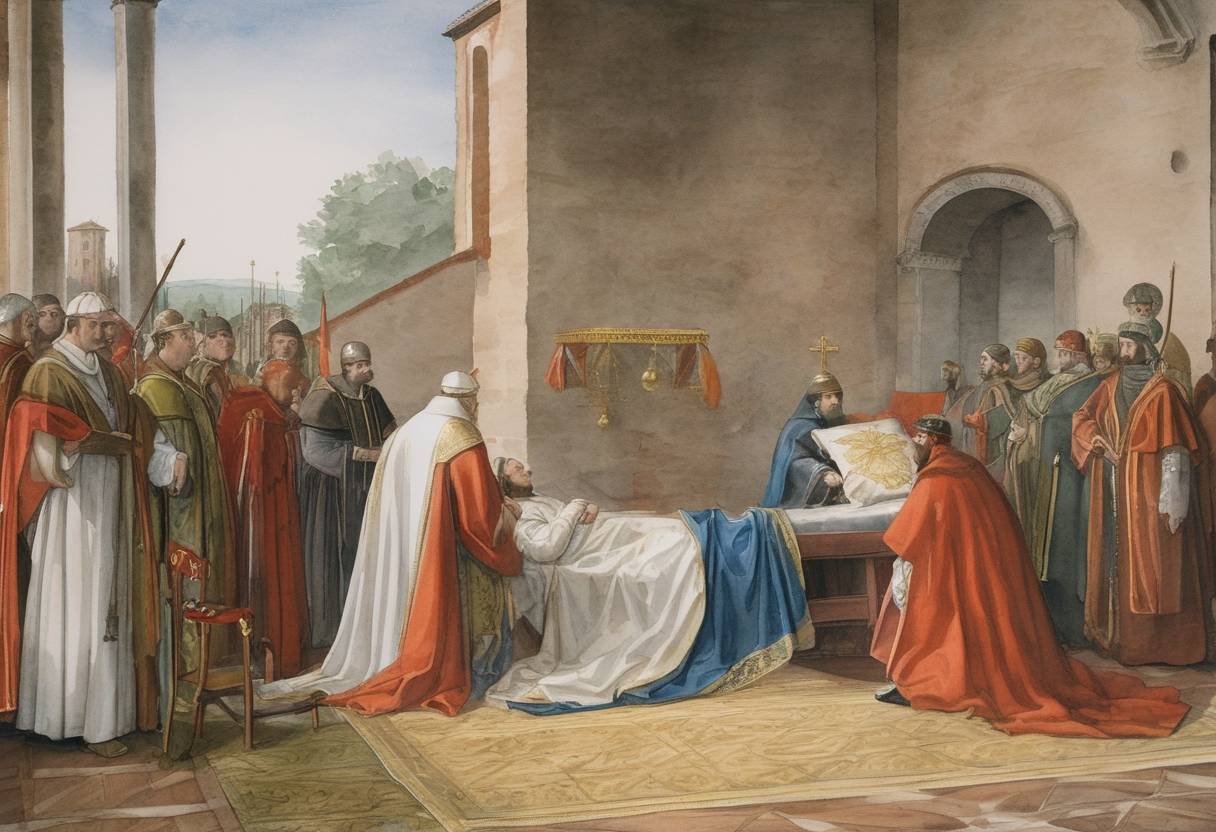
Pope Martin IV died on March 28, 1285, in Perugia, Italy. His papal reign, from 1281 until his death, was marked by his notable involvement in the political and religious turmoil of the era. Born Simon de Brion in the Kingdom of France, Martin IV became Pope during a period characterized by widespread factional conflict and the struggle for control over Sicily.
Elected pope on February 22, 1281, following a six-month vacancy of the Holy See, Martin IV was aligned with the interests of Charles I of Anjou, the King of Sicily. This alignment had significant bearings on the papal policies during his tenure. An influential figure, Martin IV supported Charles in his conflict with the Sicilian nobility and their Aragonese allies, accentuating the political dimensions of ecclesiastical rulings during the 13th century.
One of the most pivotal actions of Martin IV’s papacy was the excommunication of Peter III of Aragon. This decision, on November 18, 1282, was a direct response to the Sicilian Vespers uprising in March 1282, during which the Sicilian populace rebelled against Angevin rule and invited Peter III to take the Sicilian throne. Martin IV’s excommunication underscored the pope’s alignment with Angevin interests and intensified the conflict between the Church and Aragonese factions.
Martin IV’s papacy was heavily influenced by the geopolitical dynamics of Western Europe, as his support for Charles I of Anjou directly impacted the balance of power in the Mediterranean. His papal decisions also played a role in the War of the Sicilian Vespers, which deeply influenced Sicilian, Italian, and broader European politics for years to come. His death in 1285 marked the end of a contentious papacy deeply enmeshed in the secular struggles of its time, revealing the complex interplay between religious authority and political power during the Middle Ages.
Upon Martin IV’s death, the political and religious landscape remained turbulent. The issues and conflicts he engaged with continued to reverberate throughout Europe. The papal states and the power of the papacy itself faced ongoing challenges in balancing religious leadership with the political interests of dominant European powers. Martin IV’s legacy is reflective of a period wherein ecclesiastical authority was inextricably linked with royal ambitions and territorial disputes.
Source: en.wikipedia.org