The Siege of Yorktown: British Surrender on October 19, 1781
1781 · Yorktown, United States
The Siege of Yorktown ends with the British Army's surrender to American and French forces, effectively ending the American Revolutionary War.
April 26, 1777
During the American Revolutionary War, Sybil Ludington rides 40 miles to warn militiamen of the approaching British forces.
Dutchess County, United States (then the Thirteen Colonies) | Continental Army
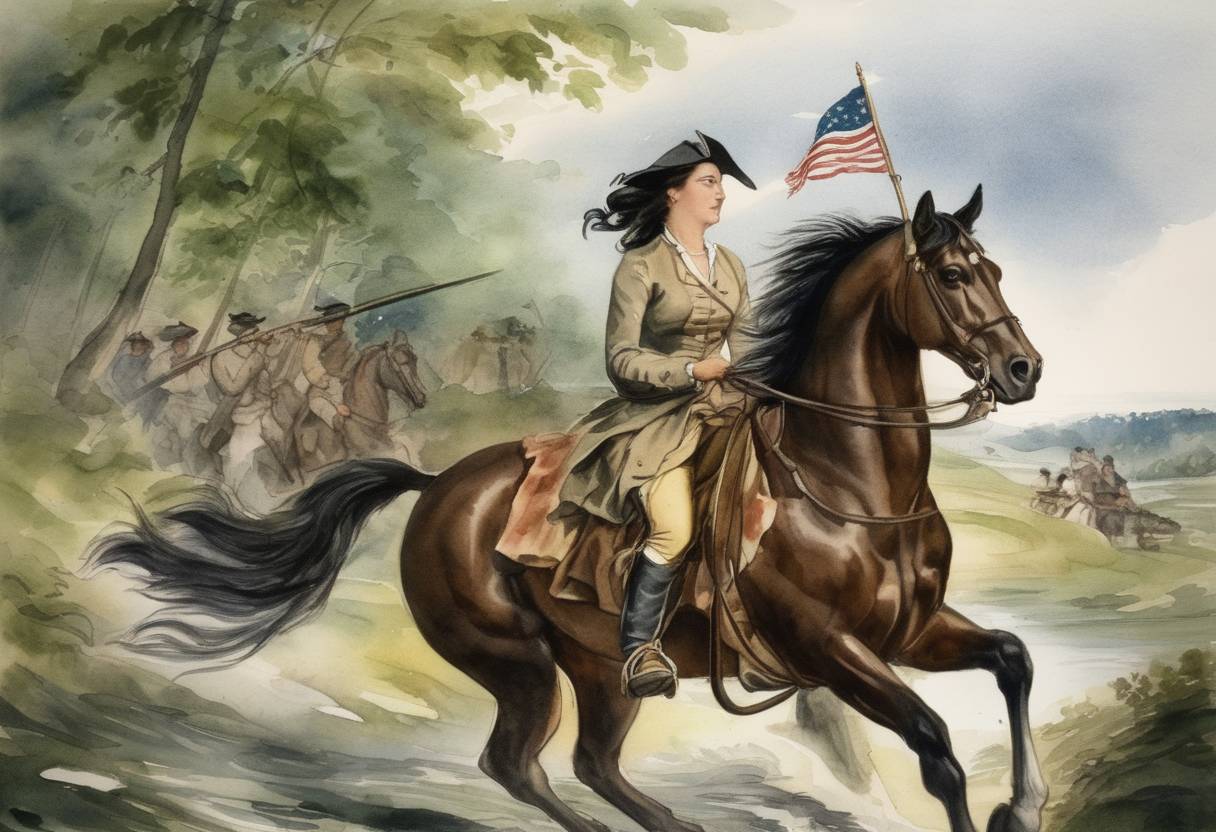
On the night of April 26, 1777, a significant event in the American Revolutionary War took place, prominently featuring a 16-year-old girl named Sybil Ludington. This feat is often compared to Paul Revere’s more famous ride, as she rode a much longer distance to warn American colonial forces of an imminent British attack.
During the spring of 1777, the Revolutionary War was intensifying, and the strategic importance of the Hudson River Valley made it a focal point for British campaigns aimed at dividing the New England colonies from the rest. Colonial forces, consisting largely of local militias, were spread thin across this area, tasked with defending against British advances.
Sybil Ludington was the daughter of Colonel Henry Ludington, the commander of a local militia in Dutchess County, New York. On the evening of April 26, intelligence reached the Ludington family about a British raid on nearby Danbury, Connecticut, where the British intended to plunder critical supplies stored by the Continental Army.
Recognizing the urgency and the need to muster his troops quickly, Colonel Ludington had to spread the word among his widely dispersed men. Due to the limited availability of riders, Sybil volunteered to carry the warning.
That night, Sybil embarked on a perilous ride covering approximately 40 miles through the rural roads of Putnam and Dutchess Counties. Battling fatigue, darkness, and inclement weather, she was tasked with alerting the militiamen to rally at her father’s headquarters.
Sybil’s ride was pivotal in gathering around 400 militiamen to fend off the British forces, though they arrived after the destruction in Danbury. Despite this, her actions contributed to the ongoing resistance against British incursions, showcasing the crucial role of local militias and civilian effort in the Revolutionary War.
Though largely overshadowed by Paul Revere’s ride in popular history, Sybil Ludington’s daring and resilience have been celebrated, particularly in local lore. In recognition, she was later acknowledged by general and first U.S. President George Washington. Her ride remains a symbol of youthful courage and contribution to the war effort.
Sybil Ludington’s story, like many of women’s roles during the Revolutionary War, highlights the lesser-known contributions that were integral to American independence. Her ride is commemorated with multiple memorials along her route in New York, and in recent years, it has gained greater recognition as an inspiring legacy of bravery and patriotism.
Source: www.smithsonianmag.com