Michigan's Admission as the 26th State of the United States
1837 · , United States
Michigan was admitted as the 26th state of the United States of America.
December 14, 1836
The Toledo War, a boundary dispute between the state of Ohio and the adjoining Michigan Territory, unofficially ended as the federal government intervened.
Washington, D.C., United States | United States Congress
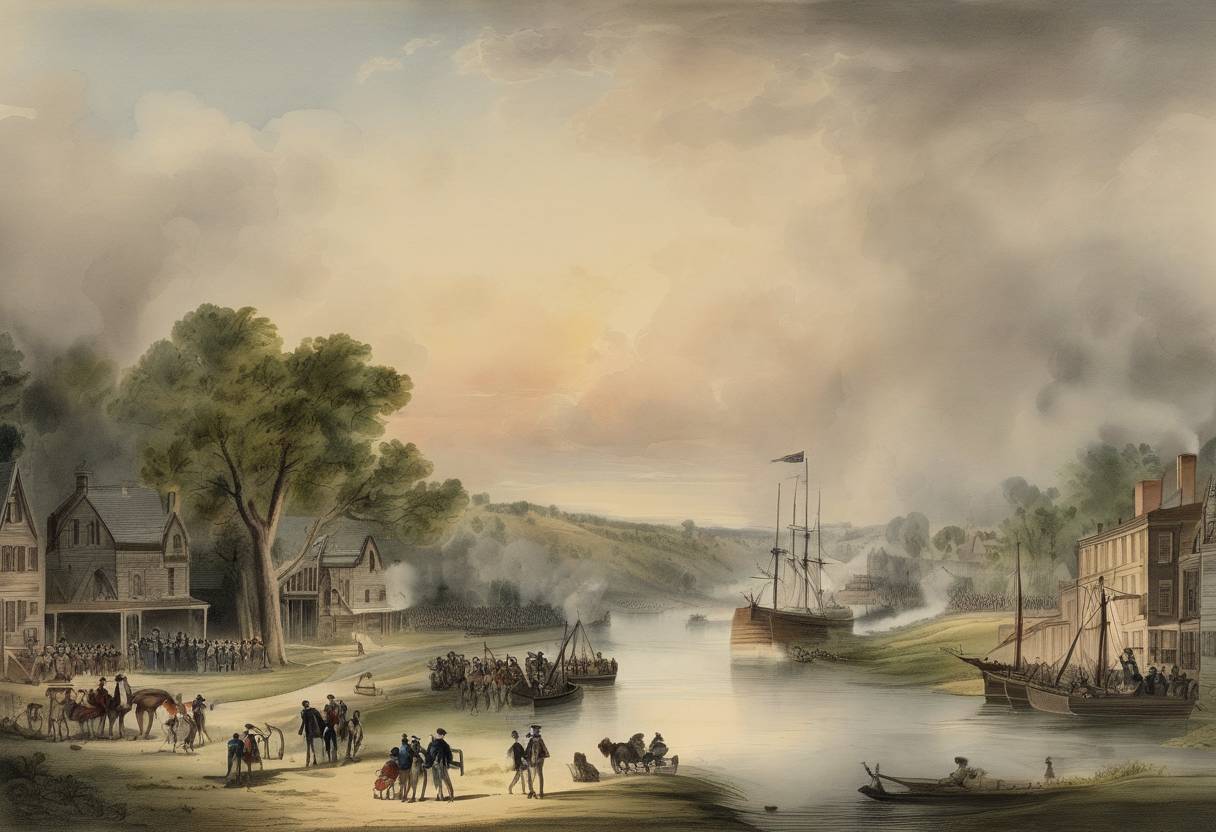
The Toledo War was a boundary dispute between the State of Ohio and the Michigan Territory that emerged due to ambiguities in the description of the boundary line in the 1787 Northwest Ordinance. At the heart of the conflict was a strip of land approximately 468 square miles, which included the valuable port city of Toledo, making it a sought-after location.
As Michigan petitioned for statehood in the early 1830s, tensions escalated. Both Ohio and Michigan prepared militias, albeit with limited skirmishes. The conflict intensified in 1835 when both jurisdictions attempted to exercise control over the disputed land.
Federal intervention became critical as the conflict persisted without a resolution. The United States Congress needed to address the situation to prevent further escalation and maintain order.
On December 14, 1836, the conflict drew toward resolution as President Andrew Jackson signed a Congressional bill enabling Michigan to become the 26th state of the United States, contingent on its acceptance of modified boundaries. The agreement, known informally as the resolution of the Toledo War, provided Michigan with the Upper Peninsula in exchange for the disputed Toledo Strip being recognized as part of Ohio.
Michigan’s initial reluctance to cede the Toledo Strip was appeased by the substantial natural resources of the Upper Peninsula, comprising rich mineral deposits and extensive timber.
The resolution of the Toledo War underscored how comprehensive negotiation and strategic compromise could effectively defuse territorial disputes within the United States.
Source: www.ohiohistory.org