The Siege of Antioch: June 3, 1098
1098 · Antioch, modern-day Turkey
The Siege of Antioch during the First Crusade ends as Crusader forces capture the city from the Seljuk Turks.
March 21, 1098
During the First Crusade, Baldwin of Boulogne is crowned the first Count of Edessa, solidifying the capture and establishment of the County of Edessa as the first of the Crusader states.
Edessa, Present-day Turkey | Crusaders
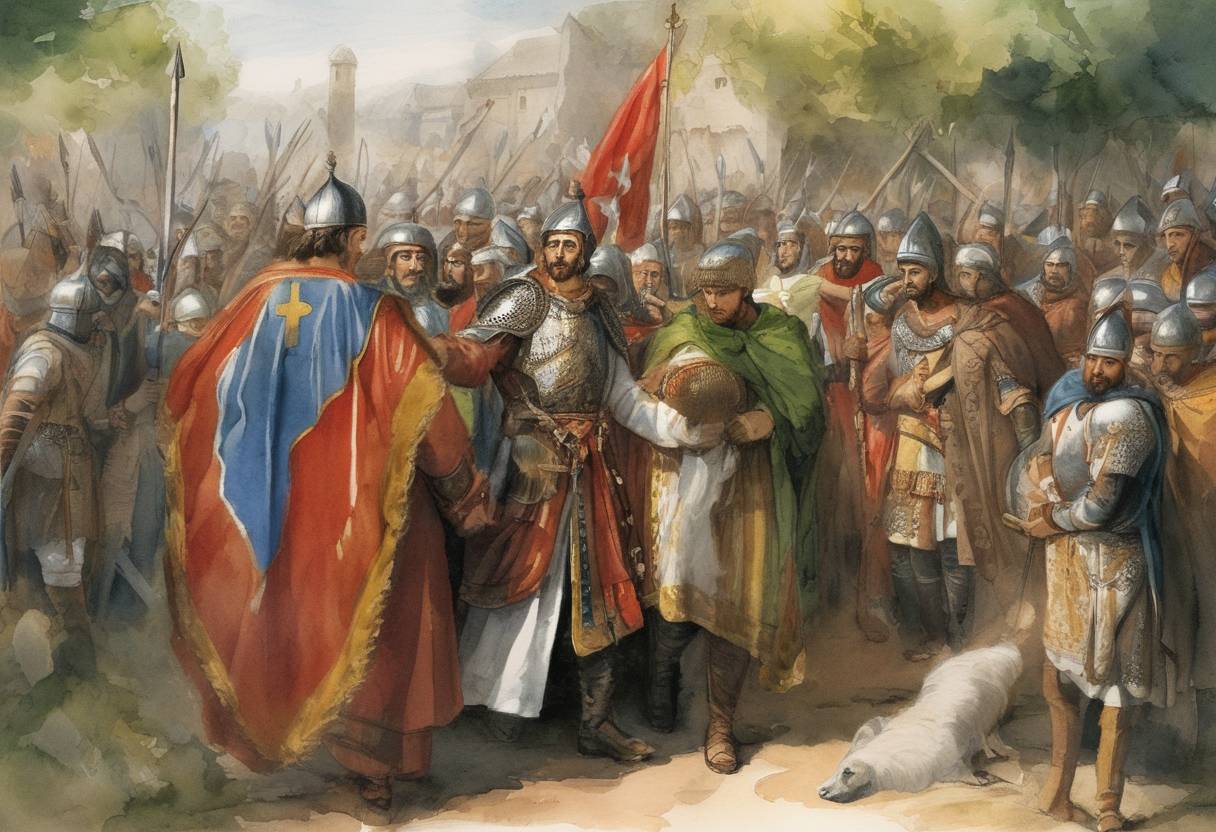
On March 21, 1098, during the First Crusade, Baldwin of Boulogne was crowned the first Count of Edessa, a pivotal moment marking the establishment of the County of Edessa as the inaugural Crusader state. This event underscored the shifting dynamics in the Levant and was a testament to the Crusaders’ strategic expansions.
The First Crusade (1096-1099): Initiated by Pope Urban II in 1095, the First Crusade aimed to recapture Jerusalem and aid the Byzantine Empire against Turkish advances. As the Crusaders advanced, establishing secure footholds became essential, leading to the foundation of several outposts that evolved into Crusader states.
Edessa’s Strategic Importance: Located in what is now southeastern Turkey, Edessa was a key city due to its position at the crossroads of major trade routes and its status as a stronghold against regional Muslim powers. Control over Edessa provided strategic leverage and resources for further Crusader campaigns.
Alliances and Diplomacy: Baldwin initially traveled eastward with the Crusaders but soon engaged in strategic alliances, notably with Thoros, the Armenian ruler of Edessa. Thoros, facing internal dissent and external threats, invited Baldwin to his court for military assistance.
Ascension as Count: Through a series of political maneuvers, including revolts against Thoros catalyzed by disenfranchised factions within Edessa, Baldwin emerged as a preferable leader. Thoros’s mysterious death, under pressure from these revolts or possibly assassination, paved the way for Baldwin’s ascension as Count on March 21, 1098.
Foundation of the First Crusader State: Baldwin’s takeover marked the establishment of the County of Edessa, the first Crusader state. It served as a model for subsequent Crusader conquests, combining feudal governance with local customs and alliances.
Consequences for Crusader Strategies: Baldwin’s rule fortified Crusader presence in the region, facilitating further military campaigns and providing a critical buffer zone for the nascent Latin Christian territories. The establishment of Edessa emphasized the Crusader approach of integrating local dynamics into their expansion strategy.
Lasting Influence: The County of Edessa influenced later Crusader states like the Kingdom of Jerusalem and the Principality of Antioch, demonstrating the interplay of military conquest and political acumen.
While Baldwin’s rule was eventually challenged by regional forces, leading to Edessa’s fall in 1144, the initial establishment of the County of Edessa in 1098 remains a landmark in Crusader history, symbolizing the complex interweaving of European and Middle Eastern histories during this tumultuous era.
Source: en.wikipedia.org