Frederick Douglass's Escape from Slavery - September 3, 1838
1838 · Baltimore, United States
Future abolitionist Frederick Douglass escaped from slavery in Maryland, eventually becoming a leading voice in the abolitionist movement.
July 5, 1852
Frederick Douglass delivers his famous speech, 'What to the Slave Is the Fourth of July?' in Rochester, New York, addressing the Rochester Ladies' Anti-Slavery Society. Douglass used the occasion to highlight the hypocrisy of the nation celebrating freedom, independence, and liberty while still permitting the institution of slavery.
Rochester, United States | Rochester Ladies' Anti-Slavery Society
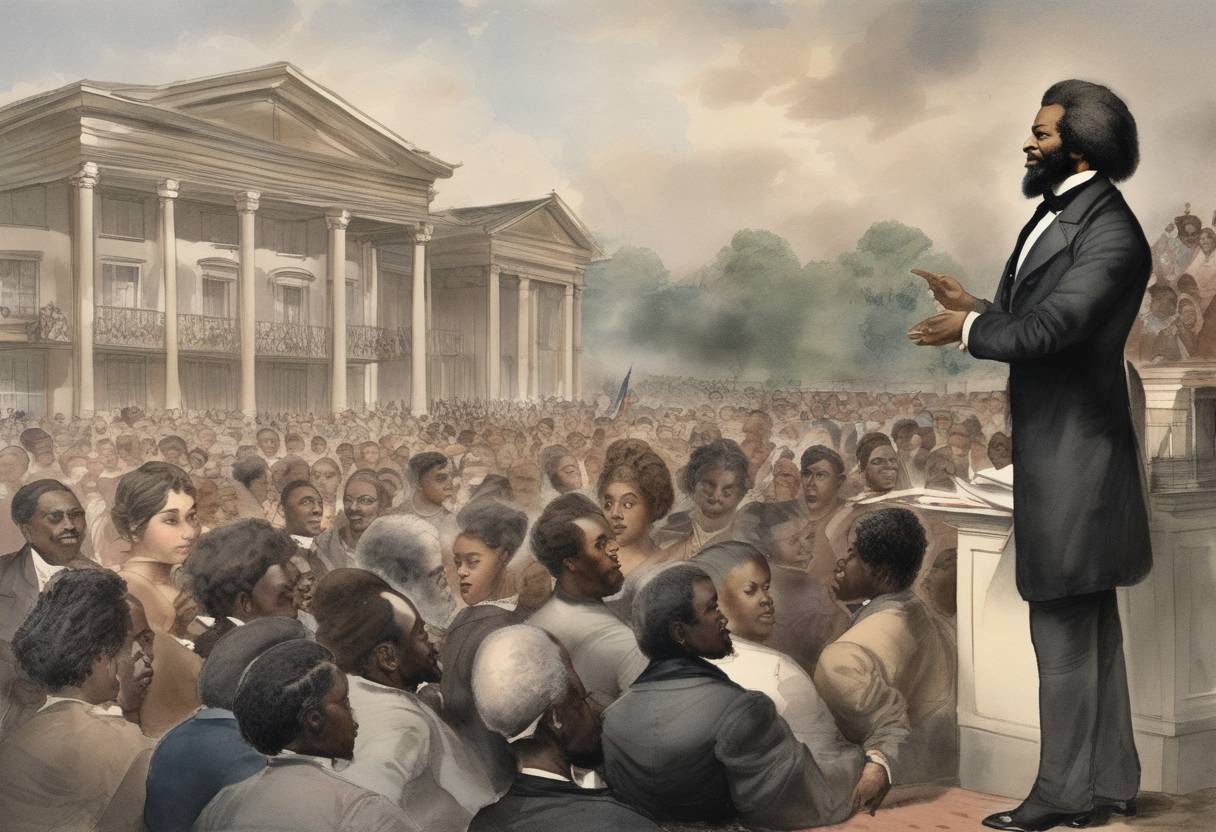
On July 5, 1852, Frederick Douglass delivered a powerful and poignant speech titled “What to the Slave Is the Fourth of July?” at Corinthian Hall in Rochester, New York. This address, delivered to the Rochester Ladies’ Anti-Slavery Society, has since become one of Douglass’ most famous and influential speeches, noted for its eloquence and devastating critique of American society’s contradictions.
By 1852, the United States was deeply divided over the issue of slavery. The Compromise of 1850, including the Fugitive Slave Act, had heightened tensions between abolitionist and pro-slavery factions across the nation. As a former enslaved person who had become a leading abolitionist, Douglass was well-positioned to speak about the pervasive injustices and moral failings associated with the institution of slavery.
Hypocrisy of Independence Celebrations: Douglass began by acknowledging the significance of the Fourth of July for white Americans, who celebrated freedom and independence. However, he argued that these ideals were starkly contrasted by the continued existence of slavery, which denied millions of African Americans their basic human rights.
Moral Paradox and National Shame: Douglass highlighted the hypocrisy of a nation that championed liberty while upholding slavery. He questioned how a country founded on principles of freedom could justify and perpetuate such a brutal system that stripped individuals of dignity and autonomy.
A Call to Conscience: His speech served not only as a critique but as a passionate call to conscience. Douglass implored his audience to consider the plight of the enslaved and advocated for a moral awakening that would lead to the abolition of slavery.
Douglass’ speech resonated strongly with abolitionists and refocused national attention on the moral contradictions of slavery. It invigorated the anti-slavery movement, providing abolitionists a persuasive narrative to rally around.
The significance of “What to the Slave Is the Fourth of July?” endures as it continues to prompt reflection on the values of freedom and equality, urging ongoing vigilance against oppression and injustice. Frederick Douglass’ words remain a powerful reminder of the work required to achieve genuine liberty and justice for all.
Source: en.wikipedia.org