The United Airlines Boeing 247 Sabotage - October 10, 1933
1933 · Chesterton, United States
A United Airlines Boeing 247 is destroyed by sabotage, the first proven case of air sabotage in commercial aviation history.
October 22, 1934
A United Airlines Boeing 247 is destroyed by sabotage, the first such proven case in aviation history.
Chesterton, United States | United Airlines
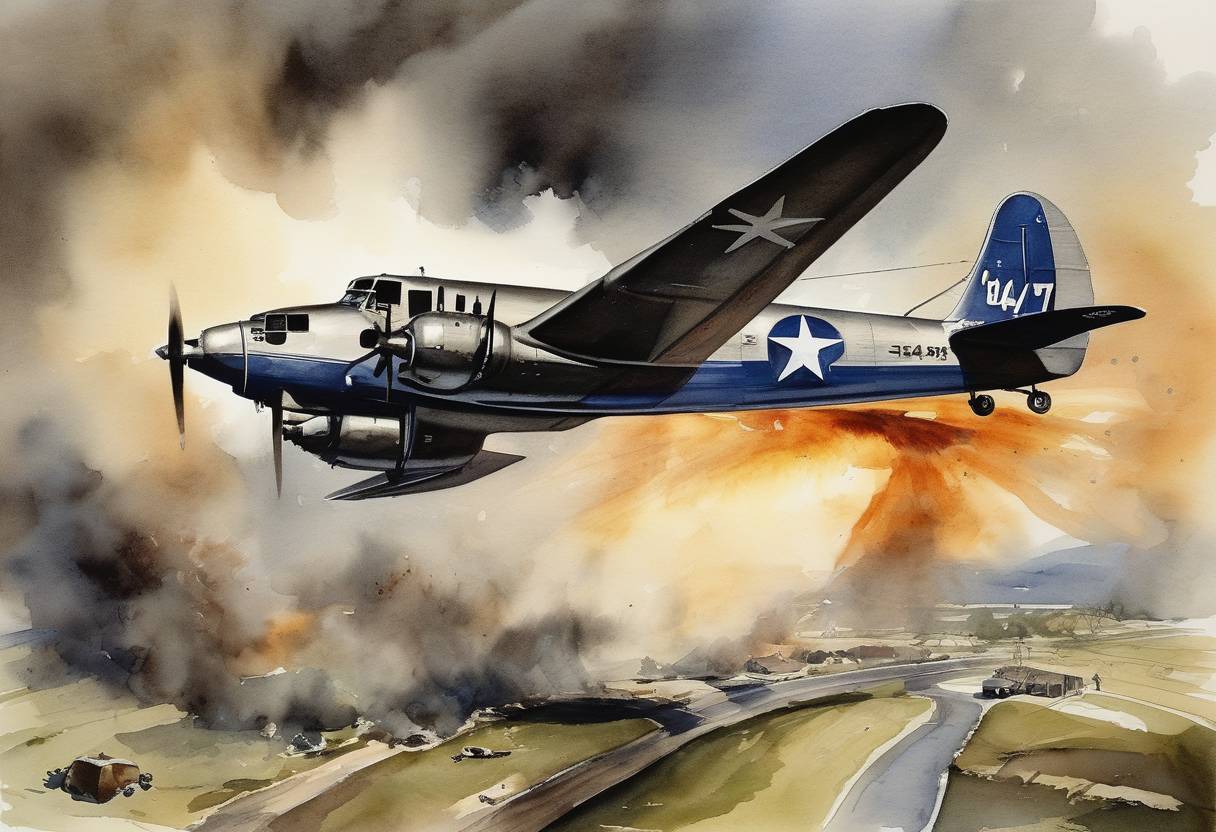
On October 22, 1934, a United Airlines Boeing 247 airliner exploded in mid-air over Chesterton, Indiana, marking the first known case of sabotage in commercial aviation history. This devastating event remains notably significant because it highlighted vulnerabilities in aviation security and led to changes in airline security measures.
Flight Information: The aircraft, a Boeing 247, was on a scheduled flight from Newark, New Jersey, to Oakland, California, with several stops in between.
Aircraft and Crew: The Boeing 247 was a pioneering model in passenger aircraft, known for its speed and reliability. On board were three crew members and four passengers.
Explosion: The aircraft mysteriously exploded while flying at approximately 1,000 feet. All seven people on board were killed instantly, as the explosion caused the entire aircraft to disintegrate mid-air.
Autopsy and Wreckage Analysis: Investigators quickly determined that the explosion was not due to any mechanical failure, given the nature of the wreckage and its distribution across the crash site.
Discovery of Evidence: Examination of the aircraft’s debris revealed evidence of a dynamite explosion, indicating deliberate sabotage. A timing device was found, further suggesting an intentional act.
Sabotage Confirmation: Although no perpetrator was ever apprehended, the evidence collected was enough to classify the crash as an act of sabotage, marking it as the first confirmed case in the annals of aviation history.
Impact on Aviation Security: The incident underscored the need for improved security measures within the aviation industry. It led to early discussions about the importance of safeguarding passenger aircraft against such acts of sabotage.
Public and Industry Reaction: This event heightened public awareness regarding aviation safety and the potential for targeted attacks. It spurred both policy-makers and airlines to consider more stringent security protocols.
Legacy: Although technology and aviation security have vastly evolved, the crash of the United Airlines Boeing 247 serves as a solemn reminder of the vulnerabilities that once existed in the fledgling days of commercial air travel and the ongoing need for vigilance in aviation security measures.
This tragic incident not only changed the course of aviation history by introducing the threat of sabotage to the list of considerations for flight safety but also highlighted a critical juncture where technology, public safety, and criminal activity intersected in the nascent days of modern air travel.
Source: www.britannica.com