The Premiere of Rossini's *The Barber of Seville*
1816 · Rome, Italy
Rossini's opera 'The Barber of Seville' premiered at the Teatro Argentina in Rome.
February 24, 1607
L'Orfeo, a late Renaissance/early Baroque opera, premieres in Mantua, Italy. Claudio Monteverdi's work is considered one of the earliest operas still performed today.
Mantua, Italy | Ducal court of Mantua
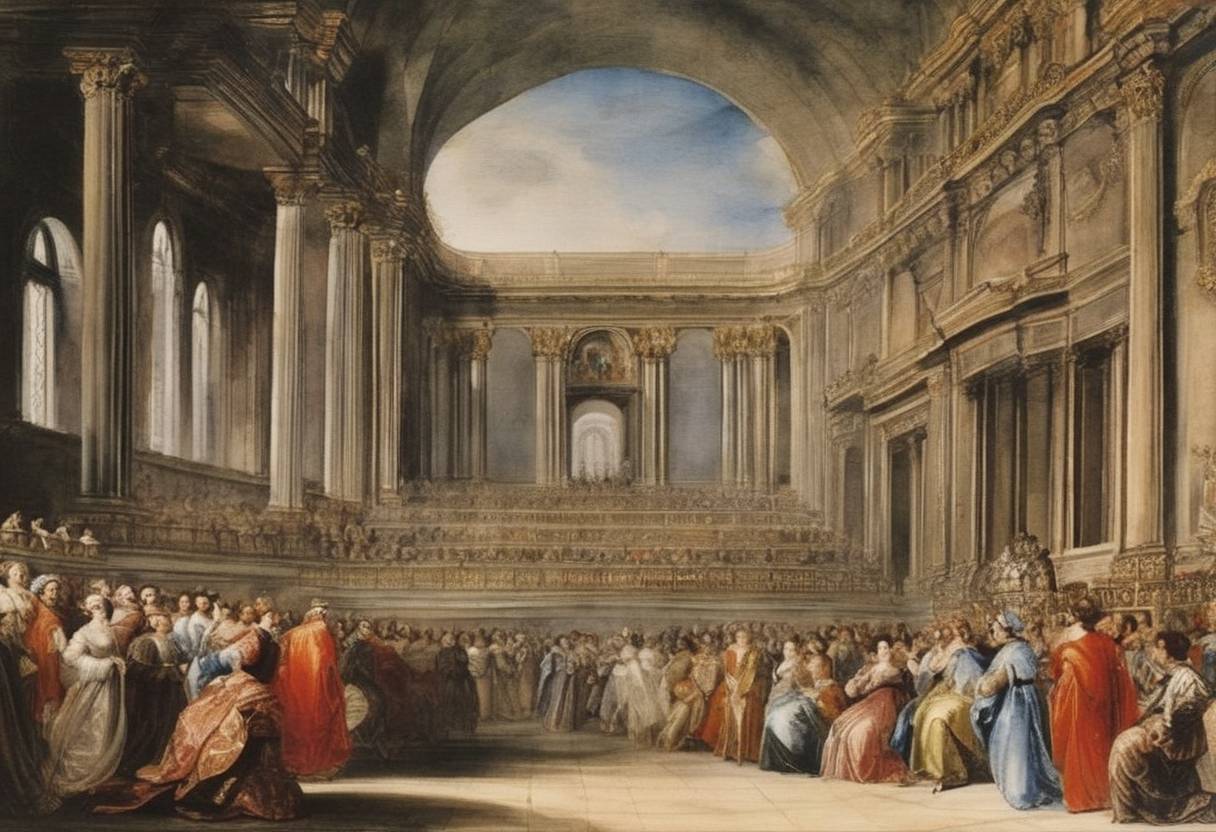
On February 24, 1607, L’Orfeo, composed by Claudio Monteverdi, premiered in Mantua, Italy. This work is considered a cornerstone in the development of opera, bridging the late Renaissance and early Baroque periods. The opera was first performed at the court of Duke Vincenzo Gonzaga during the annual Carnival season, a time traditionally associated with theatrical entertainment.
Monteverdi, then a court musician and composer for the Gonzaga family, was commissioned to create a work that would impress the elite of Mantua. At the time, opera was a nascent art form, still finding its structure and style. Monteverdi worked closely with librettist Alessandro Striggio, who adapted the ancient Greek myth of Orpheus into an Italian libretto, infusing it with humanist themes that resonated with the cultural currents of the time.
L’Orfeo is structured into five acts, following the journey of Orpheus as he descends into the underworld to rescue his beloved Eurydice. Monteverdi employed a mixture of recitative and aria, combined with expressive text setting that brought a new level of emotional depth and dramatic coherence to the music. This blend of music and drama set a standard for future operatic compositions.
Monteverdi’s use of orchestration was particularly noteworthy. He specified the instruments for various sections, which added rich textures and colors to the music — a practice considered innovative for its time. The incorporation of instruments like cornets, violins, and continuo was indicative of the affluence and resources available at the Mantuan court.
The premiere of L’Orfeo marked a pivotal moment in musical history. It demonstrated the potential of opera as a form that could combine poetry, music, and stagecraft into a unified artistic expression. L’Orfeo displayed how music could enhance the narrative and emotional impact of a story, setting the stage for the genre’s evolution over the subsequent centuries.
While opera would continue to develop in complexity and thematic scope, L’Orfeo remains a testament to Monteverdi’s genius and is regularly performed today as a historical piece that offers insight into early 17th-century theatrical and musical culture. Its ongoing performances affirm Monteverdi’s legacy as a pioneering figure in opera history.
Source: en.wikipedia.org