Italian Troops Enter Rome: The Unification of Italy
1870 · Rome, Italy
Italian troops entered Rome, completing the unification of Italy and marking the end of the Papal States.
May 20, 1347
Cola di Rienzo was acclaimed as the tribune of Rome, initiating a brief popular regime focused on restoring the grandeur of ancient Rome. Rienzo's assumption of power represented an effort to bridge the gap between the city's republican past and papal present.
Rome, Italy | N/A
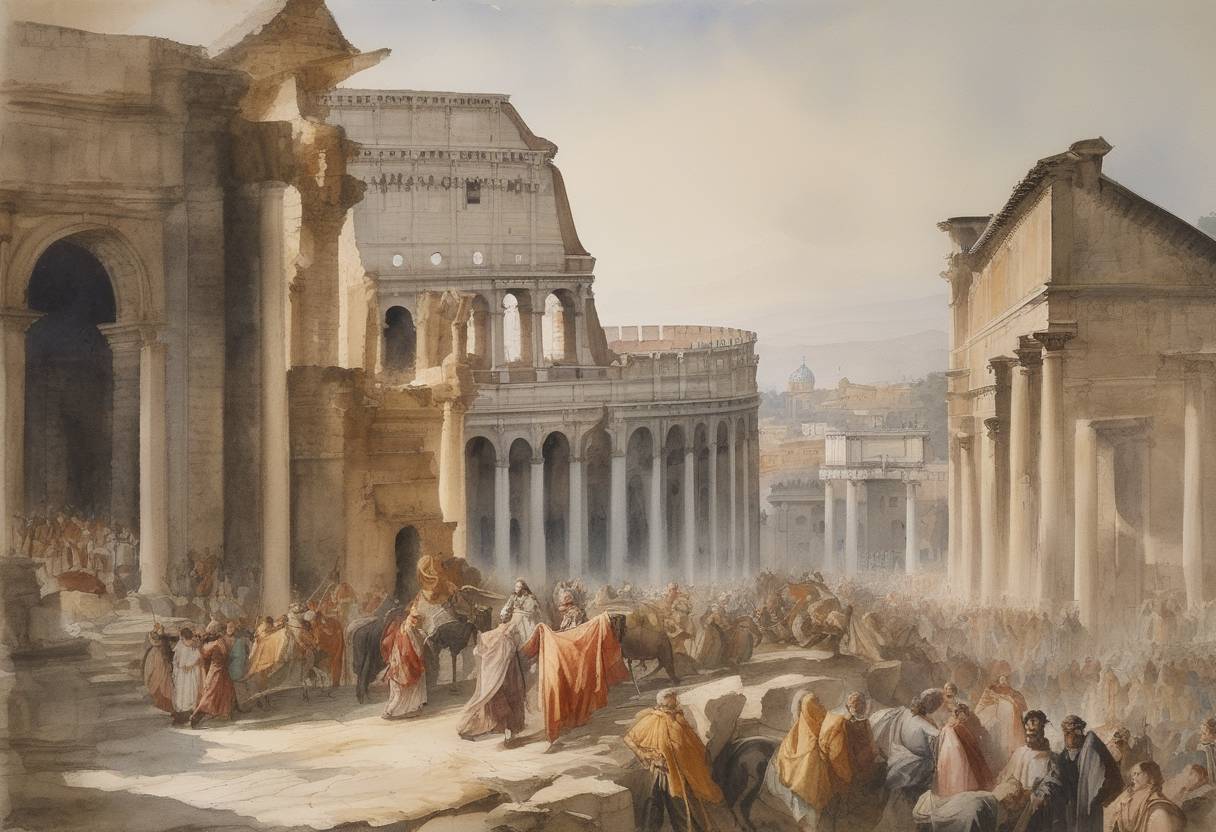
On May 20, 1347, Cola di Rienzo, born Nicola di Lorenzo Gabrini, was acclaimed as the tribune of Rome. This event marked the beginning of his ambitious attempt to restore the grandeur of ancient Rome by bridging the city’s republican past with its contemporary papal presence.
Early Life and Inspirations: Cola di Rienzo was born in Rome around 1313. He was deeply inspired by the classical heritage of Rome and was extensively educated, possibly studying in Rome and Bologna. Rienzo was impassioned by the city’s ancient republican ideals and desired to rejuvenate its prominence and power.
Political Climate: By the mid-14th century, Rome was a shadow of its former self, plagued by internal strife and power struggles. The papacy had relocated to Avignon, France, creating a power vacuum in Rome. The city was beset by feudal anarchy, with noble families exerting control over different districts.
Call for Reform: Cola di Rienzo gained popular support through his eloquent speeches that criticized the ruling nobility and called for democratic reforms. His rhetoric was filled with allusions to Roman history and ideals, striking a chord with the populace disillusioned by the current governance.
Support from the Church: Despite his republican leanings, Rienzo initially received some support from the Church, notably from Pope Clement VI. His support stemmed from a desire to stabilize the region, though the Church would later become wary of Rienzo’s independent actions.
Ceremony and Symbolism: On May 20, 1347, Rienzo was acclaimed as a tribune by the Roman populace during a grand ceremony. He took the title of “Tribune of the Roman People,” a deliberate reference to the Tribunes of the Plebs from the Roman Republic, who were champions of the common people.
Reforms Initiated: Rienzo’s regime was characterized by sweeping administrative and fiscal reforms aimed at curbing the power of the noble families. He established a new legal code and sought to unify Italy under Roman leadership, reviving the idea of a Roman-led Italy.
Short-lived Rule: Although Rienzo’s initial reforms were well-received, his rule was eventually perceived as autocratic. By November 1347, his regime faced mounting opposition, and he fled to Naples, leading to the collapse of his revolutionary government.
Legacy: Rienzo’s bold experiment was one of the first prominent attempts in the Middle Ages to revive the republican ideals of ancient Rome. His tenure as tribune and the subsequent fall highlighted the enduring tension between Rome’s imperial legacy and its medieval reality.
Impact on Later Movements: The ideas and reforms he championed inspired future movements seeking to embrace the classical heritage and national unity, contributing to the longue durée narrative of Italian unification.
Cola di Rienzo’s brief rule as tribune remains a poignant chapter in the history of Rome, symbolizing the persistent allure of its ancient past amidst the complexities of medieval politics.
Source: en.wikipedia.org