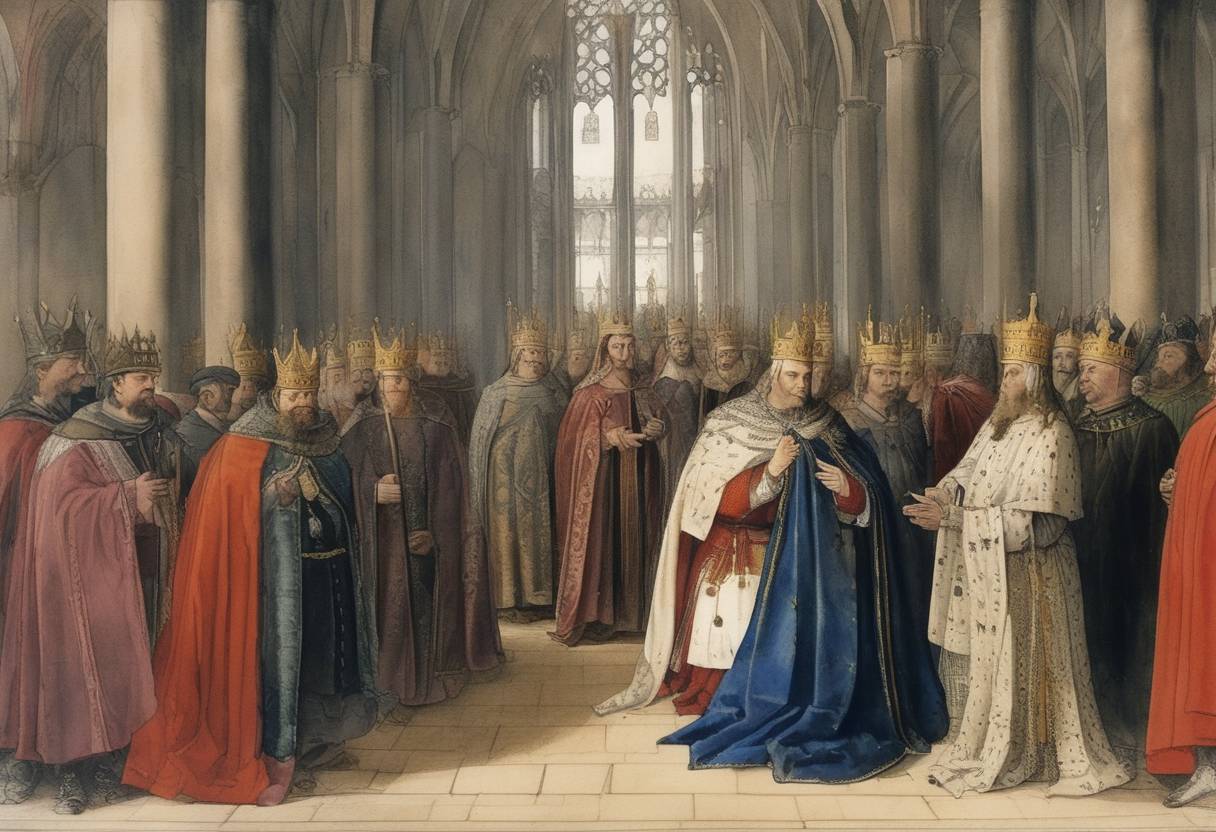
Deposition of Wenceslaus IV of Bohemia as German King
On June 11, 1389, Wenceslaus IV of Bohemia was deposed as the German King by the electors. His reign had been characterized by persistent political instability and conflict, ultimately leading to his dethronement.
Context and Background
Wenceslaus IV became King of Bohemia in 1378 following the death of his father, Charles IV, Holy Roman Emperor. He also held the title of King of the Romans, a crown he inherited with the premise of later becoming Holy Roman Emperor. However, his reign faced significant challenges, including recurring tensions with the nobility, inefficiency in governance, and lack of decisive leadership during an era of increased political complexity in Central Europe.
Key Events Leading to Deposition
Internal Strife: Under Wenceslaus, Bohemia was rife with conflict. He struggled to maintain control over the nobility and was often at odds with powerful cliques within his kingdom. His leadership was marked by a lack of authority, which allowed internal dissent to fester.
The Papal Schism: The Western Schism (1378–1417), where multiple claimants to the Papacy existed, required decisive leadership within the Holy Roman Empire. Wenceslaus’s indecision and failure to consolidate a clear stance weakened his position further.
Conflict with the Electors: Relations with the prince-electors, who were responsible for choosing the Holy Roman Emperor, were strained. They were increasingly dissatisfied with his inability to manage the empire’s pressing issues, like maintaining political unity and curbing external aggression.
Deposition by the Electors
On June 11, 1389, the greatly frustrated electors moved to depose Wenceslaus from his throne as the King of the Romans. They justified this action by citing his ineffectual leadership and failure to ensure stability within the empire. This deposition marked a significant shift in the power dynamics of Central Europe.
Aftermath
Following his deposition, Wenceslaus retained his title as King of Bohemia but was continually plagued by political struggles and intermittent captivity by his own nobles. Wenceslaus’s downfall paved the way for the election of Rupert of the Palatinate as King of the Romans. Rupert’s reign, however, faced its own challenges and highlighted the ongoing issues within the weakening structure of the Holy Roman Empire.
Broader Historical Significance
The deposition of Wenceslaus IV underscored the volatile nature of medieval European politics and the limitations of monarchical power when faced with internal dissent and external pressures. It also illustrated the intricate balance of power between kings and the regional nobility, a dynamic that would continue to evolve throughout the history of the Holy Roman Empire and influence the political landscape of Europe for centuries.