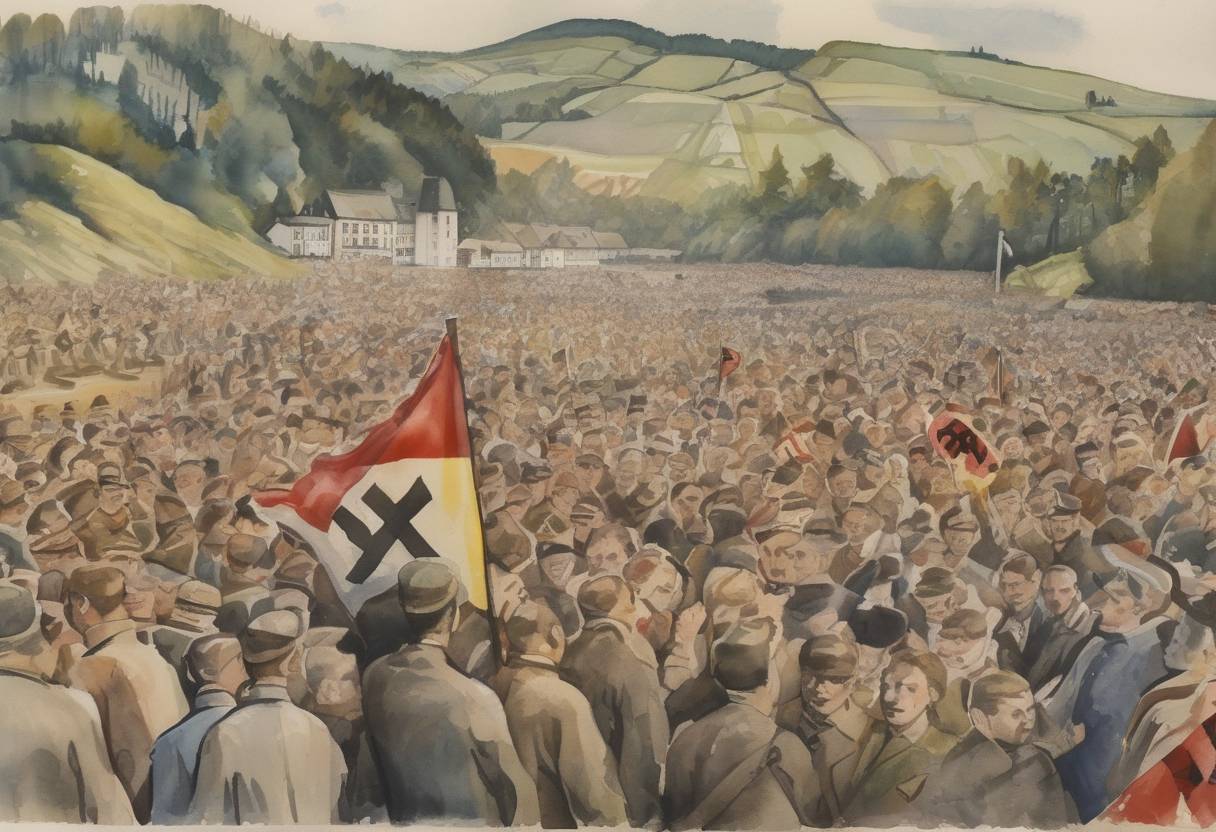
Saarland Plebiscite of January 13, 1935
On January 13, 1935, a pivotal plebiscite was held in the Saarland, a region in western Europe that had been under the administration of the League of Nations since the end of World War I. This vote was a significant event in the interwar period, as it determined the future sovereignty of the Saarland.
Historical Context
Post-World War I Arrangements: Following Germany’s defeat in World War I, the Treaty of Versailles in 1919 placed the Saarland under the administration of the League of Nations for 15 years. This was due to its rich coal deposits, which were to be exploited by France as part of reparations.
League of Nations Mandate: The League of Nations was tasked with overseeing the region, and a plebiscite was scheduled to determine its future after the 15-year period. The options were to remain under League control, return to Germany, or become part of France.
The Plebiscite
Date and Outcome: On January 13, 1935, the plebiscite was held. An overwhelming majority, 90.3% of voters, chose to reunite with Germany. This result was a clear indication of the Saarlanders’ preference for reintegration with Germany over continued League administration or annexation by France.
Voter Turnout: The plebiscite saw a high voter turnout, reflecting the importance of the decision to the local population.
Consequences and Significance
Reintegration into Germany: Following the plebiscite, the Saarland was officially reintegrated into Germany on March 1, 1935. This was one of the first territorial expansions of Nazi Germany under Adolf Hitler, who had come to power in 1933.
Propaganda Victory for Nazi Germany: The result was used by the Nazi regime as a propaganda victory, showcasing it as a validation of Hitler’s policies and a step towards reversing the perceived injustices of the Treaty of Versailles.
Impact on European Politics: The reintegration of the Saarland was a precursor to further aggressive territorial expansions by Nazi Germany, contributing to the tensions that eventually led to World War II.
Broader Historical Impact
The Saarland plebiscite is often viewed as an early indicator of the shifting political landscape in Europe during the 1930s. It demonstrated the effectiveness of Nazi propaganda and the appeal of nationalism in the region, setting a precedent for future territorial claims by Germany. The event also highlighted the limitations of the League of Nations in managing international disputes and maintaining peace in Europe.
In summary, the Saarland plebiscite of 1935 was a critical moment in the lead-up to World War II, marking a significant step in Nazi Germany’s expansionist agenda and altering the geopolitical dynamics of the time.