James Cook's First Recorded European Contact with Australia's Eastern Coastline
1770 · Botany Bay, Australia
British explorer James Cook makes his first recorded European contact with the eastern coastline of Australia.
August 22, 1770
James Cook claimed the eastern coast of Australia for Great Britain, naming it New South Wales.
Possession Island, Australia | British Empire
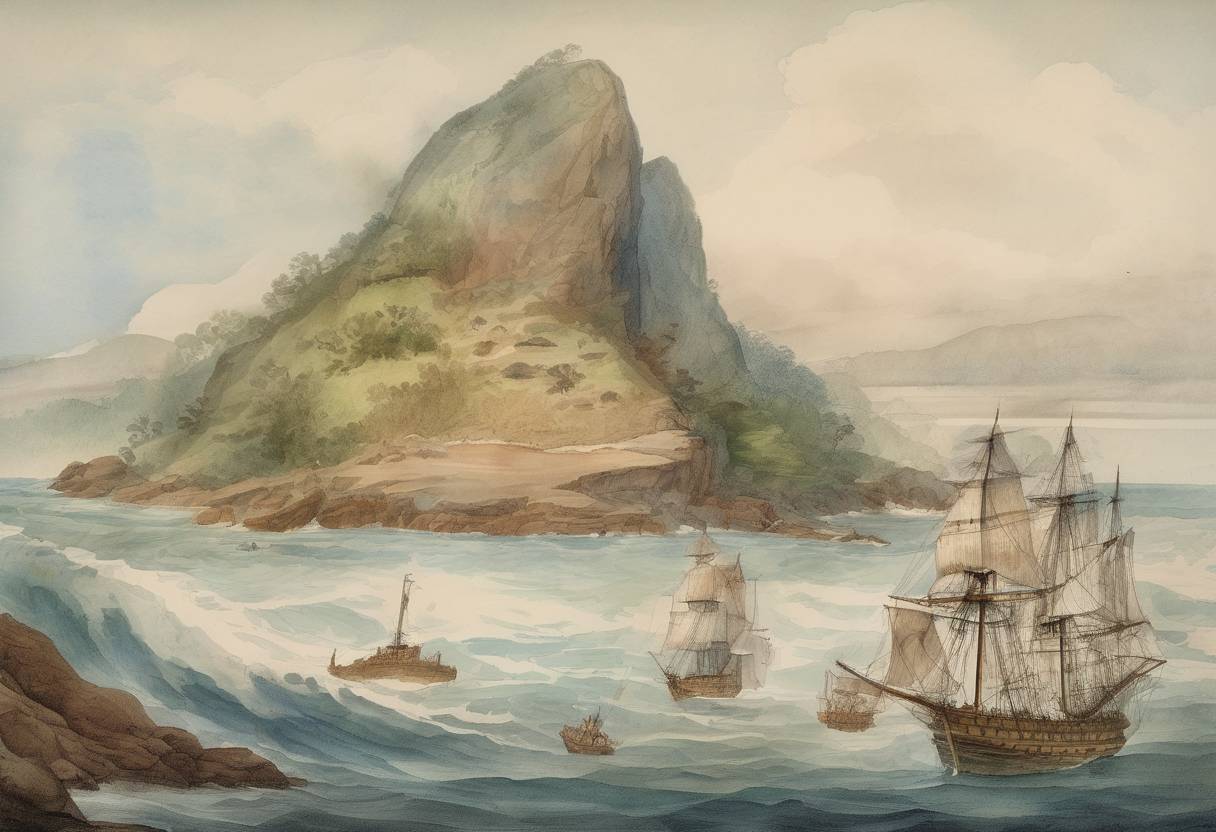
On August 22, 1770, British explorer Captain James Cook formally claimed the eastern coast of Australia for Great Britain, naming the territory New South Wales. This event marked a significant moment in the history of European exploration and the eventual colonization of Australia.
James Cook’s Voyage: Captain Cook embarked on his first voyage aboard the HMS Endeavour in 1768, commissioned by the British Admiralty. The primary mission was to observe the transit of Venus across the sun from Tahiti, which was crucial for astronomical calculations. However, Cook also carried secret orders to search for the hypothetical southern continent, Terra Australis.
Exploration of Australia: After completing the astronomical observations, Cook sailed south and eventually reached the eastern coast of Australia in April 1770. He charted the coastline, making detailed maps and notes about the land and its indigenous peoples.
Location: Cook made the formal claim at Possession Island, located in the Torres Strait, off the northern tip of Queensland.
Ceremony: During a brief ceremony, Cook raised the British flag and declared the land for King George III. This act of claiming sovereignty was typical of European explorers during this period, often disregarding the presence and rights of indigenous populations.
Colonization: Cook’s claim laid the groundwork for British colonization. The First Fleet, led by Captain Arthur Phillip, arrived in 1788 to establish a penal colony at Port Jackson, now Sydney.
Impact on Indigenous Peoples: The British claim and subsequent colonization had profound and devastating effects on the Aboriginal peoples of Australia. Colonization led to the displacement of indigenous communities, loss of land, and significant cultural disruption.
Historical Significance: Cook’s claim of New South Wales was a pivotal moment in the expansion of the British Empire. It marked the beginning of a new chapter in Australian history, influencing the continent’s demographic, cultural, and political landscape.
Global Exploration: Cook’s voyages contributed significantly to the European understanding of the Pacific region. His detailed maps and observations were invaluable to future explorers and settlers.
Scientific Contributions: Cook’s expeditions were also notable for their scientific contributions, including the collection of botanical specimens by naturalists like Joseph Banks, which expanded European knowledge of the natural world.
In summary, Captain James Cook’s claim of the eastern coast of Australia for Great Britain on August 22, 1770, was a landmark event that set the stage for British colonization and had lasting impacts on the indigenous populations and the history of Australia.
Source: en.wikipedia.org