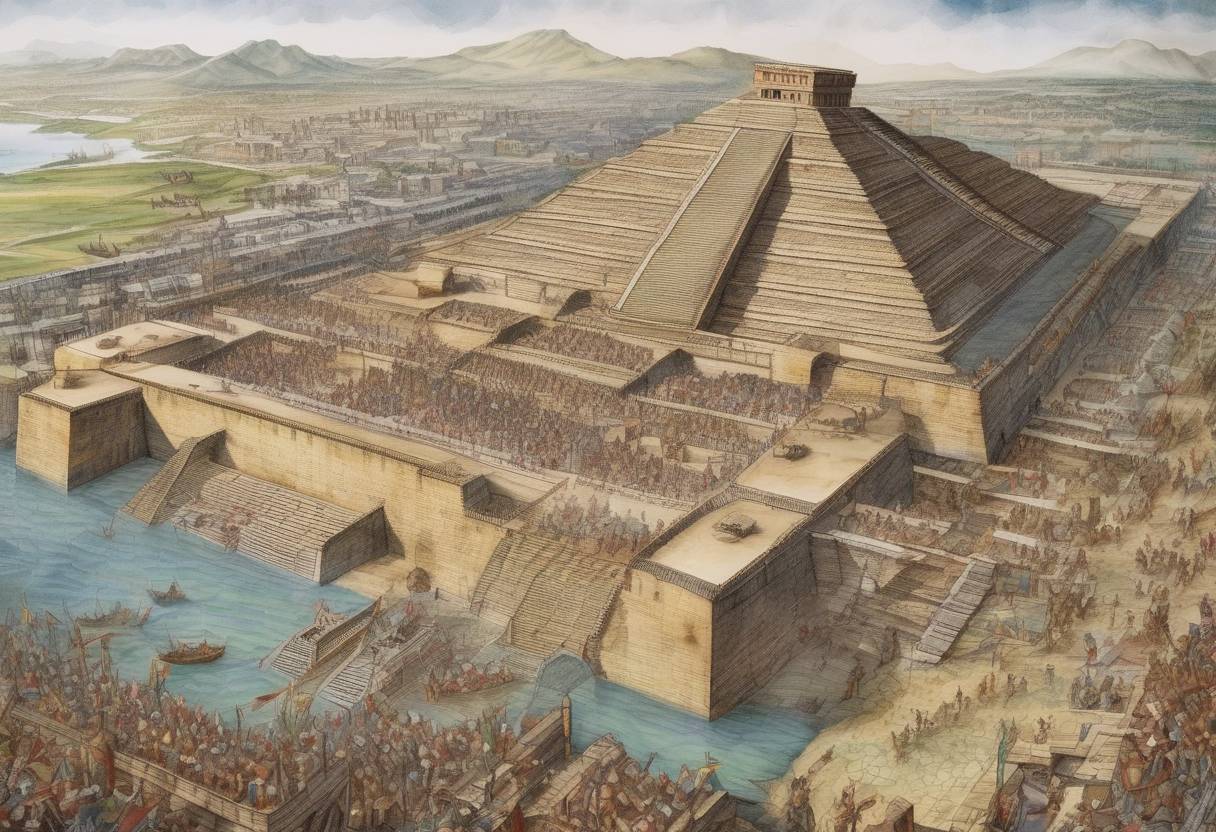
Fall of Tenochtitlán - August 13, 1521
On August 13, 1521, Tenochtitlán, the capital of the Aztec Empire, fell to Spanish forces led by Hernán Cortés, marking a pivotal moment in the history of the Americas. This event signaled the end of the Aztec Empire and the beginning of Spanish dominance in the region.
Background
- Aztec Empire: By the early 16th century, the Aztec Empire was a powerful and sophisticated civilization located in present-day Mexico. Tenochtitlán, its capital, was a large and impressive city built on an island in Lake Texcoco.
- Hernán Cortés: A Spanish conquistador, Cortés arrived in Mexico in 1519 with ambitions of conquest. He was initially welcomed by the Aztec emperor, Moctezuma II, but tensions soon escalated.
- Alliances and Strategy: Cortés formed alliances with indigenous groups who were subjugated by the Aztecs, such as the Tlaxcalans, which proved crucial in his campaign against Tenochtitlán.
Siege of Tenochtitlán
- Initial Conflict: After a series of conflicts and the death of Moctezuma II, Cortés and his forces were expelled from Tenochtitlán during the event known as “La Noche Triste” (The Night of Sorrows) in June 1520.
- Return and Siege: Cortés regrouped and returned with a larger force, including thousands of indigenous allies. The siege of Tenochtitlán began in May 1521.
- Tactics: The Spanish and their allies used superior weaponry, including firearms and cavalry, and blockaded the city, cutting off supplies and reinforcements.
Fall of the City
- Destruction and Surrender: After months of brutal fighting and a devastating smallpox epidemic that weakened the Aztec population, Tenochtitlán fell on August 13, 1521. The city was largely destroyed, and its last emperor, Cuauhtémoc, was captured.
- Aftermath: The fall of Tenochtitlán marked the collapse of the Aztec Empire. The Spanish began to establish control over the region, leading to the creation of New Spain.
Historical Significance
- Cultural Impact: The conquest led to significant cultural and demographic changes, including the spread of Christianity and the Spanish language.
- Legacy: The fall of Tenochtitlán is often seen as a symbol of the broader European colonization of the Americas, which had profound effects on indigenous populations and global history.
The fall of Tenochtitlán remains a significant event in world history, illustrating the complex interactions between European colonizers and indigenous civilizations.