John Glenn's Historic Orbit: February 20, 1962
1962 · Cape Canaveral, United States
John Glenn became the first American to orbit the Earth, aboard Friendship 7 during NASA's Mercury-Atlas 6 mission.
May 5, 1961
Alan Shepard becomes the first American in space aboard the Freedom 7 spacecraft.
Cape Canaveral, United States | NASA
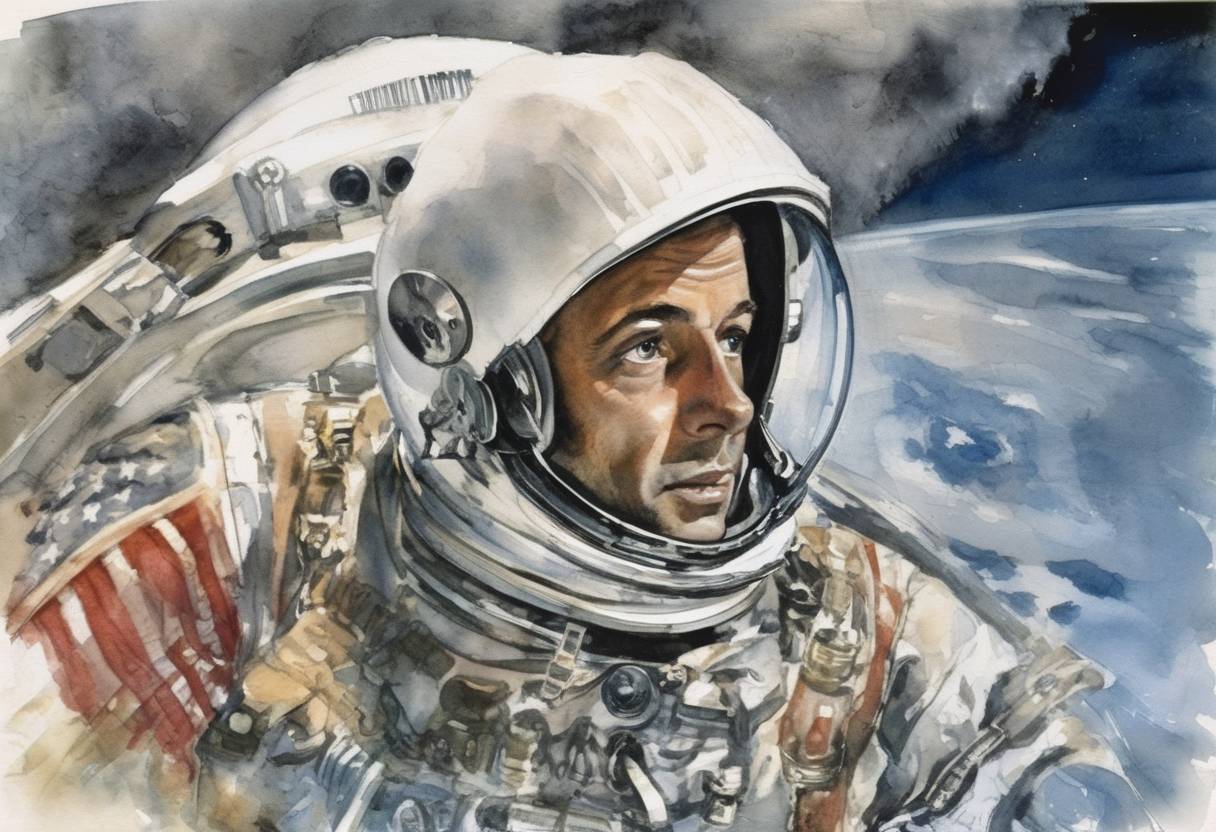
On May 5, 1961, Alan Shepard became the first American astronaut to travel into space, marking a significant milestone in the United States’ space exploration efforts. This historic event took place aboard the Freedom 7 spacecraft, part of NASA’s Mercury-Redstone 3 mission.
The early 1960s were marked by intense competition between the United States and the Soviet Union, known as the Space Race. The Soviet Union had already achieved a significant lead by launching Yuri Gagarin into orbit on April 12, 1961, making him the first human in space. In response, the United States accelerated its efforts to send an astronaut into space.
Alan Shepard’s mission was a suborbital flight, meaning that while he reached space, he did not complete an orbit around the Earth. The flight was designed to test the spacecraft’s systems and gather data on the effects of space travel on the human body.
Alan Shepard’s successful mission was a pivotal moment in the U.S. space program. It restored national confidence and demonstrated that the United States was a formidable competitor in the Space Race. Shepard’s flight paved the way for future manned missions, including John Glenn’s orbital flight in 1962 and the eventual Apollo missions to the Moon.
Shepard himself would later return to space as the commander of Apollo 14 in 1971, becoming the fifth person to walk on the Moon. His contributions to space exploration remain a significant part of NASA’s legacy.
Alan Shepard’s journey aboard Freedom 7 is remembered as a courageous and groundbreaking achievement. It not only showcased American technological capabilities but also inspired a generation to look toward the stars, fueling further advancements in space exploration.
Source: en.wikipedia.org