Alan Shepard: First American in Space
1961 · Cape Canaveral, United States
Alan Shepard becomes the first American in space aboard the Freedom 7 spacecraft.
July 29, 1958
The United States Congress passed legislation establishing the National Aeronautics and Space Administration (NASA).
Washington, D.C., United States | NASA
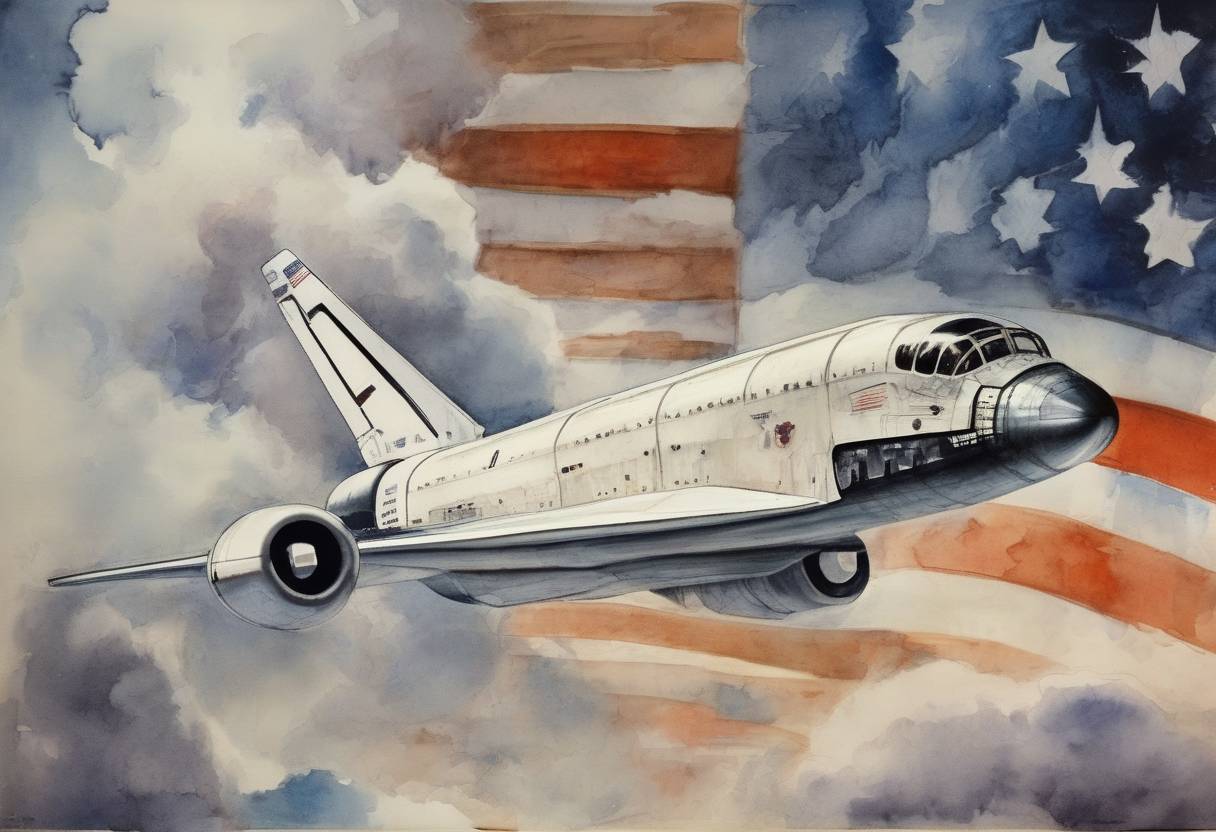
On July 29, 1958, the United States Congress passed the National Aeronautics and Space Act, which led to the creation of the National Aeronautics and Space Administration (NASA). This pivotal moment in history marked the beginning of a new era in space exploration and scientific advancement for the United States.
The establishment of NASA was largely a response to the geopolitical tensions of the Cold War, particularly the space race between the United States and the Soviet Union. The launch of the Soviet satellite Sputnik 1 on October 4, 1957, had a profound impact on the United States, as it was the first artificial satellite to orbit the Earth. This event highlighted the Soviet Union’s advanced capabilities in space technology and prompted concerns over national security and technological leadership.
In response, the U.S. government recognized the need to consolidate its efforts in aeronautics and space exploration. Prior to NASA’s creation, space-related activities were scattered across various military and civilian agencies, including the National Advisory Committee for Aeronautics (NACA), which had been established in 1915.
The National Aeronautics and Space Act of 1958 laid the groundwork for NASA’s formation and outlined its objectives. Key provisions of the Act included:
NASA officially began operations on October 1, 1958, absorbing NACA and its facilities, personnel, and resources. The agency quickly set to work on a series of projects aimed at advancing U.S. capabilities in space exploration. Among its early achievements were the Mercury and Gemini programs, which laid the groundwork for the Apollo missions that would eventually land humans on the Moon.
The creation of NASA was a significant milestone in the history of science and technology. It not only marked the United States’ commitment to leading in space exploration but also fostered advancements in various fields, including engineering, computer science, and materials science. NASA’s work has led to numerous technological innovations and has inspired generations of scientists, engineers, and explorers.
The agency’s establishment also underscored the importance of international cooperation in space, setting a precedent for future collaborative efforts such as the International Space Station.
In summary, the passage of the National Aeronautics and Space Act on July 29, 1958, was a defining moment that propelled the United States into the forefront of space exploration and scientific discovery, with lasting impacts on technology and international relations.
Source: en.wikipedia.org