Pardon of Confederate Soldiers on December 25, 1868
1868 · Washington, D.C., United States
President Andrew Johnson issued a final unconditional pardon to all Confederate soldiers.
October 20, 1864
President Abraham Lincoln formally established Thanksgiving as a national holiday in the United States, proclaimed to be celebrated on the last Thursday of November.
Washington D.C., United States | United States Government
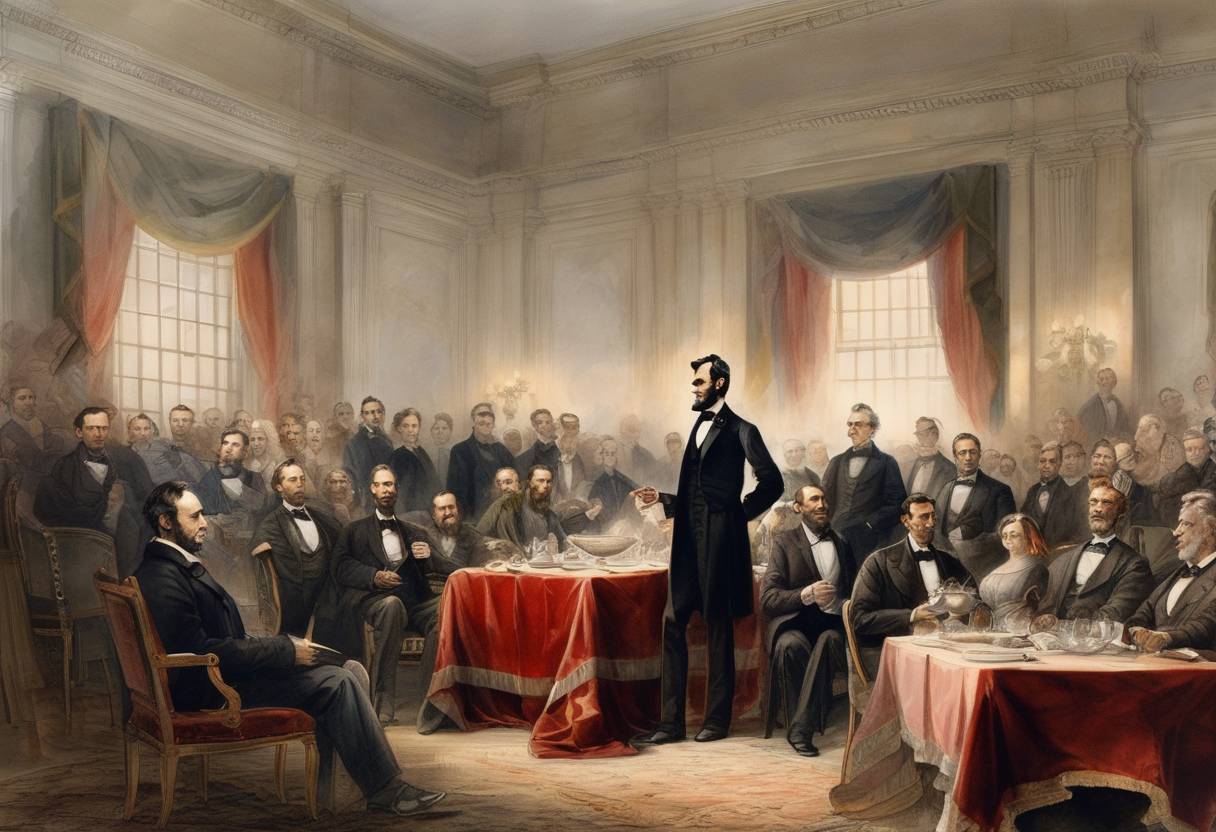
On October 20, 1864, President Abraham Lincoln solidified Thanksgiving as a national holiday in the United States, to be observed annually on the last Thursday of November. This was a pivotal moment in American history, building on his prior 1863 proclamation, which marked the first national Thanksgiving celebration.
Before Lincoln’s proclamation, Thanksgiving had been celebrated sporadically across the United States, with different states setting their dates. The tradition itself dates back to early colonial times, with the most famous being the Plymouth celebration of 1621. However, it was not nationally coordinated until the 19th century.
The catalyst for transforming this into a federal holiday can be largely attributed to the persistent efforts of Sarah Josepha Hale, a prominent editor and writer, who campaigned for a national day of thanks for over 15 years. Her advocacy highlighted the potential for Thanksgiving to unify a nation divided by the Civil War.
Lincoln’s 1864 proclamation reiterated the 1863 call for a national day of thanksgiving, highlighting the principles of gratitude for blessings amidst the ongoing Civil War. This second proclamation on October 20, 1864, reinforced the previous year’s declaration due to its warm reception and embedded the idea of a national Thanksgiving further into American tradition.
Abraham Lincoln’s decision to set aside the last Thursday of November for Thanksgiving was aimed at fostering unity and offering solace to a country that was still healing and reconciling at the end of a brutal conflict. His message was one of hope, reflection, and national solidarity.
The establishment of Thanksgiving as a fixed national holiday had lasting significance. Following Lincoln’s presidency, the tradition continued, though the specific date varied occasionally. In 1939, President Franklin D. Roosevelt briefly moved Thanksgiving up a week to extend the holiday shopping season, leading to some controversy. In 1941, Congress officially designated the fourth Thursday of November as Thanksgiving Day, ensuring its consistent celebration across the nation.
Thanksgiving remains a day for Americans to reflect on gratitude, family unity, and the historical tapestry that has shaped the nation. Lincoln’s proclamation set a tone of national identity and continuity that endures in American culture to this day.
Source: www.history.com